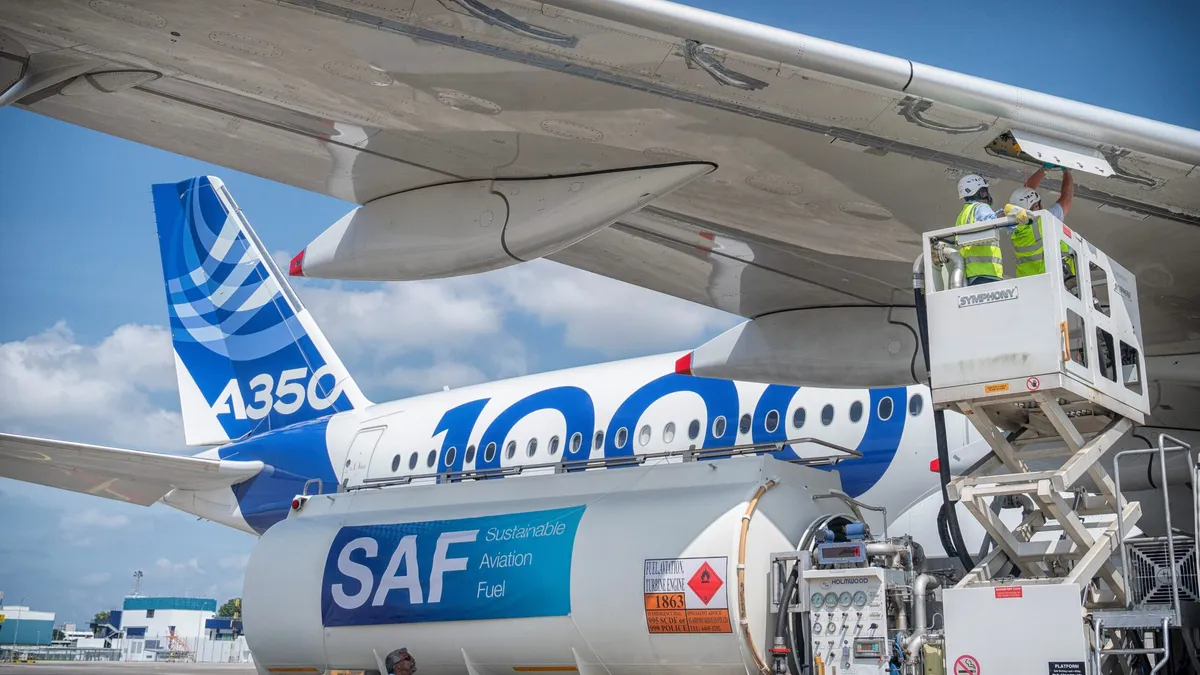
Sustainable aviation fuel is scaling up in 2026, but the central problem is no longer technical feasibility: it is industrial economics. IATA expects global SAF production to reach about 2.4 million tonnes this year, up from roughly 1.9 million tonnes in 2025, yet that still represents only around 0.8% of worldwide jet-fuel consumption.
The bottleneck is investment, not proof of concept
SAF has already been used successfully in commercial aviation. The challenge is building enough production capacity, feedstock supply, logistics and certification infrastructure to move from niche volumes to a material share of global fuel demand.
Europe is turning SAF into a compliance cost
ReFuelEU Aviation is changing the market by making sustainable fuel use progressively mandatory rather than purely voluntary. For European airlines, SAF is therefore becoming part of the cost base whether or not passengers actively demand it.
That creates a competitiveness question: airlines operating under stricter blending obligations may face higher fuel costs than rivals in regions where mandates are lighter.
Why 0.8% matters
The figure shows how far aviation remains from scale. Even with record output in 2026, more than 99% of jet fuel remains conventional.
IATA estimates that roughly 500 million tonnes a year could be needed by 2050 under a net-zero pathway, implying a production increase of more than 200 times compared with expected 2026 output.
Bio-SAF alone will not close the gap
Waste oils, residues and biomass can support growth, but feedstock availability is limited. Synthetic fuels made from renewable electricity, hydrogen and captured CO₂ are therefore likely to become increasingly important.
The key question is who pays
Airlines, fuel producers, governments and passengers are effectively sharing the cost of building a new energy supply chain. How that burden is allocated will influence fares, airline margins and the pace of investment.
AeroSillage view: the credibility of aviation’s climate strategy will be determined less by demonstration flights than by whether the industry can finance a massive fuel-production build-out without making air travel structurally uncompetitive.
Related: Air France’s twenty-year transformation and the cost of decarbonisation.
Sources
IATA SAF data 2026; ReFuelEU Aviation; CADO SAF Registry.


Leave a Reply