SkyTeam is the smallest of the three global airline alliances by member count, but that description misses what makes it distinctive in 2026. Founded in 2000 by Aeromexico, Air France, Delta Air Lines and Korean Air, it now links roughly 1,000 destinations in 160 countries with more than 13,600 daily flights and around 624 million annual passengers. Its real strength, however, lies less in simple network size than in the deep commercial ties between several of its biggest members.
From 2000 to 2026: an alliance increasingly shaped by integrated groups
The alliance launched in New York on June 22, 2000, three years after Star Alliance and one year after oneworld. Its founders wanted a global network capable of offering easier connections, shared status recognition and stronger loyalty benefits.
Its composition has continued to evolve. SAS joined in September 2024 after leaving Star Alliance. Czech Airlines ceased operations later that year. ITA Airways left SkyTeam in 2025 and moved toward Star Alliance as Lufthansa became its strategic shareholder. Aeroflot remains suspended.
That recent history shows an important truth: alliance membership increasingly follows ownership and joint-venture strategy.
Members with very different geographic roles
Each member contributes a hub, a geography or a specialist market that would be difficult for another airline to replicate quickly.
Aerolíneas Argentinas: the southern South American anchor
From Buenos Aires, Aerolíneas Argentinas gives SkyTeam deep domestic coverage across Argentina and useful access to the southern cone. Its global scale is limited, but its local network is strategically valuable.
Aeromexico: Mexico and the US bridge
Aeromexico is central to SkyTeam’s Latin American position. Mexico City connects domestic traffic with the United States, Central America and Europe, while its long-standing relationship with Delta makes the airline more than a simple alliance partner.
Air Europa: Madrid and Latin America
Air Europa gives SkyTeam a second major Iberian platform in Madrid and strong Latin American connectivity. Its future ownership remains strategically important after IAG’s failed acquisition attempt.
Air France and KLM: the European core
Paris-CDG and Amsterdam-Schiphol form one of Europe’s most powerful dual-hub systems. Air France-KLM is central to SkyTeam on the North Atlantic, in Africa and across Asia. Its increasing influence over SAS strengthens that position further.
China Airlines, China Eastern and XiamenAir: depth in Greater China
China Eastern at Shanghai, XiamenAir in south-eastern China and China Airlines in Taiwan give SkyTeam one of the alliance world’s deepest footprints across Greater China.
That is a major advantage, although geopolitics, market access rules and different commercial models can limit the degree of integration.
Delta Air Lines: the economic anchor
Delta is arguably SkyTeam’s most structurally important member. Its US hubs, financial strength, shareholdings and joint ventures mean its influence extends far beyond the alliance logo.
On the North Atlantic, Delta’s joint venture with Air France-KLM and Virgin Atlantic creates a level of schedule and revenue integration far deeper than a standard alliance relationship.
Garuda Indonesia: Indonesia’s archipelago
Garuda contributes Jakarta, Bali and a broad domestic network in one of Asia’s largest aviation markets. Financial restructuring has limited its global expansion, but its geography remains valuable.
Kenya Airways: East Africa
Nairobi gives SkyTeam a foothold in East Africa and connectivity into markets that are difficult to serve efficiently from Europe alone. Kenya Airways’ long-running financial fragility remains a weakness.
Korean Air: a major North-East Asian hub
Korean Air is both a founder and one of SkyTeam’s strongest Asian pillars. Its gradual absorption of Asiana will further strengthen Seoul’s role: while weakening Star Alliance once Asiana’s membership ends.
Middle East Airlines: a small member with regional value
MEA brings Beirut and Levant connectivity. Its fleet is small, but its local position gives it more strategic relevance than raw size suggests.
SAS: SkyTeam’s major European reinforcement
SAS joining in 2024 was one of SkyTeam’s most important recent changes. Copenhagen adds a major northern European hub and strengthens Scandinavian and North Atlantic coverage.
Air France-KLM’s plan to deepen its ownership of SAS gives the move an even more structural dimension.
Saudia: Saudi Arabia in transformation
Saudia adds Jeddah and Riyadh at a time when Saudi Arabia is investing heavily in aviation. Riyadh Air creates new competition at home, but Saudia still gives SkyTeam a meaningful Middle Eastern platform.
TAROM: useful geography, limited scale
TAROM retains a role around Bucharest, but its small size and structural difficulties make it one of the alliance’s less influential members.
Vietnam Airlines: a fast-growing Asian market
Vietnam Airlines adds Hanoi, Ho Chi Minh City and a useful domestic and regional network in one of Asia’s fastest-growing aviation markets.
Virgin Atlantic: Heathrow and the North Atlantic
Virgin Atlantic joined in 2023 and brought London-Heathrow into SkyTeam’s strategic map. Its close integration with Delta and Air France-KLM captures SkyTeam’s current model perfectly: alliance membership sits on top of much deeper commercial partnerships.
SkyTeam’s biggest strength is integration among its anchor groups
SkyTeam may be smaller than Star Alliance, but Delta, Air France-KLM, Virgin Atlantic, Aeromexico and Korean Air are linked through joint ventures and equity relationships that make parts of the network unusually coherent.
For passengers, the visible benefits remain familiar: lounges, priority services and mileage earning. Behind that sits a much more sophisticated commercial structure.
Its influence is clearly increasing. Paris and Amsterdam are already central. Copenhagen adds a third major European hub through SAS.
If Air France-KLM were also to win a stake in TAP, Lisbon could eventually become another strategic asset, especially for Brazil and Lusophone Africa. That would significantly reshape the European balance inside SkyTeam.
ITA Airways leaving SkyTeam and moving toward Star Alliance after Lufthansa’s investment demonstrated that alliances do not truly control their members.
A change in ownership can shift an airline from one global bloc to another and alter the value of hubs almost overnight.
Important geographic gaps remain
SkyTeam is strong in China, Korea, Vietnam and Indonesia, but lacks a major Indian member. That is increasingly important as India becomes one of the world’s fastest-growing aviation markets.
Star Alliance benefits from Air India. SkyTeam has no equivalent local anchor.
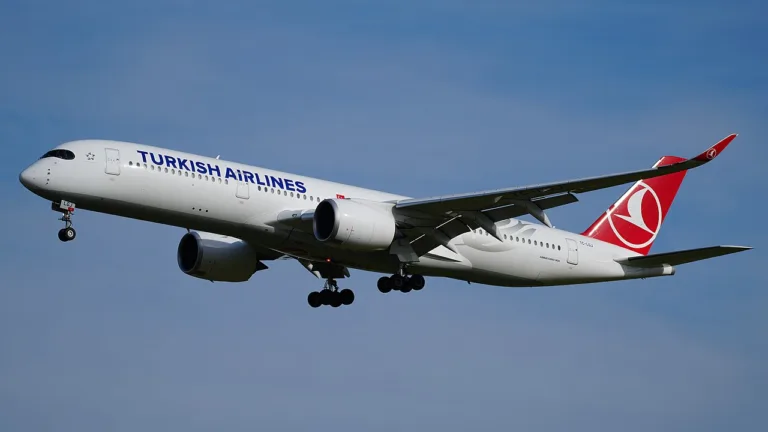
Saudia gives SkyTeam a presence in the Middle East, but the alliance has no direct equivalent to Qatar Airways in oneworld or Turkish Airlines in Star Alliance. Emirates, Etihad and Riyadh Air all remain outside the three traditional global alliances.
Intermodality and loyalty are the next differentiation levers
Partnerships with Eurostar and Trenitalia point toward a broader mobility model in which rail is integrated into an airline journey. In Europe, where short-haul aviation faces environmental and regulatory pressure, that could become strategically important.
SkyTeam does not have one common loyalty programme. Flying Blue, SkyMiles, SKYPASS, EuroBonus and others remain separate, and miles are not freely transferable between them.
Elite and Elite Plus provide some common recognition, but the customer still deals with different programme rules.
Smaller does not necessarily mean weaker
In some areas, yes. It has less global density than Star Alliance, no large Indian member and a relatively limited Gulf position. Some smaller members remain financially fragile.
But it also has a different advantage: several of its largest airlines are economically intertwined to a degree not always matched elsewhere.
SkyTeam may gradually become less a federation of equal members and more an ecosystem built around a handful of powerful groups: Delta in North America, Air France-KLM in Europe and Korean Air in North-East Asia.
That can make the alliance more efficient, but it can also make the SkyTeam brand itself less important than the joint ventures and shareholdings underneath it.
Twenty-six years after launch, SkyTeam is not the largest alliance. It may, however, be the alliance that best reflects aviation’s current direction: fewer purely symbolic partnerships, more joint ventures, equity stakes and multi-brand groups.
Its next chapter depends heavily on three questions: Air France-KLM’s control of SAS, the outcome of TAP’s privatisation and whether SkyTeam can fill major geographic gaps such as India.
Main sources
SkyTeam member and history documentation; member airline corporate information; public material on SAS, ITA, Air France-KLM, Delta and the alliance’s loyalty programme structure.
Leave a Reply