
FAA Orders Boeing 787 Fuel Tank Sealant Inspections
The FAA has ordered sealant inspections on certain Boeing 787 fuel tanks following gaps in production checks. The directive covers an estimated 60 U.S.-registered aircraft and takes effect December 7.
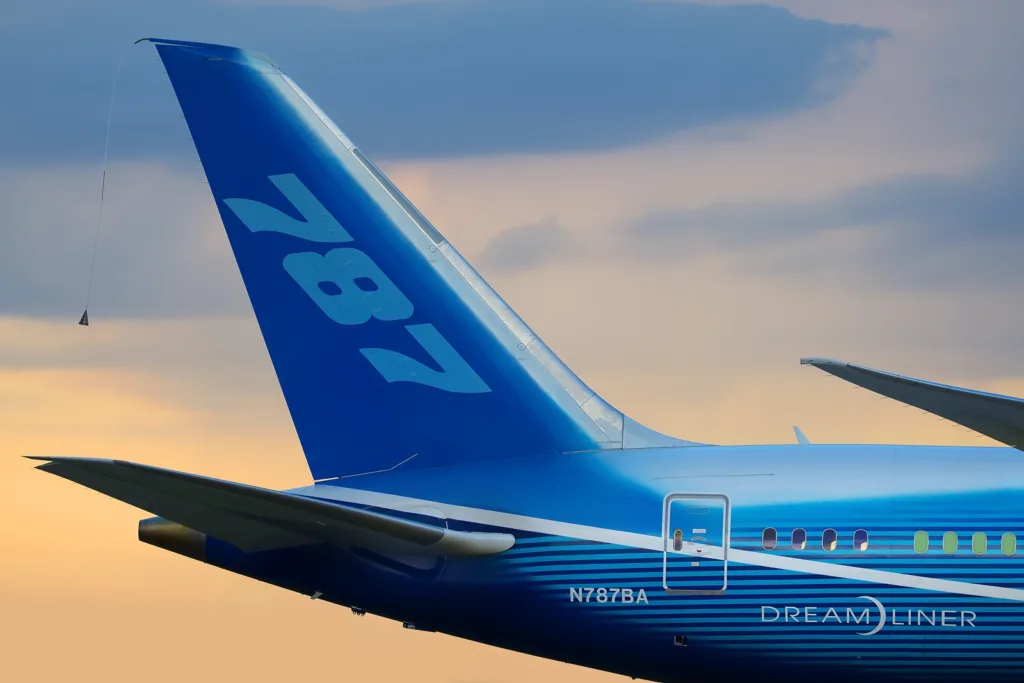
The FAA has ordered fuel tank safety inspections on certain Boeing 787 Dreamliners after discovering gaps in production checks. Issued November 2, 2026, the directive covers selected 787-8, 787-9 and 787-10 aircraft. It takes effect December 7 and affects an estimated 60 U.S.-registered jets.
According to FAA airworthiness directive AD 2026-22-05, some tank sealant did not receive the required visual and adhesion checks during manufacture. If defective, the sealant could permit an ignition source inside the fuel tank during a lightning strike. The agency identified a potential hazard, not an explosion or fuel tank fire that has occurred.
Why the FAA is inspecting Boeing 787 fuel tanks
At issue is sealant inside the center wing fuel tank, including areas near the junction between wing and fuselage. Sealant protects specified joints and surfaces. Its condition and grip on the underlying structure must meet manufacturing requirements.
However, the FAA says production records did not establish that workers completed every required inspection on certain aircraft. Operators must now inspect the specified areas and test whether the sealant adheres properly. When inspectors find a problem, the airline must arrange an approved repair.
These checks address an identified risk linked to lightning protection. They do not prove that the sealant has failed on all covered aircraft. Likewise, the directive does not attribute any accident to this manufacturing issue.
Which Boeing 787 aircraft are affected and what inspections cost
The rule applies only to aircraft identified in Boeing Alert Requirements Bulletin B787-81205-SB570053-00 RB, dated November 5, 2025. As a result, a passenger cannot determine whether a jet is affected from its 787-8, 787-9 or 787-10 model designation alone.
For its cost estimate, the FAA counted 60 U.S.-registered aircraft. It assigned 34 labor hours to inspection and adhesion testing, at $85 per hour. That produces an estimated $2,890 per aircraft and $173,400 across the U.S. fleet.
Yet those numbers exclude repairs. The FAA did not have enough information to estimate their cost. Boeing also indicated that warranty coverage might reduce some operators’ expenses. These figures are projections, not confirmed airline spending.
December 7 starts the rule, not a blanket grounding
The directive becomes effective December 7, 2026. After that date, affected operators must follow the compliance deadlines in Boeing’s requirements bulletin, with the FAA’s specified exceptions. December 7 is therefore not a universal inspection deadline for every aircraft.
Maintenance planners must first establish which jets fall within the bulletin. They must then arrange access to the tank areas, complete the tests and document any corrective work. If repairs are necessary, the FAA requires acceptable instructions or an approved alternative compliance method.
For airlines, the work could require maintenance planning and additional access to aircraft. However, 34 labor hours do not translate automatically into 34 hours of aircraft downtime. The rule itself announces neither a systemwide 787 grounding nor specific flight cancellations.
Airlines and Boeing pressed the FAA on repair instructions
In February 2026, the FAA proposed the directive before issuing its final decision. Among those commenting were American Airlines, United Airlines, Boeing, the Air Line Pilots Association and the Foundation for Aviation Safety.
American sought clarification on inspection locations and repair instructions. Boeing asked regulators to recognize certain repairs performed under existing airworthiness limitations. The FAA accepted a defined repair approach, while keeping the inspection and adhesion-testing obligations.
Separately, the FAA said it had confirmed that production inspections were taking place on aircraft outside the rule’s scope. That does not establish that affected aircraft have passed the newly required checks.
What Boeing 787 passengers need to know
Passengers do not need to change a booking solely because their flight uses a Boeing 787. Airlines, rather than travelers, must determine applicability and complete the mandated maintenance. Any flight-specific disruption needs confirmation from the operating carrier.
The next meaningful information will be inspection results, repair findings and any subsequent FAA action. For related aviation safety coverage, AeroSillage has examined Boeing 737 MAX regulatory oversight and Boeing runway-conflict alert technology. Both involve separate safety issues, not this Dreamliner fuel tank directive.
Read next
JOIN THE CONVERSATION
Let’s discuss this story.
A question, a clarification or a different perspective? Share it with us.