
Boeing 737 MAX: 15 years after launch, crises, fixes and commercial success
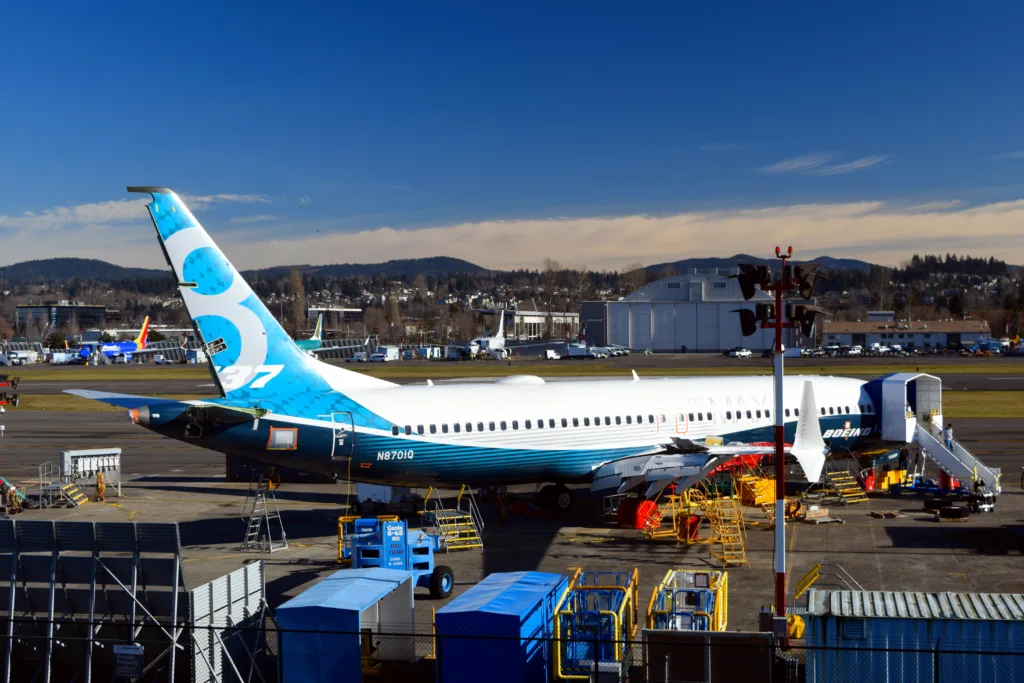
Seven years after two crashes killed 346 people, the Boeing 737 MAX is recording more deliveries over the first nine months of a year than at any previous point in the programme. That uncomfortable contrast defines the aircraft’s present. It is both the symbol of a historic certification failure and the commercial backbone of one of the world’s two biggest manufacturers. By October 2026, MAX jets operate across multiple continents, orders continue to arrive and regulators have eased some production oversight arrangements. None of that erases the failures of 2018 and 2019 or means the recovery is complete.
Why Boeing launched the MAX
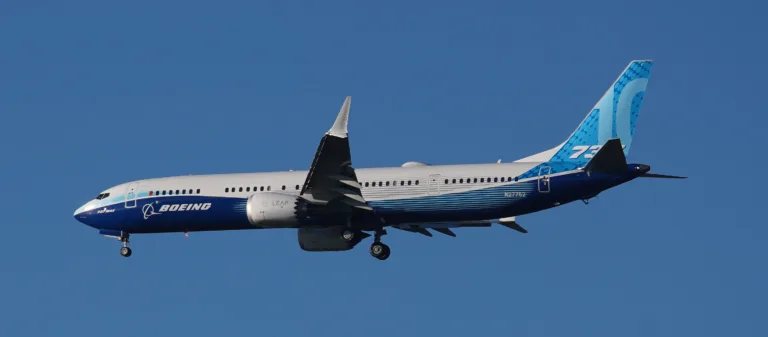
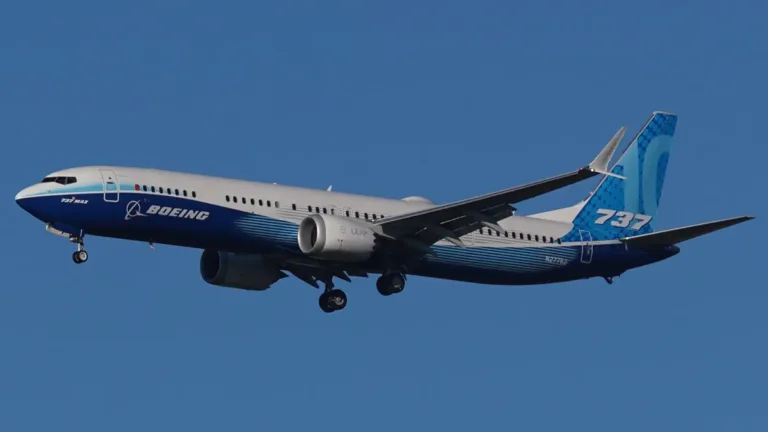
Boeing launched the 737 MAX programme in 2011 as Airbus gained ground with its A320neo family. The manufacturers’ competition continues on other aircraft programmes too, as examined in AeroSillage’s analysis of Airbus’s proposed stretched jets. Instead of immediately developing an all-new single-aisle aircraft, Boeing chose to update a familiar platform. More efficient CFM LEAP-1B engines, aerodynamic refinements and other changes promised airlines better fuel economics with continuity in their existing 737 operations. The MAX 8 first flew in January 2016 and entered commercial service with Malindo Air in 2017.
That decision involved engineering compromises. The 737’s limited ground clearance meant the larger engines had to be placed higher and farther forward. Their positioning affected some handling characteristics, including pitch behaviour at high angles of attack. Boeing introduced the Maneuvering Characteristics Augmentation System, or MCAS, which could command nose-down horizontal stabiliser movement under particular conditions. MCAS was not an autopilot, but an automatic flight-control function whose original logic became central to the crash investigations.
On 29 October 2018, Lion Air flight JT610 crashed into the Java Sea, killing 189 people. On 10 March 2019, Ethiopian Airlines flight ET302 crashed shortly after take-off from Addis Ababa, killing 157. Regulators subsequently grounded the worldwide MAX fleet. Investigations identified interacting problems involving MCAS design, reliance on erroneous angle-of-attack information, risk assessment, pilot information and training. Calling the disasters simply the result of a faulty sensor would miss the deeper failures in engineering and certification.
What was changed before flights resumed
After approximately 20 months of review, the FAA authorised the MAX’s return to commercial service on 18 November 2020, subject to mandatory changes. MCAS logic was revised to compare information from both angle-of-attack sensors, respond to disagreements and limit how much stabiliser input it can command. Additional wiring changes, procedures and pilot training formed part of the return-to-service requirements. Operators had to complete the applicable work before returning individual aircraft to passenger operations.
That process established compliance with updated airworthiness requirements; it did not mean that no 737 MAX could ever suffer another defect. The versions also need to be kept separate. The MAX 8 and MAX 9 are in airline service. On 3 August 2026, the FAA issued an amended type certificate for the smaller MAX 7, citing improvements in flight-control software, crew alerts and engine anti-icing protection. Certification of the larger MAX 10 is a separate matter. It is inaccurate to treat every member of the family as already certified and in commercial operation.
The 2024 Alaska Airlines flight 1282 door-plug blowout brought a different problem sharply into focus. A panel covering an unused exit separated from a MAX 9 in flight, exposing manufacturing and assembly oversight questions rather than the original MCAS flaw. In findings released in June 2025, the NTSB identified inadequate factory-worker training, guidance and supervision at Boeing, together with ineffective FAA oversight of recurring parts-removal recordkeeping problems. This was a MAX 9 incident, not evidence that an identical component defect affected every MAX 8.
The response included aircraft inspections, closer federal oversight in Renton and at suppliers, constraints on production expansion and a wider examination of quality systems. In July 2026, the FAA allowed Boeing to resume issuing airworthiness certificates under its delegated authority for new MAX and 787 aircraft following months of comparative quality reviews. The regulator explicitly said audits and monitoring would continue. The decision was evidence of improvement, not a declaration that oversight was no longer necessary.
How many are flying, and how many remain on order?
Commercial figures illustrate the programme’s resilience. Boeing delivered 43 737 MAX aircraft in September 2026 and 363 over the first nine months, a record for January to September since the programme began. Across its entire commercial range, the manufacturer delivered 475 aircraft over that period and ended September with an official backlog of 6,371 jets. The 6,371 figure covers all Boeing programmes, not only the 737 MAX.
An earlier, more detailed regulatory filing gives another important measure: at 30 June 2026, Boeing recorded 4,397 undelivered firm orders within the 737 programme. That is a June programme-level figure, not a September MAX 8-specific total. It also differs from aircraft in service or airframes already built. Boeing received 165 new commercial aircraft orders in September, including 100 MAX jets for Turkish Airlines and 20 for Lufthansa, according to Reuters. An order is not a delivery, and a delivery is not proof of current daily flight activity.
Counting active MAX 8s requires a separate fleet dataset. FlightQ, a private aircraft directory, listed 1,762 examples in service with 63 airlines across 39 countries in a dataset checked on 24 August 2026. Methodology matters: aircraft in temporary storage, the high-density 737-8200 derivative and recently transferred frames may be treated differently by other databases. This is a dated private estimate, not an official Boeing fleet count or a verified tally of aircraft flying on 16 October.
For airline executives, scale changes the economics of every decision. Replacing hundreds of narrowbodies overnight would disrupt schedules, crew qualifications, maintenance arrangements and fleet financing. Carriers assess the MAX’s economics, availability and regulatory compliance while also facing lengthy delivery queues. A strong order book nevertheless should not be used as a proxy for public confidence or as proof that manufacturing risks have vanished.
Boeing’s challenge in late 2026 is no longer merely to convince customers to place orders. It must deliver consistently without weakening quality controls, complete the certification of outstanding variants and demonstrate that concerns from factories, regulators and flight crews are addressed before they become failures. The MAX is neither a vanished aircraft nor a permanently resolved crisis. Its next chapter will be measured by sustained evidence of safe production, not by sales figures alone.
Documentation : FAA, remise en service 2020 ; FAA, MAX 7 certifié août 2026 ; NTSB, conclusions Alaska Airlines 2025 ; FAA, délégation des certificats juillet 2026 ; Boeing, dépôt réglementaire juin 2026 ; Reuters, livraisons septembre 2026 ; FlightQ, parc MAX 8 août 2026 (estimation privée).
JOIN THE CONVERSATION
Let’s discuss this story.
A question, a clarification or a different perspective? Share it with us.