FAA certifies Boeing 737 MAX 10, setting up renewed A321neo rivalry
The FAA certifies the 230-seat Boeing 737 MAX 10. Its 1,555 orders and 5,740 km range bring new competition for the A321neo, not the A321XLR.
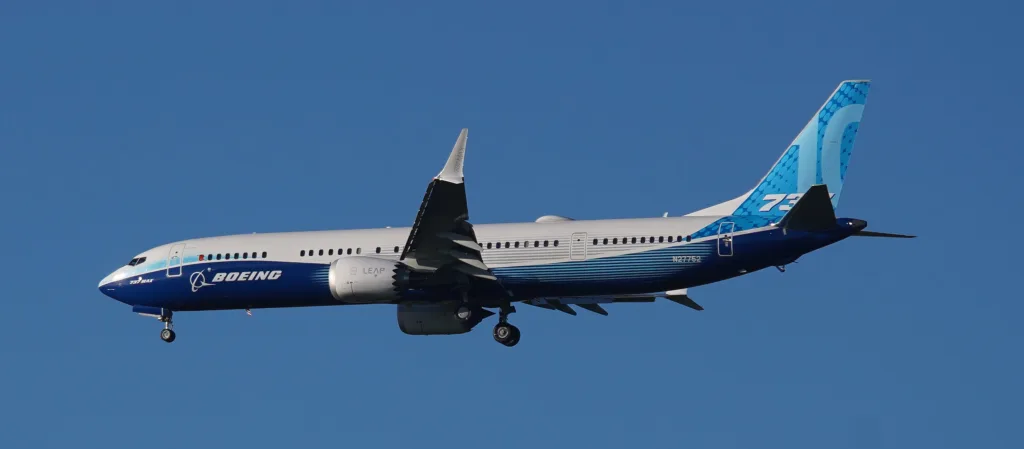
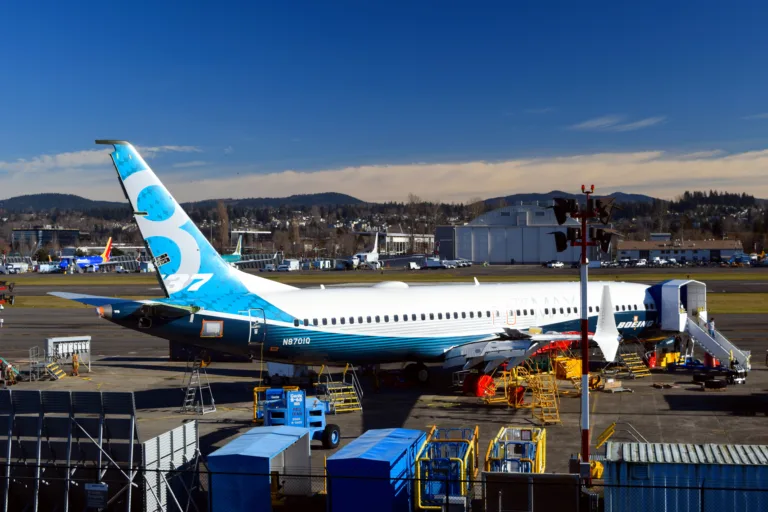
The US Federal Aviation Administration certified Boeing’s 737 MAX 10 on Tuesday, 20 October 2026, in Everett, Washington, clearing a major regulatory obstacle after years of delays. The decision allows Boeing to prepare deliveries of its largest 737, restoring its ability to compete with the Airbus A321neo for high-capacity narrowbody orders, although it will not match the transatlantic range of the A321XLR, which is already in airline service.
The FAA issued an amended type certificate, confirming that the MAX 10 meets the applicable design and safety requirements, together with an updated production authorization. Transportation Secretary Sean Duffy and FAA Administrator Bryan Bedford announced the decision at Boeing’s Everett facility. Type approval clears the aircraft design for service; it does not mean that every aircraft has already been delivered or cleared to enter an airline’s fleet.
Boeing expects to start deliveries in the coming months. Boeing Commercial Airplanes chief Stephanie Pope highlighted the aircraft’s capacity and per-seat economics. The manufacturer now reports 1,555 MAX 10 orders from more than 30 customers worldwide, representing over 30% of the current 737 MAX orderbook. That backlog illustrates how long airlines have been waiting for the largest MAX to become available.
More seats, major airline commitments
The 43.8-metre-long MAX 10 is the longest Boeing 737 yet developed. Powered by CFM LEAP-1B engines, it seats 185–210 passengers in a typical two-class arrangement, with an advertised maximum of 230. Airlines are buying the added capacity for busy services on which carrying more people per departure can improve unit costs while retaining much of the commonality of their existing 737 operations.
Airline commitments show why the MAX 10 matters: Ryanair, for example, plans 228 seats per aircraft and is targeting initial deliveries in early 2027. The selection below separates announced orders from options.
| Customer | Aircraft | Options | Details |
|---|---|---|---|
| Ryanair | 150 | 150 | 228 planned seats |
| United Airlines | 167 | — | As of end-2025 |
| American Airlines | 115 | — | Includes 30 converted MAX 8s |
| Alaska Airlines | 105 | 35 | Additional 2026 order |
| Delta Air Lines | 100 | 30 | Announced order |
| SMBC Aviation Capital | 60 | — | Aircraft lessor |
Figures come from announcements and company filings made on different dates. The orders column does not represent each customer’s complete current backlog as of 20 October 2026; options are shown separately. Boeing’s global total of 1,555 MAX 10 orders is the reference figure.
Certification allows delivery plans to become more tangible, but each aircraft still needs to be built, inspected and handed over. Airlines must prepare crews and operating procedures, while aircraft-specific airworthiness requirements remain distinct from approval of the design.
Competing with the A321neo, not matching the A321XLR
Boeing advertises a maximum MAX 10 range of 3,100 nautical miles, approximately 5,740 kilometres. That figure is a published reference, not a promise that every route can be flown with 230 passengers, baggage and the required fuel. Winds, payload and operational fuel reserves all affect achievable range. The MAX 10’s principal market remains dense short- and medium-haul flying, where additional seating can be particularly valuable.
Its most direct rival is the standard Airbus A321neo, another high-capacity single-aisle jet for major airline networks. Operators will weigh cabin size against fuel efficiency, airport performance, fleet compatibility and operating costs. Boeing also developed a modified main landing-gear arrangement to provide sufficient takeoff rotation clearance for the MAX 10’s longer fuselage.
Airbus’s A321XLR addresses a different market. Its advertised range reaches 4,700 nautical miles, or about 8,700 kilometres, almost 3,000 kilometres beyond the MAX 10’s quoted capability. That difference opens transatlantic routes to an Airbus narrowbody that the Boeing would struggle to serve with a comparable commercial payload. This is not just a future proposition: Iberia received the first A321XLR in October 2024 and began Madrid–Boston transatlantic services the following month. Boeing’s 787 can fly far longer sectors, but it is a larger twin-aisle aircraft rather than a direct XLR counterpart.
The decision completes certification of the 737 MAX family, following approval of the smaller MAX 7 in August 2026. The MAX 10’s own regulatory journey was prolonged. By July 2026, Boeing reported 976 certification flights and more than 2,060 hours in the air. Tests covered landing gear, braking, engine anti-ice protection and flight-control functions. A flight-management software issue complicated the closing stages. The FAA says the final design incorporates changes required under the US Aircraft Certification, Safety, and Accountability Act of 2020 and NTSB recommendations, including an enhanced angle-of-attack sensing system, which provides important information about how the wing meets the airflow.
The FAA’s examination took place under the heightened scrutiny that followed the fatal 737 MAX 8 crashes in 2018 and 2019 and subsequent manufacturing-quality problems. Administrator Bryan Bedford said Boeing would remain subject to strict safety oversight as production proceeds. Type certification is a milestone, not the end of regulatory supervision.
The next challenge is meeting delivery schedules for airlines that have already waited years. For the earlier regulatory setbacks, see AeroSillage’s previous coverage of the certification delays.
JOIN THE CONVERSATION
Let’s discuss this story.
A question, a clarification or a different perspective? Share it with us.