
Airbus A350F begins flight tests backed by 115 orders
The Airbus A350F completed its maiden flight from Toulouse on 29 September 2026, launching a certification campaign after securing 115 orders.
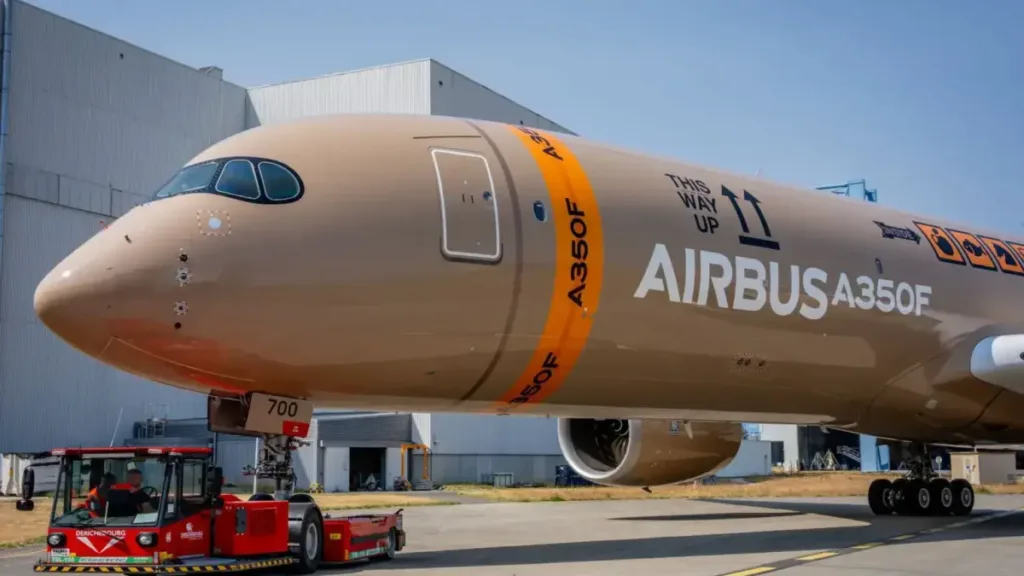
Airbus flew its A350F cargo aircraft for the first time from Toulouse on 29 September 2026, beginning a flight-test campaign for a freighter that had already secured 115 orders. The flight, lasting four hours and ten minutes, moves Airbus closer to challenging Boeing’s longstanding dominance of large twin-engined cargo aircraft.
The first test aircraft, MSN700, climbed to 25,000 feet as an Airbus crew assessed basic handling, airworthiness and systems performance. It was a first examination in the air, not a certification or a demonstration that the programme’s remaining technical challenges have been settled.
A350F starts its flight-test campaign
Airbus plans to use two aircraft for the programme. The first will concentrate on handling, performance and autopilot functions; the second, MSN701, was approaching the next stages of final assembly when the inaugural flight took place. The campaign is expected to last more than nine months and to encompass roughly 400 flight-test hours before certification.
For airline customers, the question now moves beyond whether the aircraft can fly. They need confidence in its payload, range, loading system, operational reliability and eventual delivery schedule.
115 orders before the first take-off
At the end of August, Airbus counted 115 A350F orders, including eight added that month for an undisclosed buyer. That commercial support is substantial for a freighter still in development. Cargo operators typically keep aircraft for many years, so choosing a new type is a decision about decades of fleet economics.
Airbus has attracted commitments from operators including Cathay Cargo, Air China Cargo, Korean Air and Atlas Air. Their orders give the programme a global customer base before certification, but they do not make delivery timing or operating costs certain.
What the A350F offers cargo airlines
The aircraft is designed for a maximum payload of 111 tonnes and a range of approximately 8,700 kilometres. It uses Rolls-Royce Trent XWB-97 engines and a fuselage adapted for large main-deck freight loads, with a sizeable cargo door towards the rear. Airbus says its lighter structure and modern engines should reduce fuel burn compared with older freighters of broadly similar capability.
Airbus’s figures are manufacturer’s performance claims that customers will scrutinise alongside real-world utilisation and maintenance experience. Loading speed, runway performance and flexibility across different markets can matter as much as the published headline specifications.
Boeing faces a new widebody freighter rival
The A350F is intended to compete with Boeing’s 777-8F and to replace older generations of widebody cargo aircraft. Boeing’s installed fleet and established customer relationships are formidable advantages. Airbus is betting that airlines renewing those fleets will see value in a new aircraft designed around the demands of contemporary global freight.
For now the most important change is chronological: an aircraft that was awaiting its first flight in early September has flown. The next story is whether Airbus can translate that start into a reliable certification and delivery programme.
Sources: Airbus, A350F maiden-flight announcement, 29 September 2026; Airbus A350F programme and August order figures; FlightGlobal reporting on pre-flight preparations. Related reading: Ethiopian Airlines’ order for Boeing 777 freighters, a separate investment in the cargo aircraft market.
Read next
JOIN THE CONVERSATION
Let’s discuss this story.
A question, a clarification or a different perspective? Share it with us.