
Ethiopian Airlines orders ten Boeing 777 freighters
Ethiopian Airlines has placed a firm order for eight Boeing 777-8 freighters and two current-generation 777Fs, combining near-term fleet growth with a long-term cargo strategy.
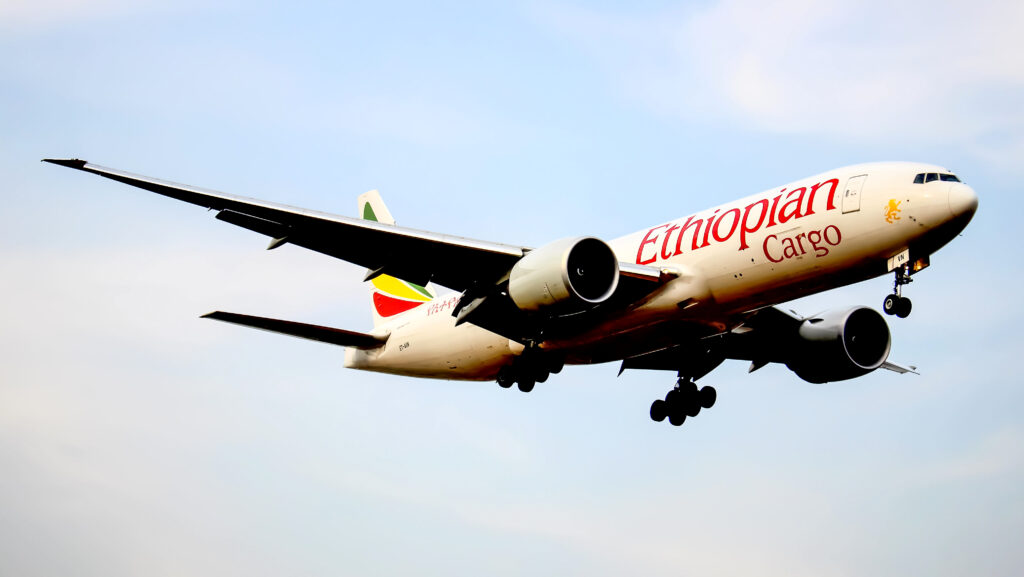
Ethiopian Airlines ordered ten Boeing widebody freighters on 30 September 2026, committing to eight next-generation 777-8Fs and two current-generation 777Fs as it expands Africa’s largest aviation cargo network. The agreement, announced with Boeing in Addis Ababa, turns an order that had been under discussion earlier in the month into a firm commitment.
The mix matters. The established 777F offers a way to add capacity sooner, while the newer 777-8F is intended to improve the economics of large intercontinental freight operations. The two aircraft types will not arrive on the same timetable, so the agreement is both an immediate fleet-planning decision and a bet on cargo demand well into the 2030s.
Eight 777-8Fs and two 777Fs
Boeing and Ethiopian Airlines confirmed the ten-aircraft order in statements issued on 30 September. Ethiopian becomes the first African customer for the 777-8 freighter. Chief executive Mesfin Tasew described the agreement as a further investment in the airline’s cargo business and global logistics network.
The airline’s plans also include options or purchase rights beyond the ten firm aircraft. Those potential additions must be distinguished from the order already placed.
Cargo capacity for Addis Ababa and Bishoftu
Ethiopian has built a freight network connecting African producers with markets in Europe, Asia, the Middle East and the Americas. Flowers, fresh produce, manufactured goods and time-sensitive shipments depend not only on aircraft range but on customs processes, temperature-controlled handling and dependable onward connections.
The wider strategy includes a new airport development at Bishoftu. That investment is intended to transform the scale of Ethiopia’s passenger and cargo operations over the next decade. New freighters can make use of a larger hub only if terminals, warehouse capacity, ground transport and schedules develop with them.
Why Boeing is supplying two generations at once
The current 777F is already widely used on long-range cargo routes. Its operational record and existing support network make it a practical addition for a carrier that needs capacity before the newest type enters service. The 777-8F, by contrast, promises improvements in payload and efficiency but remains tied to the certification and delivery timetable of the wider 777X family.
Signing for both therefore reduces the risk of relying on one future aircraft programme to meet all growth requirements. It does not remove the possibility of schedule changes or market downturns.
The order also reinforces Addis Ababa’s role as a cargo gateway rather than merely adding aircraft to Ethiopian’s fleet. Whether the investment pays off will depend on the traffic the airline can carry profitably and the reliability of the logistics chain around each flight.
Sources: Ethiopian Airlines corporate statement, 30 September 2026; Boeing commercial-aircraft announcement, 30 September 2026; Reuters reporting on the agreement and purchase rights. Related reading: Airbus A350F begins its flight-test campaign, the programme competing for future widebody freighter demand.
Read next
JOIN THE CONVERSATION
Let’s discuss this story.
A question, a clarification or a different perspective? Share it with us.