
Airbus A330 inspections widen after tools found in tailplanes
After an initial production-line discovery, Airbus extended A330 checks to delivered aircraft. A further policy is expected to be submitted to EASA in mid-November.
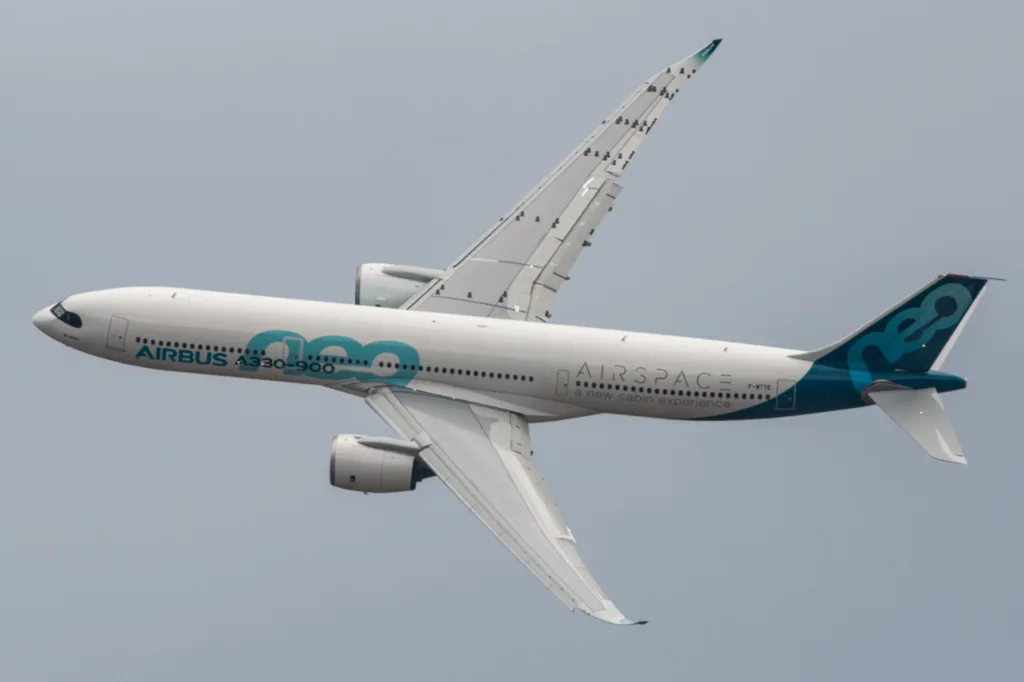
Airbus is widening A330 quality checks after tools were found inside horizontal tailplanes. An initial discovery reported in September disrupted summer deliveries. On 14 October, Aviation Week reported a further finding by a customer on a recently delivered aircraft. Airbus is due to present its proposed response to the European Union Aviation Safety Agency (EASA) by mid-November 2026.
The horizontal tailplane, at the rear of the aircraft, contributes to stability and pitch control. A tool left inside the structure is a manufacturing irregularity, but its implications depend on where it lies and whether it can move. The discovery alone does not establish that an aircraft is unsafe to operate.
Delivery disruption gives way to operator inspections
On 3 September, Reuters reported that a tool had been found during a pre-delivery inspection. Airbus confirmed what it called an isolated quality problem, saying it had identified the cause and taken corrective action. Additional checks contributed to a delivery slowdown: no A330neos were handed over in June or July, before deliveries resumed in August.
The response subsequently extended beyond the factory. On 2 October, Reuters reported that Airbus had advised operators to inspect previously delivered A330 aircraft produced between January 2021 and July 2026. Fleet figures cited in that report suggested a potential inspection population of approximately 160 aircraft, including around 15 military tanker and transport aircraft. That estimate does not mean tools had been found on 160 aircraft.
Airbus said aircraft then leaving production had already been inspected and could be delivered. For airlines operating the type, a recommendation to conduct checks is not the same as a fleet-wide grounding order.
A fuller policy expected in November
On 14 October, Aviation Week reported that a customer had discovered a tool inside the horizontal tailplane of a recently delivered A330. The issue therefore cannot be described solely as a pre-delivery finding. Publicly available information does not conclusively establish how all the reported discoveries relate to one another.
According to the trade publication, Airbus must submit a comprehensive policy addressing these production-quality concerns to EASA by mid-November. The precise implications for operators have yet to be established. The reporting does not indicate that regulators have ordered a blanket grounding.
In aviation, unwanted objects left inside an aircraft are commonly known as foreign object debris, or FOD. Depending on their location, a forgotten tool or loose part can remain stationary, damage equipment or interfere with a mechanism. Manufacturers and maintenance organisations therefore employ tool-accountability systems and inspections before enclosed structures are closed.
The evidence does not establish an inherent A330neo design flaw. Rather, the case raises questions about manufacturing traceability and the effectiveness of final inspections. For airlines, the practical task will be to identify which aircraft require checks, what those inspections involve and how they can be incorporated into maintenance schedules.
For context, AeroSillage has covered a separate manufacturing-quality issue affecting A321neo aircraft.

JOIN THE CONVERSATION
Let’s discuss this story.
A question, a clarification or a different perspective? Share it with us.