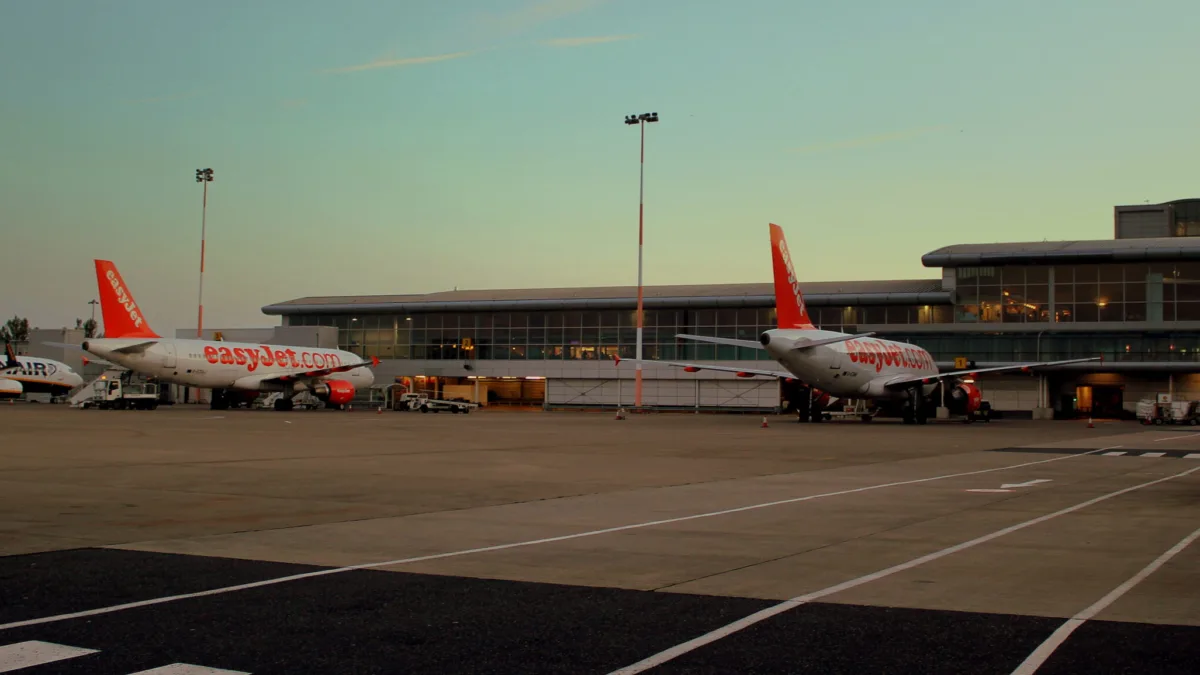
Europe’s airline market is entering a new phase of concentration. Within months, several major ownership moves have approached decisive points: Apollo has made a recommended offer for easyJet, Air France-KLM is seeking control of SAS and remains in the running for TAP Air Portugal, while Lufthansa is preparing to increase its stake in ITA Airways from 41% to 90%.
Each transaction has its own logic. Taken together, they point toward a deeper change: fewer truly independent network airlines and a larger role for groups able to control hubs, loyalty ecosystems, airport slots and capital investment.
This analysis reflects the verified position as of September 8, 2026. Transactions that were not yet completed are described as conditional.
Four transactions reshaping Europe’s balance of power
easyJet / Apollo: on August 6, easyJet’s board recommended an Apollo offer valuing the airline at around £5.7 billion. The transaction was not yet fully completed and remained subject to the UK takeover process and other conditions.
Air France-KLM / SAS: Air France-KLM already owned 19.9% of SAS and had started the process of increasing its stake to 60.5% by buying out Castlelake and Lind Invest, subject to approvals and other conditions.
Lufthansa / ITA Airways: Lufthansa held 41% of ITA and had exercised its option to acquire another 49% for €325 million, which would take its stake to 90% if the transaction clears the required regulatory steps.
TAP Air Portugal: Portugal had invited Air France-KLM and Lufthansa to improve their final offers for up to 44.9% of TAP after judging the two bids too close to choose between them immediately.
TAP is strategically valuable because Lisbon is exceptionally well positioned for traffic between Europe, Brazil, North America and Lusophone Africa.
Air France-KLM has presented Lisbon as a potential southern-European pillar that could complement Paris-CDG, Amsterdam-Schiphol and, through SAS, Copenhagen.
Lufthansa’s geography is different but equally clear: Frankfurt, Munich, Zurich, Vienna and Brussels already form a broad central-European system; ITA strengthens Rome-Fiumicino, and TAP would add a major Atlantic gateway on the western side of the Iberian Peninsula.
Why the major groups want scale while Ryanair plays a different game
Scale produces concrete advantages in aviation.
A larger group can spread aircraft purchases over a broader fleet, negotiate common contracts, combine selected back-office functions, coordinate schedules and feed hubs with more connecting traffic.
That matters especially on long haul. An intercontinental route is easier to fill when many short- and medium-haul services feed the same airport.
Consolidation is also a response to a more expensive environment: aircraft renewal, fuel, labour, maintenance, environmental regulation and constrained airports all require capital that is easier for a large group to absorb than for a standalone medium-sized airline.
Ryanair shows that scale does not require buying network airlines.
The group carried 208.4 million passengers in its 2026 financial year and ended the year with 647 aircraft, according to its annual report.
Its power comes from very low unit costs, a highly standardised fleet and a point-to-point network that can move capacity quickly between markets.
That makes Europe’s consolidation paradoxical: while traditional groups become more powerful around hubs, Ryanair remains a large independent counterweight on short- and medium-haul pricing.
easyJet is also primarily point-to-point, but unlike Ryanair it holds strong positions at several capacity-constrained primary airports.
That makes its slot portfolio especially valuable. The Apollo offer is therefore about more than aircraft and revenue: easyJet’s bases, airport positions, brand and easyJet holidays business are strategic assets in their own right.
For passengers: more network, but how much competition?
Consolidation is not automatically bad for travellers.
Integrated networks can create easier connections, more destinations on one ticket, broader loyalty benefits and stronger investment in fleets, lounges, apps and onboard products.
But the opposite risk exists when two previously competing airlines come under common control. Fewer alternatives can weaken price pressure or reduce choice on specific routes.
That is why the European Commission examines airline consolidation not only by total group size but route by route.
Brussels remains the arbiter of consolidation
The Lufthansa–ITA transaction provides a useful example.
When the European Commission reviewed Lufthansa’s investment, it identified competition concerns on selected short-haul routes between Italy and Central Europe, on some long-haul markets and at Milan-Linate.
Approval therefore came with remedies intended to preserve competition, including access for rivals on certain routes and measures involving airport slots and commercial agreements.
This does not predict the outcome of SAS or TAP, but it shows the method: regulators focus on markets where losing an independent competitor could materially reduce passenger choice.
If Air France-KLM completes majority control of SAS and also wins TAP, it would have strong positions in France, the Netherlands, Scandinavia and Portugal, with different gateways toward North America, Latin America, Africa and Asia.
If Lufthansa wins TAP while moving to 90% of ITA, its portfolio of national brands would become even broader: Lufthansa, SWISS, Austrian Airlines, Brussels Airlines and ITA, alongside other group activities such as Eurowings.
That still would not create a duopoly. IAG remains powerful, Ryanair is enormous, and carriers such as Wizz Air, Jet2 and Norwegian continue to matter. The real change is that the space for medium-sized independent network airlines is getting smaller.
easyJet under Apollo remains the most unusual case
Apollo is not an airline competitor. The transaction would not immediately merge two route networks.
Instead, a major listed carrier would move toward private ownership under an asset manager. That could give easyJet more investment flexibility, but it also raises questions about financing, governance and European ownership-and-control rules for airlines.
2026 is a turning point, not the end of the story
Several of the biggest transactions were still incomplete on September 8. TAP had not chosen a partner. Air France-KLM’s SAS control remained conditional. Lufthansa still had steps to complete before reaching 90% of ITA. Apollo’s easyJet offer also remained in process.
But the direction is increasingly clear: Europe’s largest groups are seeking more scale, more hubs and more control over strategic markets, while the strongest low-cost airlines continue to grow independently and keep pressure on prices.
The central question for the end of the decade is therefore not simply who buys whom, but how many genuinely independent decision centres will remain: and whether stronger airline groups can coexist with enough competition to preserve real choice for passengers.
Main sources
Portuguese government; Air France-KLM; Lufthansa Group; easyJet investor documentation; Ryanair annual report; European Commission competition decisions.
Leave a Reply