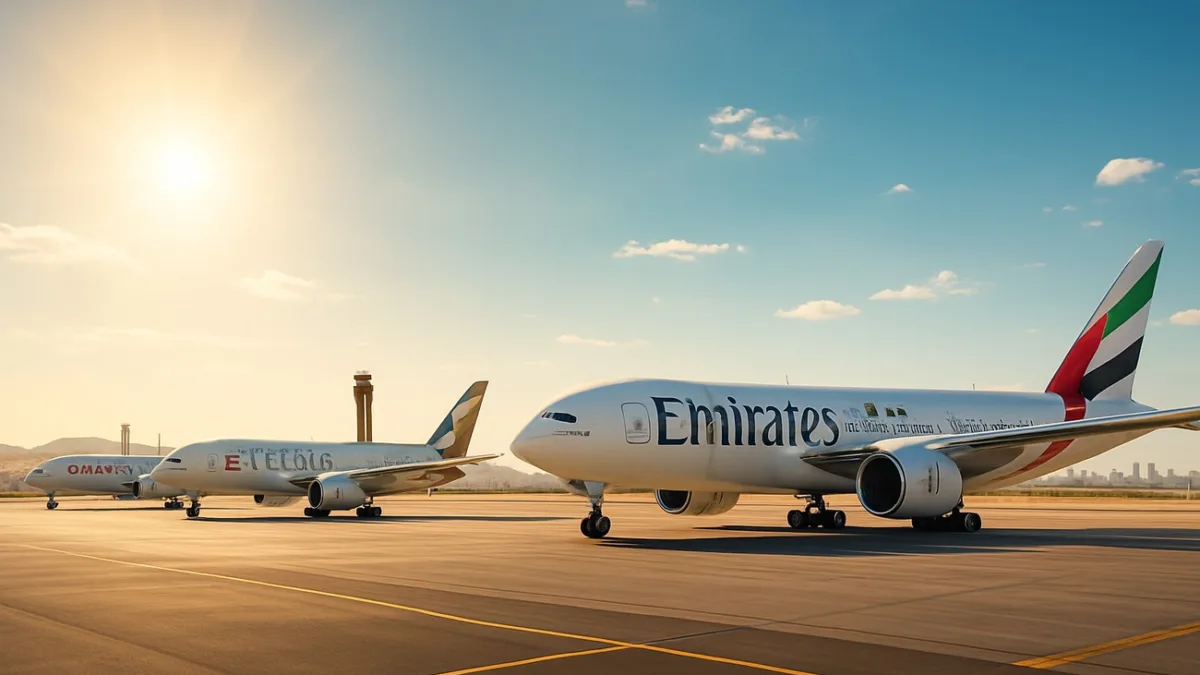
September 2026 capacity data show that Gulf aviation is not moving as one market: Dubai is down sharply, Abu Dhabi is expanding and Doha is rebuilding. That divergence matters more than the regional headline of roughly 36 million seats, down 3.7% year on year.
Dubai’s weakness is the biggest swing factor
Dubai International remains the region’s largest airport, but scheduled seats are more than 15% below September 2025. Emirates is also down around 10% year on year.
Because Dubai is so large, its decline pulls the entire regional average lower even while competitors grow.
Abu Dhabi is gaining while others recover
Etihad’s capacity is up more than 11%, reflecting route launches and a more focused growth strategy. Abu Dhabi is therefore using the disruption period to gain relative market share.
Doha is rebuilding connectivity
Qatar Airways has restored more of its network and continues investing in product and connectivity, including Starlink. The key question is how quickly frequencies return to pre-disruption levels.
Airspace risk remains the common constraint
All three hubs remain exposed to rerouting, longer flight times and higher fuel burn when regional airspace restrictions tighten. That affects aircraft utilisation and the economics of Europe–Asia connections.
What global travellers should watch
Schedule reliability, connection times and fare competition between Dubai, Doha and Abu Dhabi may matter more than total regional capacity in the coming months.
AeroSillage view: Gulf aviation is not shrinking structurally; it is redistributing momentum between hubs while geopolitical risk temporarily changes the competitive balance.
Related: Qatar Airways reshapes its fleet and staffing.
Sources
OAG September 2026 capacity data; EASA; Qatar Airways; Reuters.
Leave a Reply