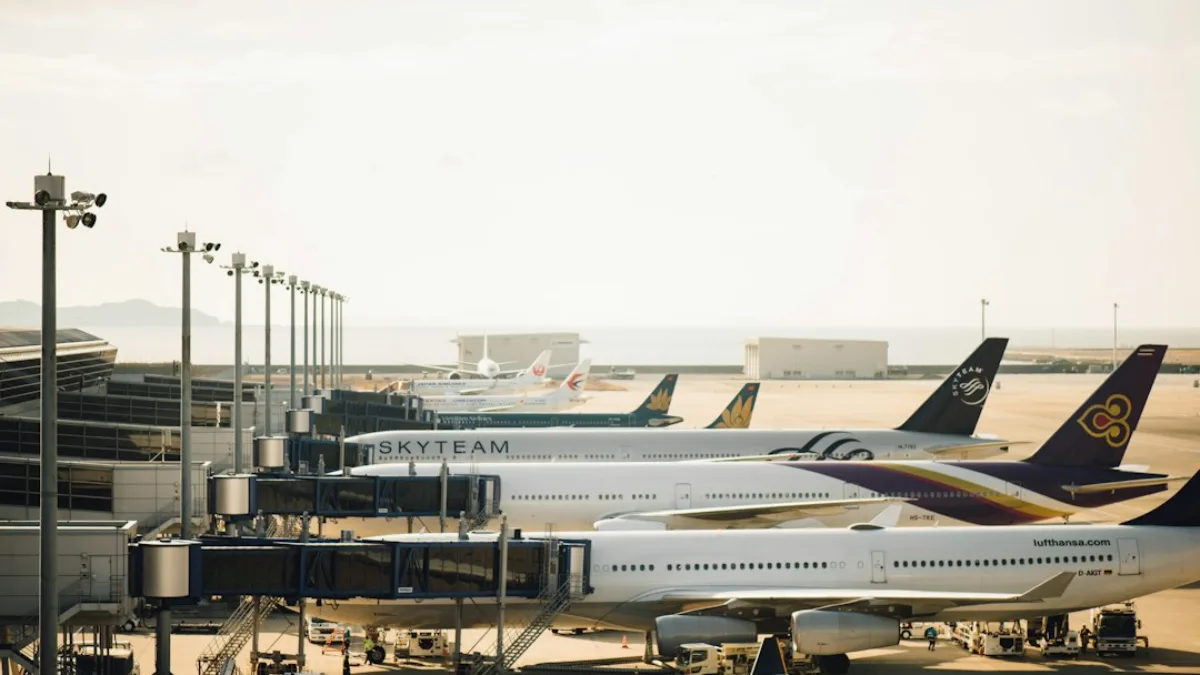
Europe’s airline landscape could look very different by the end of the decade. The market remains much more fragmented than the United States, but consolidation is accelerating as large groups expand, medium-sized airlines face rising costs and several historic carriers move toward new ownership structures.
Three situations need to be separated: airlines already undergoing a change of control, carriers formally seeking investors, and airlines that are merely vulnerable. “Disappearance” also does not necessarily mean a brand vanishes: European airline groups often preserve valuable names after taking control.
Why European consolidation is accelerating
US aviation consolidated heavily after the 2008 financial crisis through combinations such as Delta–Northwest, United–Continental and American–US Airways.
Europe still combines Lufthansa Group, Air France-KLM, IAG and Ryanair with numerous national, low-cost and regional airlines. That diversity supports competition, but it also leaves some carriers less able to absorb shocks such as expensive fuel, grounded engines, higher financing costs or closed airspace.
Reuters argued in September 2026 that Europe is moving gradually toward a more rationalised airline structure with greater concentration and slower capacity growth.
ITA, SAS and TAP are redrawing Europe’s major groups
Lufthansa already held 41% of ITA Airways and in 2026 exercised its option to increase the stake to 90%. The additional transaction, valued at around €325 million, remained subject to regulatory approvals and was expected to close in the first quarter of 2027.
ITA is already being integrated into Lufthansa Group in multiple areas. Its brand can survive, but its strategic independence is clearly shrinking.
Air France-KLM, already a 19.9% shareholder, started the process of increasing its stake to 60.5% by acquiring shares held by Castlelake and Lind Invest, subject to approvals.
The Danish state would retain 26.4%. SAS has strong Scandinavian brand value and a useful network, so control by Air France-KLM would not imply that the SAS name disappears. It would, however, mark the end of a fully independent SAS strategy.
TAP is one of the most strategic cases. Portugal is seeking to sell a minority stake of roughly 45–49.9%, with Air France-KLM and Lufthansa both submitting binding offers.
Lisbon asked the two groups to improve their proposals in early September. TAP is attractive because of its Lisbon hub, airport slots and strong network to Brazil, Lusophone Africa and North America.
TAP is therefore not facing disappearance. It is being courted. But if Portugal later sells more of its remaining holding, the airline could move progressively into the orbit of one of Europe’s large groups.
airBaltic, Norse and easyJet face different kinds of vulnerability
airBaltic faces a different problem: short-term financing pressure rather than an already agreed takeover.
Fitch estimated that the Latvian airline needed about €156 million in near-term financing to continue operating normally, while airBaltic was seeking up to €257 million of new debt and creditor support.
The airline has been hit by Pratt & Whitney engine-related groundings, high financing costs, geopolitical disruption and fuel pressure. Lufthansa is already a shareholder, while the Latvian state remains the majority owner.
Recapitalisation, a new investor, a smaller fleet or deeper integration are plausible scenarios. Predicting the airline’s disappearance would still be premature.
Norse Atlantic continues to adjust its Boeing 787 strategy between scheduled long-haul flying and leasing or ACMI work.
In July 2026 the airline said its ACMI cooperation with IndiGo would end on November 1 and announced a strategic review. The return of aircraft gives Norse more capacity but also revives the question of how to deploy it profitably.
No major takeover was confirmed in the source period, but Norse remains a useful example of the structural difficulty of long-haul low-cost economics.
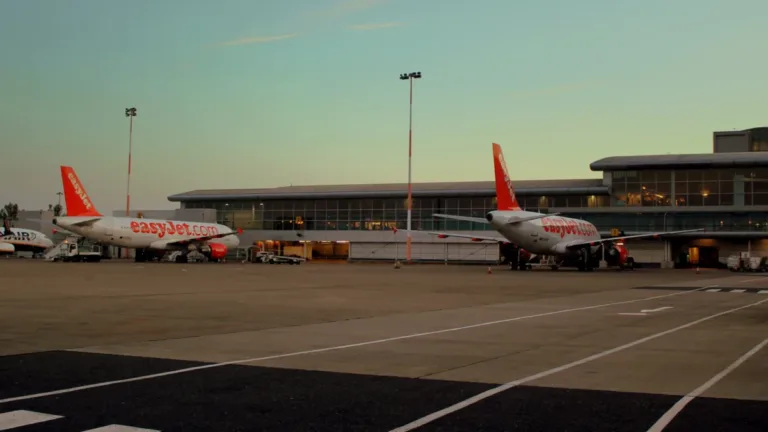
Consolidation is no longer driven only by airline groups. According to Reuters, Apollo Global Management completed the acquisition of easyJet in 2026 for around £5.7 billion.
The case illustrates a different path: a large financial investor can take control of a carrier with valuable slots, brand equity and a major network without folding it into another airline.
The easyJet brand is therefore not the part likely to disappear; it is one of the assets that makes the business valuable.
Why medium-sized national airlines are most exposed
Fleet renewal, decarbonisation investment, volatile fuel, expensive financing and airport constraints all reward scale.
The most vulnerable carriers are not necessarily the smallest. They are often airlines with strategically useful networks but insufficient financial depth to absorb several difficult years independently.
Lufthansa kept SWISS, Austrian and Brussels Airlines. IAG operates British Airways, Iberia, Aer Lingus, Vueling and LEVEL. Air France and KLM remain distinct brands more than two decades after combining.
The likely European future is therefore not four or five airline logos. It is a large number of brands increasingly controlled by a smaller number of corporate groups.
What consolidation could change for passengers
There are benefits: a stronger owner can stabilise an airline financially, improve connections and provide access to wider loyalty and network ecosystems.
But fewer independent competitors can also reduce price pressure. Two airlines that once competed head-to-head may eventually sit under common ownership.
That is why European competition authorities often demand remedies such as slot releases, route access for rivals or other guarantees when airline mergers are approved.
The dossiers to watch through 2030 and Europe’s new balance
ITA Airways: Lufthansa’s path toward 90% control.
SAS: Air France-KLM’s proposed 60.5% controlling stake.
TAP Air Portugal: a strategic privatisation contested by Lufthansa and Air France-KLM.
airBaltic: urgent financing needs and possible shareholder restructuring.
Norse Atlantic: strategic review and a business model still evolving.
Ryanair chief Michael O’Leary has long argued that Europe will eventually look more like the concentrated US market.
That outcome is not complete, but 2026 makes it more plausible: Lufthansa is expanding in Italy and pursuing Portugal; Air France-KLM is advancing in Scandinavia and also wants TAP; IAG remains a natural participant in future consolidation; Ryanair continues to expand without needing to buy a network carrier.
The question is no longer whether European airline consolidation will continue, but how far it will go: and how many airlines will still retain genuine strategic independence by 2030.
Main sources
Reuters on European airline consolidation, airBaltic and TAP; Air France-KLM on SAS; Lufthansa Group on ITA Airways; Norse Atlantic corporate communications.
Leave a Reply