
Why US regulators fined Air France and KLM over Delta-coded Iraq flights
The US Department of Transportation imposed $425,000 in penalties on Air France and KLM for Delta-coded flights below restricted altitudes in Iraqi airspace.
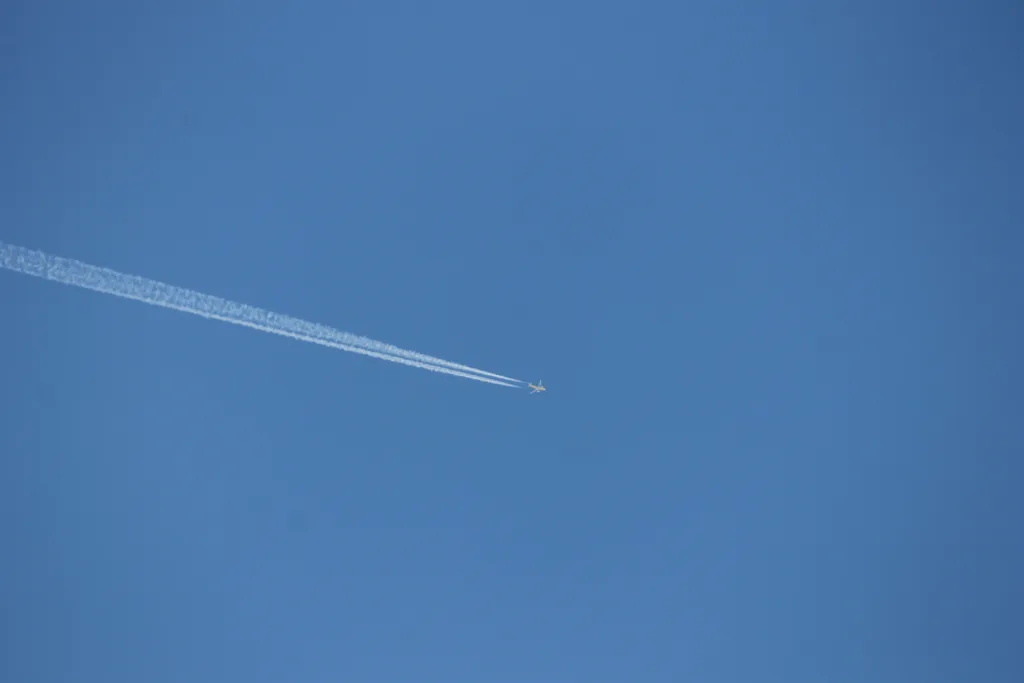
A flight operated by a European airline can still fall under US restrictions when it carries an American partner’s flight code. That distinction is central to $425,000 in penalties imposed on Air France and KLM over services crossing Iraq. Announcing the action on 23 October 2026, Washington said the carriers had operated more than 130 flights below the altitude permitted by US aviation restrictions between 2022 and 2025. The dispute is not simply about how low the aircraft flew. The airlines say Iraqi controllers directed the crews to those altitudes; US regulators argue the carriers should have changed their operations when the problem became recurring.
The US Department of Transportation (DOT) assessed $105,000 against Air France and $320,000 against KLM. Air France operated more than 30 Delta-coded flights through the affected Baghdad Flight Information Region between April 2022 and November 2025. KLM operated more than 100 between January 2022 and May 2025. The flights were below Flight Level 320, approximately 32,000 feet or 9,750 metres.
How Delta’s flight code brought US rules into play
The regulatory link is codesharing. One airline operates the aircraft while another markets seats under its own flight number. A passenger may therefore buy a Delta-coded service that is actually flown by an Air France or KLM crew and aircraft. The penalties do not mean Delta operated the flights in question.
US authorisations for these arrangements prohibit foreign operating airlines from carrying a US airline’s code through airspace where the Federal Aviation Administration bans US flight operations. Under the FAA’s special rule SFAR 77, US operators have been prohibited from flying in the Baghdad region below FL320 because of risks associated with conflict, armed activity and regional tensions. The restriction has been extended through 26 October 2027.
This is an important distinction: the DOT is not claiming that every foreign airline flight over Iraq was prohibited under US law. The alleged violations arose because the flights passed below the US altitude limit while displaying Delta’s code. That breached conditions attached to the carriers’ US codeshare authority and, in the DOT’s view, amounted to operating without the required economic authorisation.
The airlines say local air traffic control left little choice
In the official Air France and KLM consent orders, both airlines set out a similar defence. They say the affected services were planned at or above FL320, but Iraqi air traffic controllers instructed crews to descend or would not clear them to climb because of other traffic. According to the carriers, pilots complied with those instructions and returned to higher levels as soon as clearance was granted.
The airlines argue that refusing an air traffic control instruction could itself create a safety risk, so the flights should fall within an emergency exception to the FAA rule. They also state that passengers and crew were not adversely affected. Those are the airlines’ positions as recorded in the settlements, rather than independent findings about every individual flight.
The DOT disagrees. Crucially, the orders make clear that the enforcement action does not punish flight crews for obeying controllers while airborne. The regulator’s criticism is directed at the airlines’ operational planning. After repeated descents over several years, the carriers knew or should have known that traffic conditions might bring flights below FL320. Washington says they could have rerouted those services or removed the Delta code.
The DOT distinguishes a pilot’s decision to comply with local air traffic control instructions from the airline’s earlier responsibility to plan a permitted codeshare route.
Only $265,000 is immediately payable
Although the announced penalties total $425,000, the full amount is not due now. The orders require Air France to pay $65,000 and KLM $200,000 within 60 days. The remaining $160,000, split into $40,000 for Air France and $120,000 for KLM, becomes payable if the respective carrier breaches the terms of its order during the following year. Both are directed to cease similar violations.
The airlines agreed to these administrative consent orders to resolve the cases without litigation. Served on 23 October, they are due to become final ten days later unless a timely petition for review is submitted or the department initiates review. The orders do not ban Air France or KLM from operating flights to the United States.
The broader risk over Iraq is also evolving. The European Union Aviation Safety Agency currently advises operators within the scope of its conflict-zone bulletin to avoid the Baghdad FIR at all altitudes. That contemporary European recommendation is separate from the specific US FL320 restriction underlying the historical violations.
For both airlines, the practical issue now reaches beyond the fines: whenever a flight carries a US partner’s code, the route, planned altitude and conditions of that codeshare approval must fit together before the aircraft departs. That is the compliance gap the DOT says persisted for years.
Sources: US Department of Transportation, 23 October 2026; Air France consent order 2026-10-9; KLM consent order 2026-10-10; EASA conflict-zone bulletin on Iraq.
Read next
JOIN THE CONVERSATION
Let’s discuss this story.
A question, a clarification or a different perspective? Share it with us.