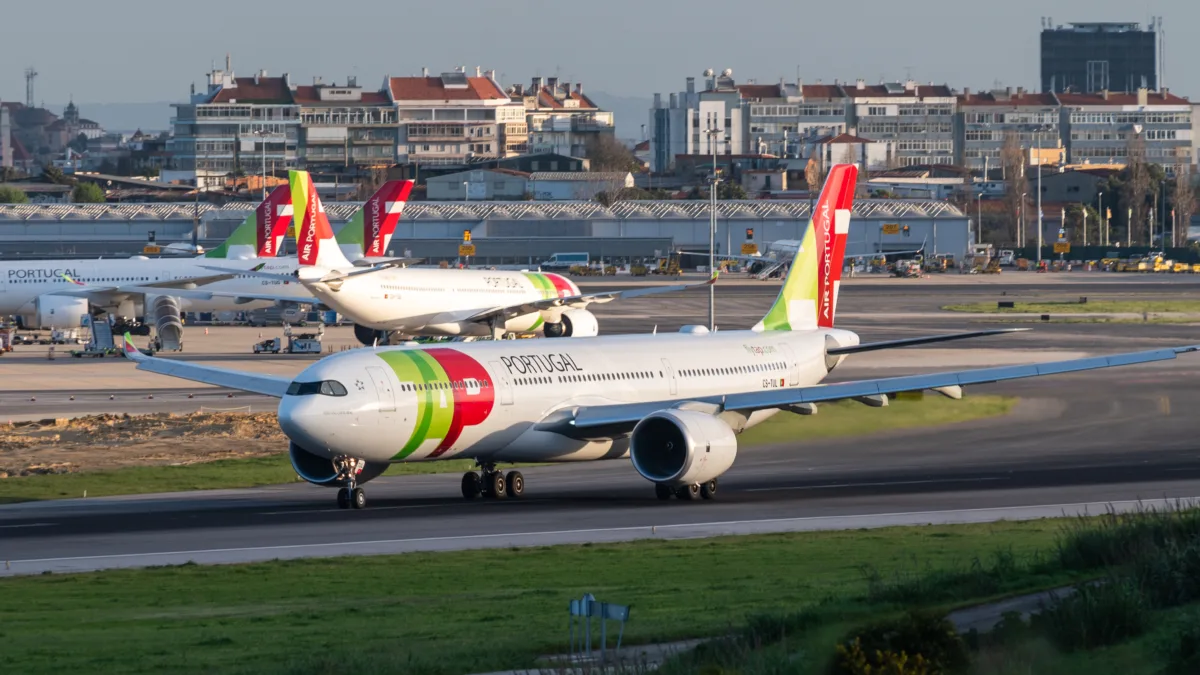
A major shift in European aviation: Portugal has selected Lufthansa to acquire a 44.9% stake in TAP Air Portugal, defeating Air France-KLM after a months-long contest for strategic control and influence. Announced on Wednesday, 14 October 2026, the Portuguese government expects €1.201 billion from the sale of a stake of up to 49.9%, beginning with 44.9% allocated to Lufthansa. The German financial bid is 16% higher than its rival’s. The decision is politically and commercially decisive, but completion still depends on regulatory clearance.
The repercussions extend well beyond Portugal. TAP’s network offers extensive access to Brazil, Portuguese-speaking Africa and North America. For Lufthansa, an investment in the airline would complement a European portfolio that already includes SWISS, Austrian Airlines, Brussels Airlines and ITA Airways, while strengthening its exposure to South Atlantic traffic.
Why Portugal chose Lufthansa over Air France-KLM
Prime Minister Luís Montenegro announced the result following a cabinet meeting. Price was central, but the government also highlighted the clarity of the proposal and the industrial assurances behind it. The German group’s package addresses fleet growth, employment, investment and TAP’s role in connecting Portugal with global markets. A premium of 16% over the competing offer nonetheless represented a significant advantage for the selling state.
Lufthansa and Air France-KLM had both improved their final proposals after negotiations. The Franco-Dutch group viewed TAP as a way to deepen its transatlantic presence; Lisbon ultimately preferred a different route to consolidation. Comparing the bids involves more than their headline price, however. Industrial commitments, financing conditions and contractual protections are also material to the long-term value of the agreement, and will need scrutiny once the full terms are available.
The Portuguese state will initially retain majority ownership. Another 5% of TAP has been reserved for employees, and the winning investor may be able to purchase shares not taken up by staff under the privatisation mechanism. This is a conditional partial privatisation, not an immediate full takeover or merger of the airlines.
A fleet of 117 aircraft by 2035: the scale of the industrial promise
The growth plan presented by the Portuguese authorities envisages 117 aircraft by 2035, increasing to 130 later. It also contemplates the introduction of up to eight Airbus A350-900s from 2030. These figures should be described as planned commitments rather than firm aircraft orders already placed with Airbus. Their execution will depend on business performance, aircraft availability and the capacity of airport infrastructure.
Infrastructure and employment are equally important. The authorities have referred to 3,000 jobs associated with TAP’s projected expansion and a total of 5,500 direct and indirect jobs linked to the proposed investments. Those are prospective effects, not jobs already created on the date of the announcement. Delivery will depend on investment decisions and the timing of the wider transaction.
Lisbon’s planned new airport is a key variable. An airline cannot expand indefinitely merely by allocating more aircraft: it needs runway access, terminal capacity, gates and reliable onward connections. The proposal also highlights investment in Porto, Faro and Portugal’s autonomous regions, reflecting an important political concern. The government wants national connectivity benefits rather than an outcome focused solely on Lisbon.
The Portuguese government’s selection marks a major stage in the privatisation process, not the completed transfer of shares. Regulatory review may examine competition, network links and airport access before closing. Travellers should not assume that tickets, alliance benefits or schedules change immediately simply because a preferred buyer has been named.
Selection by the Portuguese government does not mean the share transfer has already closed. Regulatory review and final transaction terms remain material, and anticipated network benefits should not be described as completed integration. TAP’s longer-term position will depend on delivered investment, Lisbon’s role in the combined network and whether employment commitments are honoured.
Brazil, Africa and airline alliances: the strategic prize behind the price
TAP’s true strategic value is not simply its fleet size. Lisbon is a major gateway to Brazil, while the airline has established links with Angola, Mozambique and other Lusophone markets. Such networks are difficult to replicate quickly. They are sustained by long-standing travel patterns, family links, business relationships and connecting traffic built over many years.
TAP is already a member of Star Alliance, as is Lufthansa. That existing relationship may make continued alliance participation and future commercial cooperation easier, including codeshare arrangements, connections and loyalty programmes. An Air France-KLM win would have posed a different strategic question involving the competing airline group and alliance structure. Nevertheless, the 14 October announcement does not automatically change passengers’ tickets, loyalty benefits or scheduled flights.
Competition authorities will have to examine where combining networks might reduce passenger choice, particularly on journeys that depend on connections through Lufthansa Group hubs. Possible remedies can include airport access or slot commitments, depending on the findings. None should be presented as already agreed. Network integration can create benefits for passengers, but regulators must also assess whether the resulting market power could weaken competition.
Why the deal is not yet complete
The government’s selection of Lufthansa and the announced price do not mean that the stake has legally transferred at once. The parties must complete their contractual process and obtain required competition approvals. Portuguese officials have indicated that completion could take 18 to 24 months, potentially extending into 2028. A chosen buyer and a closed transaction are two different stages.
TAP faces the same structural pressures as many airlines: fuel costs, capital investment requirements, aircraft availability and fluctuating demand. Its modest reported net profit for 2025, despite the commercial value of its route network, illustrates that strategic appeal does not eliminate financial risk. Lufthansa also has to balance TAP’s integration with work already under way elsewhere in the group, including ITA Airways.
For Air France-KLM, the decision is a setback in its European expansion ambitions, not an immediate change to its existing flights. For TAP, a large airline shareholder may bring scale, distribution and investment, while raising questions about decision-making autonomy, employment and the future balance between Lisbon and other airports. The meaningful test will be whether promised capacity, routes and jobs materialise after regulators have completed their review.
Sources: Reuters, 14 October 2026; Associated Press, 14 October; Financial Times, 14 October; Portuguese government statements reported by Euronews.
Leave a Reply