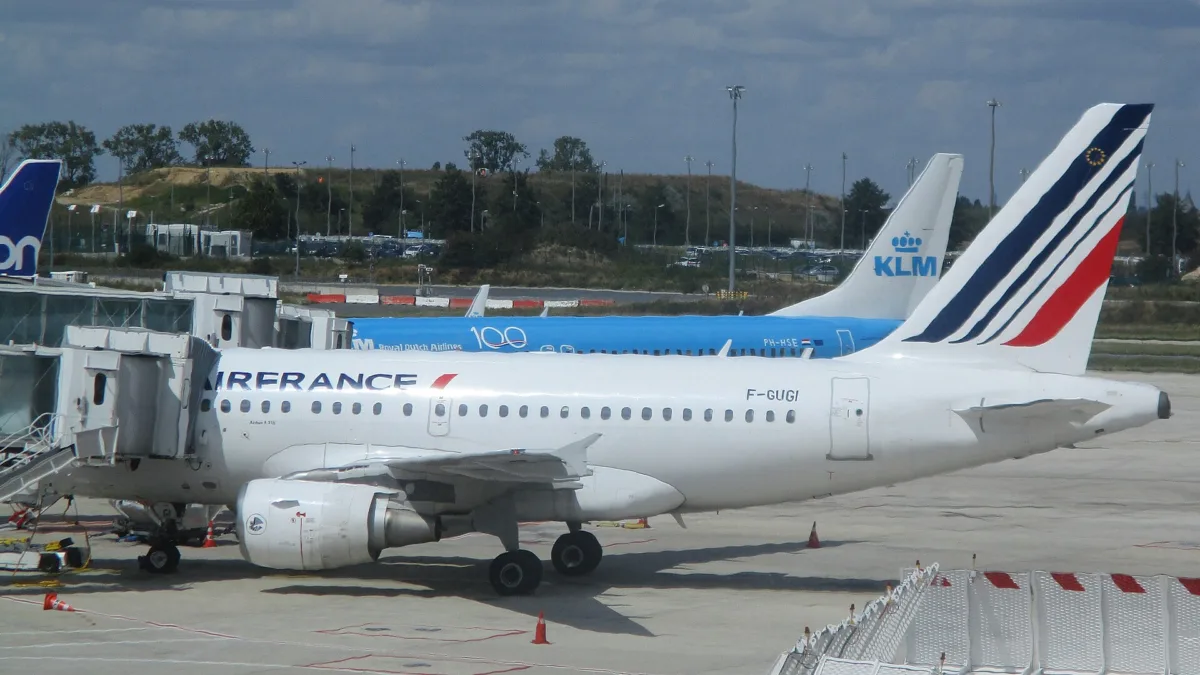
Air France-KLM says its operations generate nearly €114 billion in annual economic benefits across the European Union and support more than 1.2 million jobs. Published on October 6, 2026, the findings illustrate the reach of the airline group beyond its own aircraft and workforce. But the figures describe an estimated economic footprint, not company revenue or the number of people directly employed by Air France-KLM.
The assessment, carried out under the direction of Professor Herbert Castéran of Institut Mines-Télécom Business School, is the fourth edition of the group’s socioeconomic impact study and the first to provide an EU-wide measurement. Its scope encompasses passenger airlines, cargo and aircraft maintenance, together with spending and commercial activity generated around those businesses. The group says it carried 103 million passengers and 917,000 tonnes of freight in 2025; those activity figures help explain the breadth of the economic ecosystem, without constituting a separate measure of its net benefit.
Why €114 billion is not airline revenue
Air France-KLM reported consolidated revenue of €33 billion in 2025, far below the new footprint estimate. The gap is not a contradiction: the study is looking at an entirely different measure. Its direct category includes employee pay and procurement; indirect effects encompass passenger spending and airport-related economic activity; induced effects follow further rounds of spending; and catalytic effects relate to the attractiveness of destinations linked by the airline’s network.
The group equates the overall footprint to about 0.6% of EU GDP. Such a comparison conveys scale, not a straightforward claim that the economy would shrink by exactly that amount without the carrier. Some journeys, supplier contracts and spending would likely shift to competitors or alternative activities. A footprint study is not automatically a net-cost-benefit assessment or a credible counterfactual about what would happen if one airline group ceased operating.
The employment number requires equal care. More than 1.2 million refers to direct, indirect and induced jobs supported, expressed as full-time equivalents. The group’s own direct workforce was approximately 80,000 employees in 2025. Conflating those two figures would substantially exaggerate its payroll.
France and the Netherlands anchor the European picture
The largest national results reflect the group’s two home markets. In France, Air France-KLM estimates €52.2 billion in annual economic benefits and close to 550,000 supported jobs, equivalent to 1.8% of national GDP. Within that total, the Île-de-France region accounts for €27.2 billion and around 250,000 full-time-equivalent jobs. Paris Charles de Gaulle’s long-haul hub, operations at Paris Orly and maintenance facilities form important parts of this ecosystem.
In the Netherlands, the estimate reaches €29.1 billion and almost 300,000 supported jobs. Amsterdam Schiphol is central to KLM’s connecting traffic and associated commercial activity. The study also reports economic links to markets beyond the group’s home countries, including more than €1.3 billion in Portugal and a combined €2.3 billion in Denmark and Sweden.
This broader footprint is a plausible consequence of a hub airline’s cross-border network: tourists spend away from airports, freight moves through logistics chains, and maintenance contracts involve specialised suppliers. None of that means the reported impacts are an independent measure of the group’s net contribution after all costs.
Economic-impact estimates typically combine direct activity with indirect and induced effects under a defined methodology. Jobs said to be ‘supported’ are therefore not equivalent to employees on the group’s payroll or positions newly created. The assumptions, geographic boundaries and treatment of overlapping economic activity matter when evaluating the headline numbers.
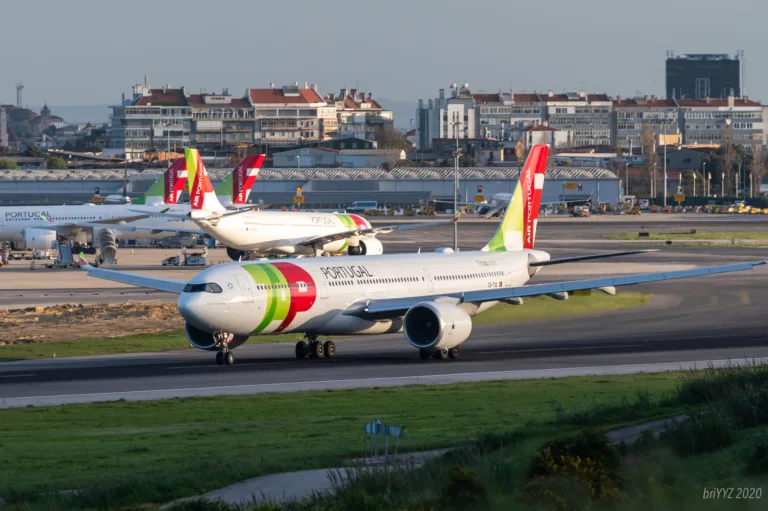
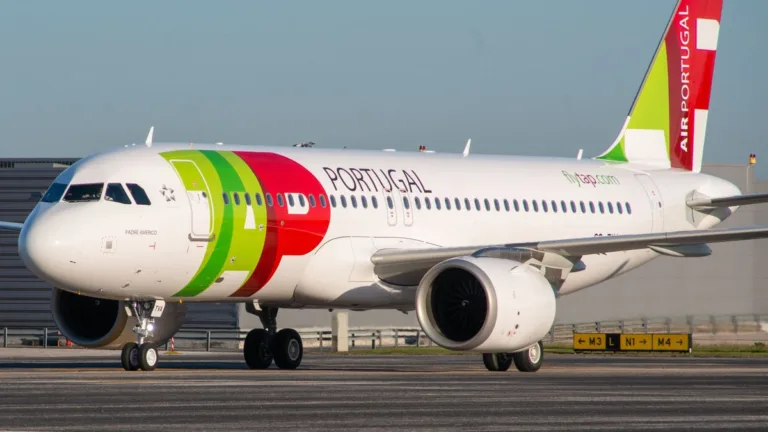
Economic scale also informs the group’s investment choices, but cannot by itself predict the outcome of a particular deal. For a separate, recent development, see the Portuguese government’s decision to select Lufthansa, rather than Air France-KLM, for a stake in TAP.
What the study establishes, and what remains untested
By separating direct, indirect, induced and catalytic impacts, the researchers attempt to capture several layers of economic activity. The estimates nevertheless depend on assumptions about multipliers, supplier spending, passenger expenditure and the share of regional attractiveness attributable to air connectivity. The group’s public announcement does not itself provide an independent counter-analysis of each assumption.
The findings were published by Air France-KLM as it pursues a wider European strategy. Academic oversight is relevant, but it does not turn a company-published impact assessment into an uncontested measure of economic welfare. Environmental effects, noise, public policy trade-offs and potential substitution by other carriers deserve separate analysis before treating the headline total as a net social benefit.
The findings are most useful as a map of commercial relationships extending far beyond airline employees. For travellers, policymakers and airports alike, the next question is how much of that activity is genuinely additional, how much would be displaced elsewhere and how benefits compare with external costs.
Sources: Air France-KLM’s October 6, 2026 EU impact study and methodology; group financial information. Important distinction: estimated jobs supported across the economy are not the same as the group’s direct workforce.
Archive photograph from Paris Charles de Gaulle Airport in 2019: Air France and KLM aircraft. Sidowpknbkhihj / Wikimedia Commons, CC BY-SA 3.0.
_and_KLM_B737-8K2_(PH-HSE)_at_Paris-Charles_de_Gaulle_Airport.jpg)
Leave a Reply