
Portugal selects Lufthansa for TAP after bidding contest
Portugal chose Lufthansa as the preferred buyer of a 44.9% stake in TAP on 14 October 2026. The airline has not yet changed ownership through the transaction.
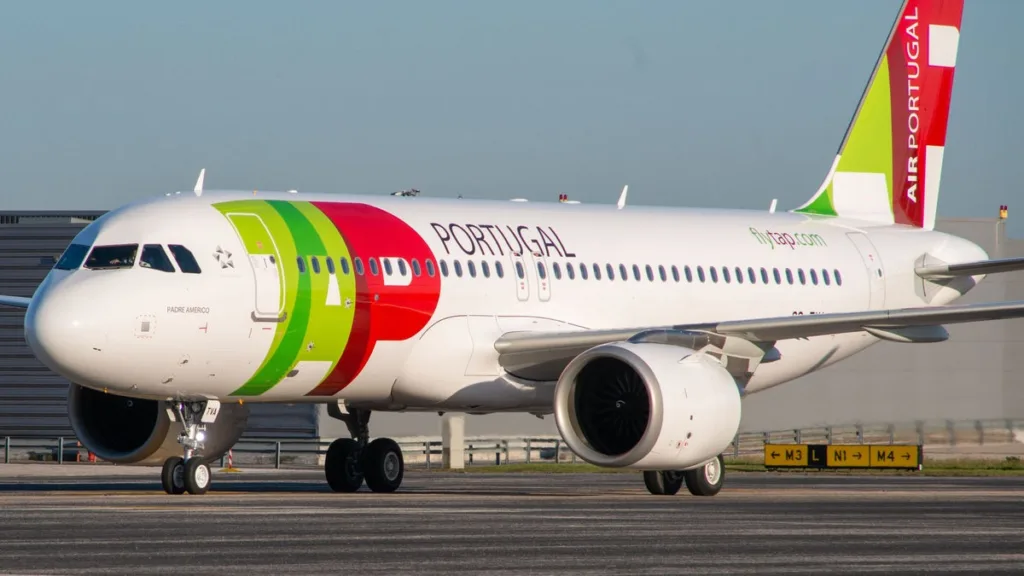
Portugal selected Lufthansa on 14 October 2026 as the preferred purchaser of a 44.9% stake in TAP Air Portugal, ending the competition with Air France-KLM but not completing the sale.
Portugal’s Council of Ministers chose Lufthansa after comparing revised proposals. The government put the potential proceeds at €1.201 billion for a transaction involving up to 49.9% of TAP, including the shares reserved for employees. The direct reference sale concerns 44.9%. The selected bidder must still complete contracts and obtain applicable approvals. The Portuguese state remains the majority shareholder at this stage.
What changed in October and what remains open
The October decision supersedes September reporting that Air France-KLM and Lufthansa were still level in the bidding. It does not establish that the ownership transfer has closed. The question for passengers is how TAP’s Lisbon hub, links with Brazil and Africa, and independent brand will be managed once the transaction is completed, subject to competition scrutiny.
Elsewhere, easyJet’s board recommended an Apollo-backed takeover offer rather than announcing a completed sale. Air France-KLM’s plan for majority control of SAS and Lufthansa’s additional investment in ITA also have their own conditions and timetables. Distinguishing a recommended offer, a government selection and completed ownership is essential to understanding Europe’s consolidation.
Current primary sources: Portuguese Council of Ministers decision, 14 October 2026, and Resolution 201/2026 published on 16 October; easyJet takeover updates, 6 August 2026. The following analysis retains its original September perspective and should be read in that historical context.
September background and strategic analysis
Portugal has moved the partial privatisation of TAP into its final negotiating phase, with Air France-KLM and Lufthansa competing for a 44.9% stake. As of September 20, 2026, no buyer had been selected and Lisbon was using the final stage to extract stronger financial and industrial commitments.
Air France-KLM and Lufthansa enter the final duel
On September 4, the Portuguese government confirmed that both binding offers were sufficiently close for neither bidder to be selected immediately. The state therefore opened a further negotiating round.
The direct sale covers 44.9% of TAP, while another 5% is reserved for employees. The Portuguese state would initially retain 50.1%.
The timetable slipped from earlier expectations. Portuguese reporting pointed toward a decision around mid-October, while the government extended the direct-sale process through December 31, 2026 to allow time for final offers, evaluation and legal completion.
The delay shows that Lisbon is prioritising the quality of the industrial and financial package over a rushed choice.
Price, strategy and integration will decide the outcome
The government’s tender framework puts weight on the industrial plan, financial strength and preservation of Portugal’s connectivity.
The selected partner will be expected to explain how it intends to develop Lisbon, strengthen Porto, preserve links to the Azores and Madeira and support TAP’s historic markets in Brazil, Portuguese-speaking Africa and the Portuguese diaspora.
Why TAP has become a strategic European asset
TAP carried 16.1 million passengers in 2024, but its strategic value is greater than its size suggests.
Lisbon sits in a favourable position between Europe, South America, Africa and North America. TAP also has a particularly strong historic presence in Brazil and Lusophone African markets.
Those routes, slots and customer relationships would be difficult for another European group to recreate from scratch.
Two very different integration models
A stake in TAP would give Air France-KLM a third important western European anchor alongside Paris-CDG and Amsterdam-Schiphol.
It would also strengthen exposure to Brazil and Portuguese-speaking Africa. Air France-KLM has said it intends to preserve TAP’s brand, network, Portuguese headquarters and Lisbon hub.
For Lisbon, the key question is whether those commitments are strong enough to prevent TAP from becoming primarily a feeder into Paris and Amsterdam.
Lufthansa Group has extensive experience integrating national airlines while preserving separate brands and hubs, including SWISS, Austrian Airlines, Brussels Airlines and more recently ITA Airways.
Portugal’s 14 October selection of Lufthansa changes the context of the September negotiations described in this analysis. Being selected is not the same as completing the acquisition: contractual arrangements, approvals and industrial commitments remain relevant. The government’s decision and the actual transfer of a stake in TAP should be presented as distinct stages.
TAP would add Lisbon to that multi-hub system and strengthen Lufthansa’s reach into Lusophone markets.
The Portuguese government therefore has to compare not only price but also competing models of control, integration and long-term decision-making.
TAP is currently a member of Star Alliance. Lufthansa is one of that alliance’s founding pillars, while Air France-KLM is anchored in SkyTeam.
An Air France-KLM investment would therefore raise a long-term alliance question, although a change would not be automatic or immediate.
A minority stake could prepare a wider reshaping
The current transaction does not transfer majority control, but the Portuguese government has left open the possibility of selling part or all of its remaining stake later.
That means the partner chosen now could shape TAP’s strategic direction for many years. Once commercial, technical and financial integration deepens, switching groups would become much harder.
TAP is part of a wider consolidation trend that already includes Lufthansa’s investment in ITA Airways and the growing influence of large groups over medium-sized national carriers.
For either Air France-KLM or Lufthansa, winning TAP means gaining a hub, Lisbon slots and a network position that would take years to reproduce.
For Portugal, the challenge is the opposite: gaining the scale and capital of a major European group without weakening the national strategic role of TAP.
What remained open in September 2026
At that stage, both bidders were required to submit improved final offers. The Portuguese government will then compare price, financial capacity and industrial commitments before selecting a partner.
As of 20 September 2026, no winner had yet been selected. The competition remains officially open.
Outcome, 14 October 2026: the Portuguese government has now named Lufthansa as its selected partner. Selection is not the same as a completed share transfer. Our follow-up report examines the decision and the remaining conditions.
Main sources
Portuguese government, Council of Ministers September 4, 2026; Reuters; Air France-KLM binding offer; RTP; ECO; TAP annual report 2024.
Read next

JOIN THE CONVERSATION
Let’s discuss this story.
A question, a clarification or a different perspective? Share it with us.