GNSS jamming and, increasingly, spoofing are becoming one of the most consequential technical risks in modern commercial aviation. Speaking in Istanbul on 6 October 2026, IATA said reported jamming events were up 67% from 2023 to 2025, while reported GPS spoofing incidents surged 193%. The issue is no longer confined to isolated military zones. It now affects busy commercial routes, heavily used flight information regions and aircraft systems that rely on trustworthy satellite positioning.
Jamming and spoofing are not the same problem
Jamming: GNSS signals are blocked or degraded. The crew normally knows that one navigation source has become unavailable.
Spoofing: counterfeit signals are transmitted to the receiver. The aircraft may calculate a false position, time or navigation solution that initially looks credible.
That distinction is why spoofing is attracting so much attention. A lost GPS signal is an obvious failure state. A false but believable signal can feed incorrect data into several connected systems before crews identify the mismatch.
What crews can actually see
EASA lists symptoms including navigation-position discrepancies, abnormal differences between groundspeed and true airspeed, clock shifts, spurious terrain-awareness alerts and deviations in hybrid IRS/GNSS positions. In some cases, GNSS may not recover immediately after leaving the affected area.
This does not mean an airliner suddenly becomes uncontrollable. Commercial aircraft carry multiple navigation layers and crews can cross-check position using other sources. The challenge is system dependency: when several functions consume the same corrupted satellite data, recognising the problem quickly becomes a matter of training, procedures and avionics design.
The risk map is increasingly global
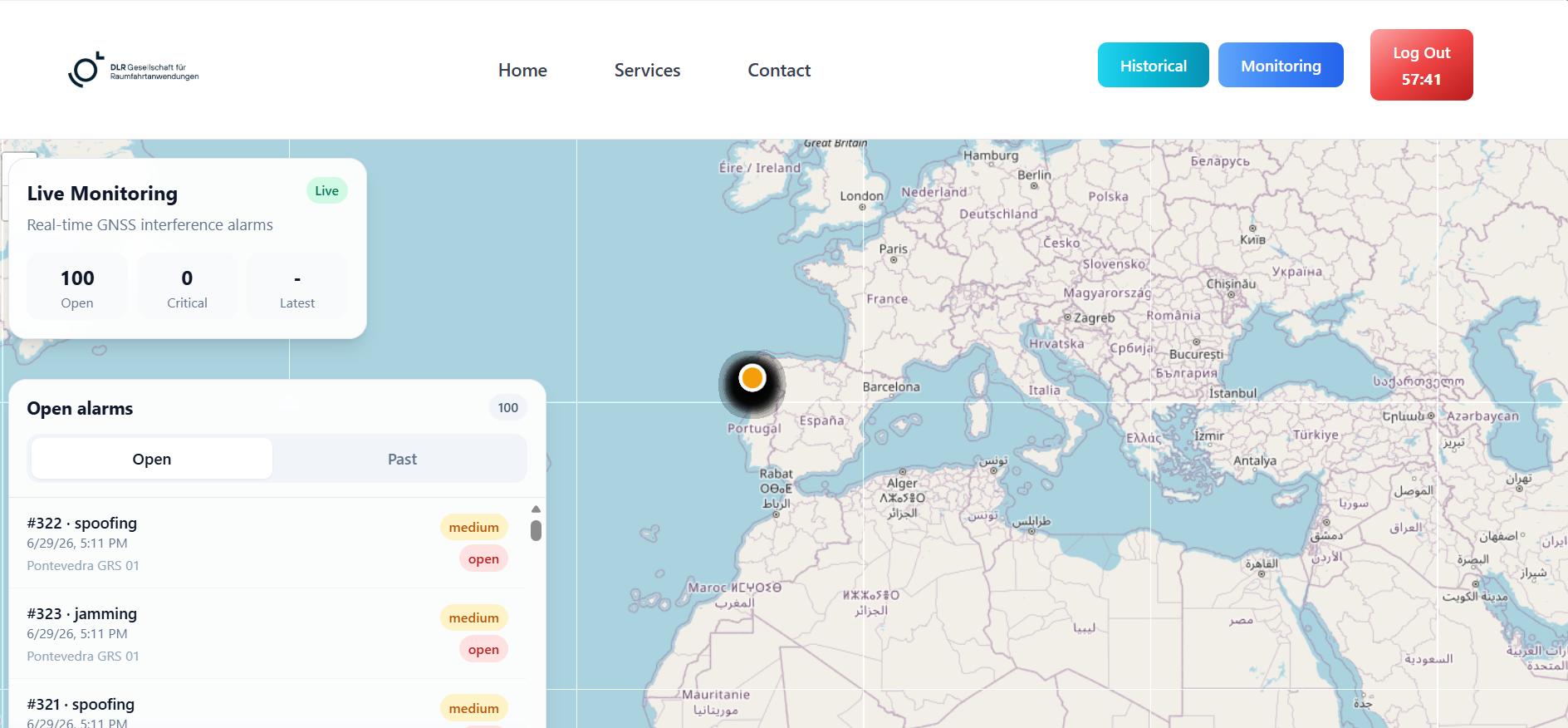
EASA’s latest data show persistent exposure across Eastern Europe, the Baltic, the Black Sea, the eastern Mediterranean and the Middle East. Recent affected FIRs have included Ankara, Bucharest, Warsaw, Jeddah, Vilnius, Sofia, Nicosia, Cairo, Damascus, Tehran, Baghdad, Beirut, Muscat and Amman.
The geography matters. Interference is most common around conflict zones and strategically sensitive areas, but radio-frequency effects do not stop at political borders. Civil aircraft can therefore be exposed even when they are not the intended target.
Why Europe is rebuilding resilience around satellite navigation
EASA and EUROCONTROL published a joint GNSS resilience plan in March 2026. Its underlying assumption is significant: interference will persist, so aviation needs to remain safe and operational when satellite positioning is unreliable.
That means preserving conventional aids such as ILS, DME and VOR where needed, improving spectrum monitoring, standardising ATC procedures, training crews and strengthening civil-military coordination. EUROCONTROL notes that DME/DME remains a key fallback for area navigation when GPS is unavailable, although coverage and redundancy are uneven across the network.
What changes for pilots and air traffic control
EASA’s 2026 revision of its GNSS interference bulletin added more standardised pilot-controller phraseology, greater integration of Electronic Flight Bag tools, updated training requirements and new attention to ATC capacity when interference degrades navigation performance.
For jamming, operators are advised to verify aircraft position using non-GNSS means and confirm available navigation aids. For suspected spoofing, crews should cross-check sources, monitor ATC closely and follow manufacturer procedures designed for corrupted navigation data.
Why this matters outside Europe too
The issue is inherently global. IATA’s warning was delivered at its World Safety and Operations Conference, not as a regional European alert. ICAO has also taken the subject forward, including work on State-origin interference and international resilience measures.
That matters for long-haul networks linking Europe, the Gulf, South Asia and Southeast Asia. A single route can cross several interference-prone regions, meaning the operational challenge is not simply whether GNSS is available at departure or destination, but whether crews can maintain a trustworthy navigation solution throughout the journey.
GNSS itself is not the failure
IATA stresses that satellite navigation has transformed aviation safety and efficiency. The lesson is not to abandon GNSS, but to avoid making the wider system brittle through overdependence on one source.
Resilience therefore becomes the key metric. A safe architecture must not only perform accurately when satellite signals are healthy; it must also degrade gracefully when those signals are lost, manipulated or contradictory.
Why spoofing is now the priority threat
Spoofing reports are growing much faster than simple jamming reports. That makes sense operationally. Counterfeit signals can create plausible-looking errors: a shifted map, a false time reference, an incorrect terrain warning or a navigation solution that does not match the aircraft’s actual position.
EASA therefore treats spoofing reports differently from routine jamming. Significant spoofing events remain especially valuable because they can reveal new failure modes across different aircraft and avionics architectures.
The broader safety lesson
GNSS interference has moved from a niche technical issue to a recurring operational risk. It affects navigation, surveillance, ATC workload, airline procedures and aircraft design. The industry is not trying to replace GPS or Galileo. It is trying to make sure that one compromised data source cannot undermine several layers of the aviation system at once.
The next step in GNSS safety will therefore depend less on ever-greater satellite accuracy than on how quickly aircraft, crews and controllers can detect when satellite data should no longer be trusted.
Related: EUROCONTROL: who really controls Europe’s skies?
Main sources
IATA, World Safety and Operations Conference, 6 October 2026
EASA, GNSS outages and alterations
EASA/EUROCONTROL, European Aviation Action Plan
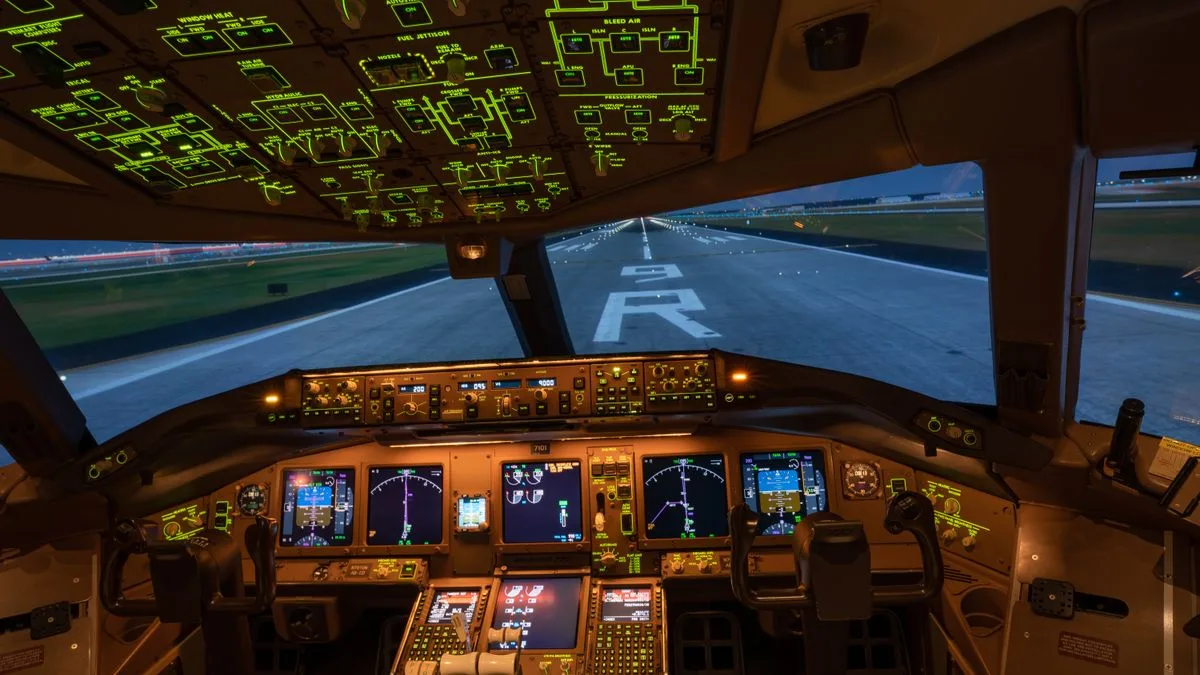
Featured image: Terrence Bowen / Pexels. Map: ESA Space Solutions.