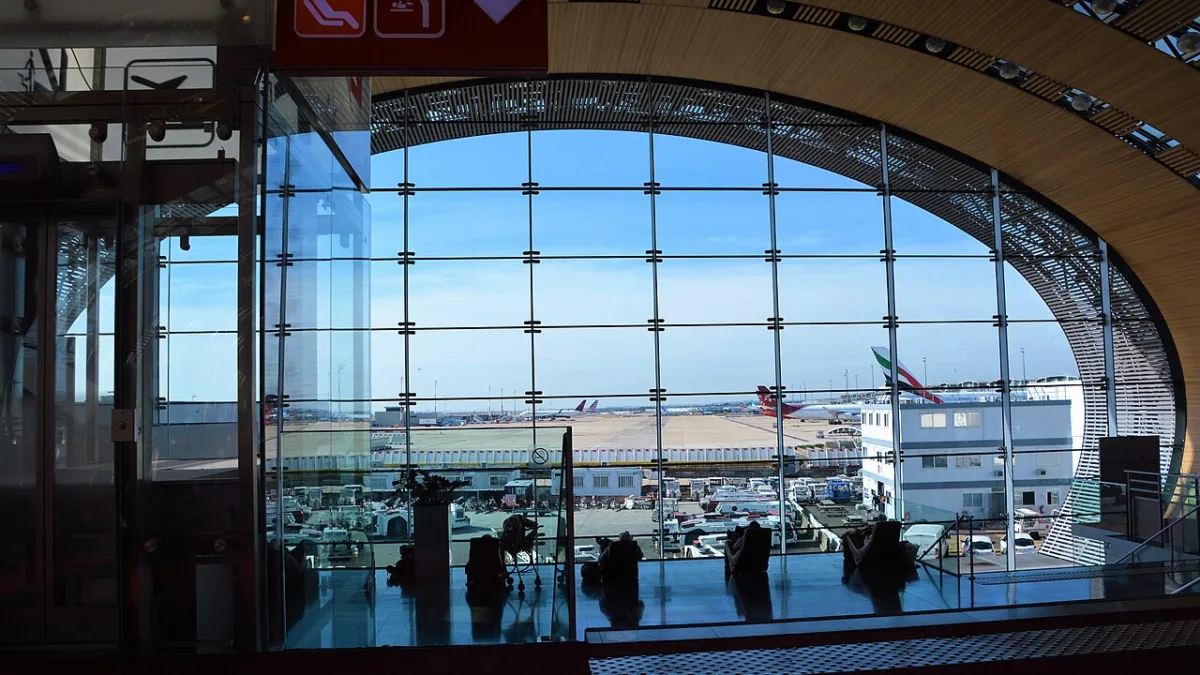
Paris-Charles de Gaulle is entering one of the most important transformation cycles in its history. More than five decades after opening, France’s largest airport is preparing a full terminal renumbering, new transfer infrastructure, runway reconstruction, additional border-control capacity, staged terminal expansion and the opening of CDG Express. The paradox is striking: traffic has still not fully returned to its 2019 record, yet the airport is already building the system that will define its competitiveness into the 2030s.
72 million passengers — still below 2019
Paris-CDG handled 72,029,407 passengers in 2025, up 2.5% year on year but still only 94.6% of 2019 traffic.
Aircraft movements reached 473,798. The airport covers roughly 3,257 hectares, has four runways arranged in two parallel pairs, around 312 aircraft stands and nominal terminal capacity of about 81 million passengers per year.
Cargo is another major pillar: CDG handled around 1.921 million tonnes of freight and mail in 2025, supported by Air France-KLM Cargo and FedEx’s European hub.
Growth paused in 2026
From January to July 2026, CDG handled 41.3 million passengers, down 0.3% from the same period in 2025 and still around 94.4% of the comparable 2019 level.
Groupe ADP linked the softer performance to several factors including Middle East-related schedule reductions, fuel-price pressure and operating constraints.
The transformation is therefore not simply a reaction to immediate airport-wide saturation. It is aimed at fixing bottlenecks, improving connections and preparing more gradual growth.
On March 16, 2027, terminals 2A to 2G disappear
This will be the most visible passenger change.
From March 16, 2027, CDG will replace the historic letter-heavy terminal system with continuous numbering:
- Current Terminal 1 → Terminal 1
- Current Terminal 3 → Terminal 2
- 2A + 2C → Terminal 3
- 2B + 2D → Terminal 4
- 2E → Terminal 5
- 2F → Terminal 6
- 2G → Terminal 7
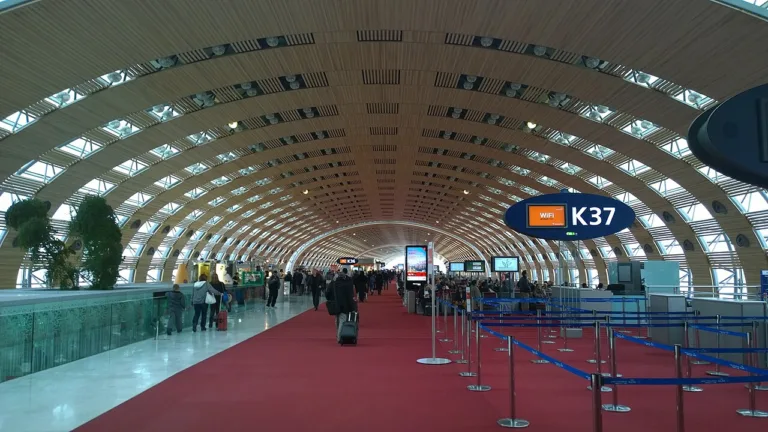
Boarding halls will retain letter identifiers. The principle becomes simpler: one number for the terminal, one letter for the boarding hall.
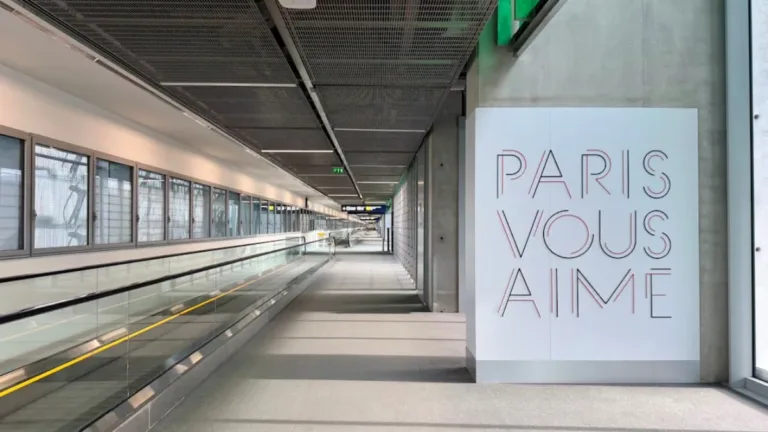
ADP explicitly links the reform to passenger stress and wayfinding problems, especially for international travellers and connecting passengers. More than 30% of CDG users are connecting passengers.
The signage project is much larger than changing a few boards
ADP plans to replace more than 3,000 signs inside terminals, around 600 in car parks and roughly 250 road-sign elements.
Behind the passenger-facing signage, thousands of technical references also have to change. Around 10,000 CCTV cameras need to be reassigned in systems, applications need updating and operating data must be remapped.
Nearly 900 companies and about 90,000 workers on the airport platform are affected in some way.
Why CDG became so complex
The airport was never built as one finished object. Terminal 1 opened as a self-contained concept in 1974, then Terminal 2 expanded through successive modules — 2A, 2B, 2C, 2D, 2E, 2F and 2G — followed by halls K, L and M, the TGV station, CDGVAL and Air France hub extensions.
That modular growth made expansion possible without rebuilding the airport from scratch. It also created the complex geography passengers struggle with today.
The giant Terminal 4 project is gone — expansion is not
The former plan for a single massive Terminal 4 was abandoned in 2020.
ADP has shifted to a progressive, modular development strategy: more contact stands, better internal transport, targeted terminal extensions and new processing capacity rather than one giant building.
The proposed 2027–2034 economic-regulation programme includes around €8.4 billion of investment across the regulated Paris airport perimeter, with many of the largest projects at CDG.
The major 2027–2034 timetable
Key provisional CDG milestones include:
- End 2027: runway 2 rehabilitation.
- End 2030: East Satellite phase 1 / additional contact stands.
- End 2030: LISA automated train extension.
- End 2030: new Terminal 1 border-control area.
- End 2030: current Terminal 3 densification and extension.
- End 2032: new automated transfer train.
- End 2033: runway 3 rehabilitation.
- End 2034: East Satellite phase 2 / larger international-satellite extension.
These are planning dates and remain subject to the final investment and regulatory framework.
East Satellite and more contact stands
The eastern side of the hub is one of the most important growth areas.
The first phase is intended to bring the AGEN parking areas into contact-gate use and connect them to an extended LISA system around 2030.
A second phase toward 2034 would create a larger international-satellite extension.
The philosophy is clear: use existing airport land more intensively, reduce remote bus boarding and increase the share of aircraft parked at contact gates.
LISA extension and a new transfer train
Internal movement is one of CDG’s historic weaknesses.
The airport currently combines CDGVAL in the public area, LISA in part of the secure zone and numerous airside bus transfers.
ADP plans an extension of LISA by 2030 and a new automated connection train by 2032.
For a hub, this is not cosmetic. A connection depends on border controls, security and how quickly a passenger can physically move between gates and terminals.
Terminal 1 gets more border-processing capacity
The 2027–2034 programme includes a new border-control area beneath the Alpha roadway at Terminal 1, designed for up to nine million passengers annually.
The arrivals hall and baggage-delivery capacity are also expected to be expanded.
This matters as Europe rolls out more digital border procedures such as EES, and because border queues remain one of CDG’s most persistent passenger complaints.
The runways are entering a major renewal cycle
CDG’s four runways are one of its strongest structural advantages, but they also require heavy renewal.
Runway 1, 09R/27L, was fully rebuilt in 2025 in its first complete rehabilitation since the airport opened. The five-month project involved more than 650 people and the runway returned to service on December 8, 2025.
Runway 2 follows in 2027 and runway 3 is planned around 2033.
Air France is concentrating Paris around CDG
Since March 29, 2026, Air France has concentrated most Paris flying at CDG, including Toulouse, Nice, Marseille and overseas routes, with limited Corsica public-service exceptions.
Transavia is simultaneously becoming Air France-KLM’s main operator at Orly.
For CDG, the shift increases connecting opportunities but also raises the importance of operational resilience because more Air France traffic is concentrated at a single hub.
Connect France targets the weak points of the hub
Air France-KLM and Groupe ADP launched Connect France to improve CDG’s competitiveness against Heathrow, Amsterdam, Frankfurt, Istanbul, Madrid and Gulf hubs.
One visible measure is the Short Connection Pass. When a passenger’s connection becomes critically short, the system can identify the traveller through the boarding pass and direct them toward priority security and border channels.
The programme also seeks more widebody contact stands and a redesign of the current Terminal 2E Hall K, including lounges, retail, restaurants and gate areas.
CDG Express opens twelve days after the terminal renumbering
The dedicated rail link is scheduled to open on March 28, 2027.
CDG Express is designed to link Gare de l’Est with the airport in 20 minutes nonstop, every 15 minutes from roughly 05:00 to midnight.
The announced standard one-way fare is €25, with free travel for accompanied passengers aged 16 and under.
It does not replace RER B, but it gives CDG the dedicated airport rail product long associated with major global hubs.
Sixth in the world at Skytrax — but spontaneous reviews are brutal
At the 2026 Skytrax World Airport Awards, Paris-CDG ranked sixth worldwide, up from seventh in 2025, and was named Best Airport in Europe for the fifth consecutive year.
That sits in sharp contrast with spontaneous online reviews. In early September 2026, Paris Aéroport’s Trustpilot profile stood at roughly 1.3/5, with complaints focusing on border queues, security, wayfinding, walking distances, baggage delivery and uneven staff experience.
The two sources measure different things and cannot be directly compared. But together they illustrate CDG’s paradox: when the journey works, the airport can deliver a world-class product; when one link fails, the experience deteriorates quickly.
New routes in 2026 and 2027
Network growth continues.
Air France opened Paris–Las Vegas on April 15, 2026, three times weekly with the A350-900.
Aeroméxico launched Monterrey–Paris on April 13, 2026, initially seasonal before extending it.
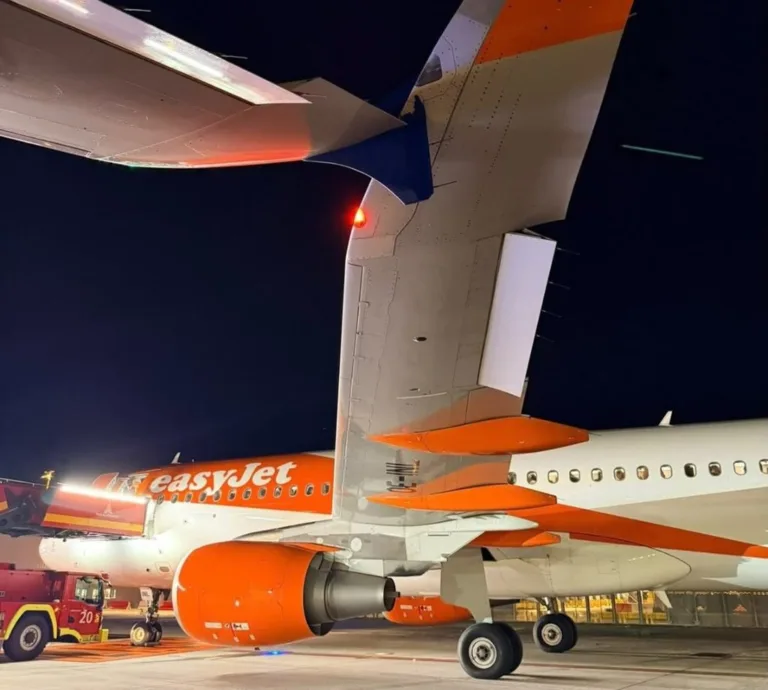
easyJet opened CDG–Cairo Sphinx on September 2, 2026 and scheduled Southampton from October 25.
For 2027, Delta plans a seasonal daily Austin–Paris service from March 27 with the A330-900, while Alaska Airlines plans Seattle–Paris five times weekly from May 25 with the 787-9.
What CDG already has — and what it still needs to fix
The airport’s structural advantages are formidable: four runways, large land reserves, the Air France hub, an integrated TGV station, deep long-haul connectivity and Paris itself.
The weaknesses are equally identifiable:
- border queues;
- complex wayfinding;
- fragile connections when delays occur;
- too many bus transfers in some flows;
- baggage-delivery variability;
- uneven quality between terminal generations;
- and until 2027, no dedicated central-Paris airport rail link.
The next competitive advantage must be simplicity
CDG’s strategy has changed. The objective is no longer to build the biggest possible new terminal.
It is to make the existing airport work more intelligently: clearer navigation, more contact gates, better border capacity, better internal trains, modernised runways and modular expansion.
March 2027 will be the first major test. In less than two weeks, CDG will renumber the terminal system and open CDG Express. The deeper transformation will then continue into 2034.
Paris-CDG already has the scale and network of a global hub. The challenge is to make that scale feel simpler, more consistent and more predictable to the passenger.
Main sources
Groupe ADP 2025 and 2026 traffic data; ADP terminal-renumbering programme; proposed 2027–2034 investment plan; French Transport Regulatory Authority; Air France-KLM / Connect France; CDG Express; Skytrax 2026; airline route announcements.
Leave a Reply