A debris field linked to Canadian air-ambulance jet C-GRJP has been found off Nantucket after the aircraft disappeared during a medical flight from Bermuda to Boston with six people aboard. The U.S. Coast Guard has now suspended the active search for survivors after 66 hours of operations. The discovery is a major development because authorities are no longer dealing only with a lost radio and tracking contact, but it still does not explain why the aircraft was lost.
A medical mission carrying a patient to Boston
This was not a scheduled airline flight. Bermuda airport operator Skyport says the aircraft departed L.F. Wade International Airport at about 12:41 a.m. local time on October 3, bound for Boston Logan International Airport. The six people aboard were two Canadian pilots, two Canadian medical crew members, a Bermudian patient and a Bermudian relative accompanying the patient.
The flight was operated by Ontario-based Latitude Air Ambulance, a company specialising in medical evacuations and international patient repatriation. Air-ambulance flights use aircraft equipped or adapted to transport patients who may require medical supervision while travelling between hospitals, countries or specialised treatment centres.
What kind of aircraft is C-GRJP?
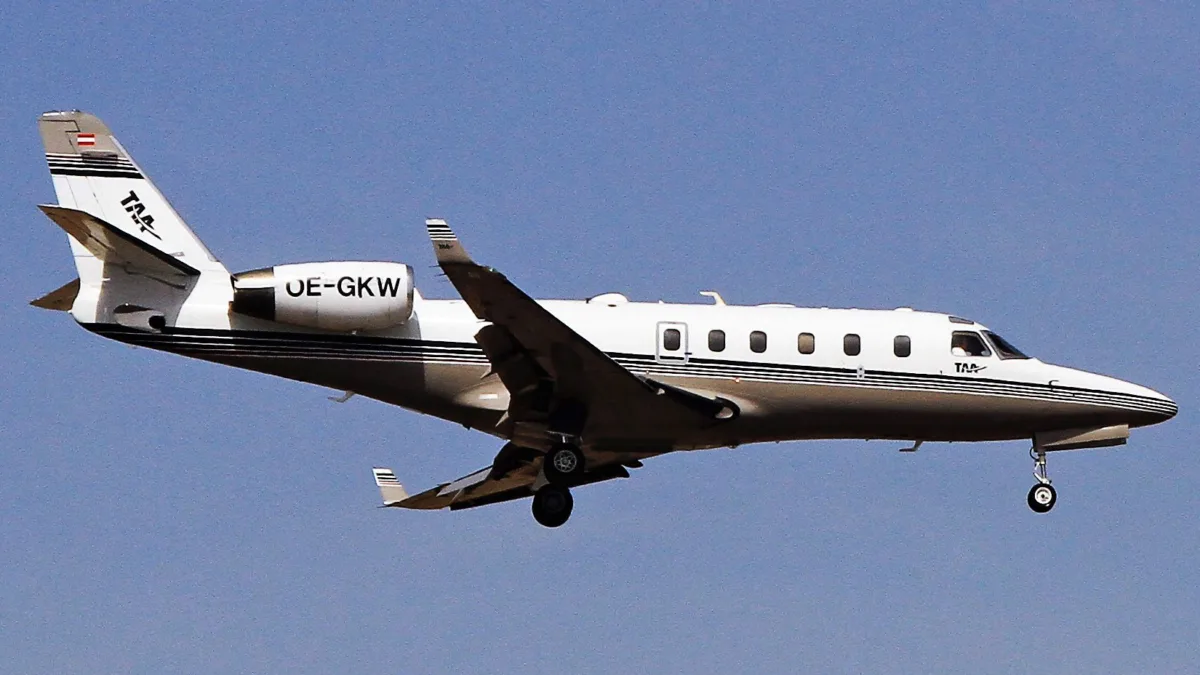
The aircraft is an IAI 1125A Astra SPX marketed as a Gulfstream G100, a twin-engine business jet that can be configured for aeromedical work. Public aircraft records identify C-GRJP as serial number 080. The registration prefix “C” denotes a Canadian-registered aircraft, an important point because the state of registration can have a role in an international accident investigation.
What does finding a debris field mean?
The U.S. Coast Guard has confirmed a debris field associated with C-GRJP off Nantucket. A debris field is an area where pieces associated with an aircraft are found, potentially spread by the initial event and then by wind, waves and ocean currents. It is a significant confirmation because the case began as a search for an aircraft after communications and tracking contact were lost.
It does not, however, answer the two most important questions: what happened to the six people aboard, and what caused the aircraft to be lost? The presence of debris cannot by itself reconstruct the final minutes of the flight or establish a technical cause.
Electrical problems reported before contact was lost
Air-traffic-control communications reported by news organisations provide important context for the aircraft’s final known phase of flight. The crew reportedly declared an emergency and reported electrical problems before contact was lost. Communications then became more difficult, while publicly available flight-tracking data indicate a sharp loss of altitude before the final signal.
Those facts must not be confused with a finding of cause. An electrical problem can affect radios, navigation equipment, cockpit displays or other aircraft systems in different ways depending on the failure involved and the aircraft’s remaining power sources. There is currently insufficient evidence to conclude that the reported electrical problem caused the accident. Investigators will need technical evidence and the communications record to establish the sequence.
Why the search is centred off Nantucket
Nantucket is a Massachusetts island in the Atlantic Ocean, southeast of Cape Cod. C-GRJP was approaching the northeastern United States from Bermuda and was ultimately bound for Boston when contact was lost. The Federal Aviation Administration, the U.S. civil aviation regulator, alerted the Coast Guard at about 2 a.m.
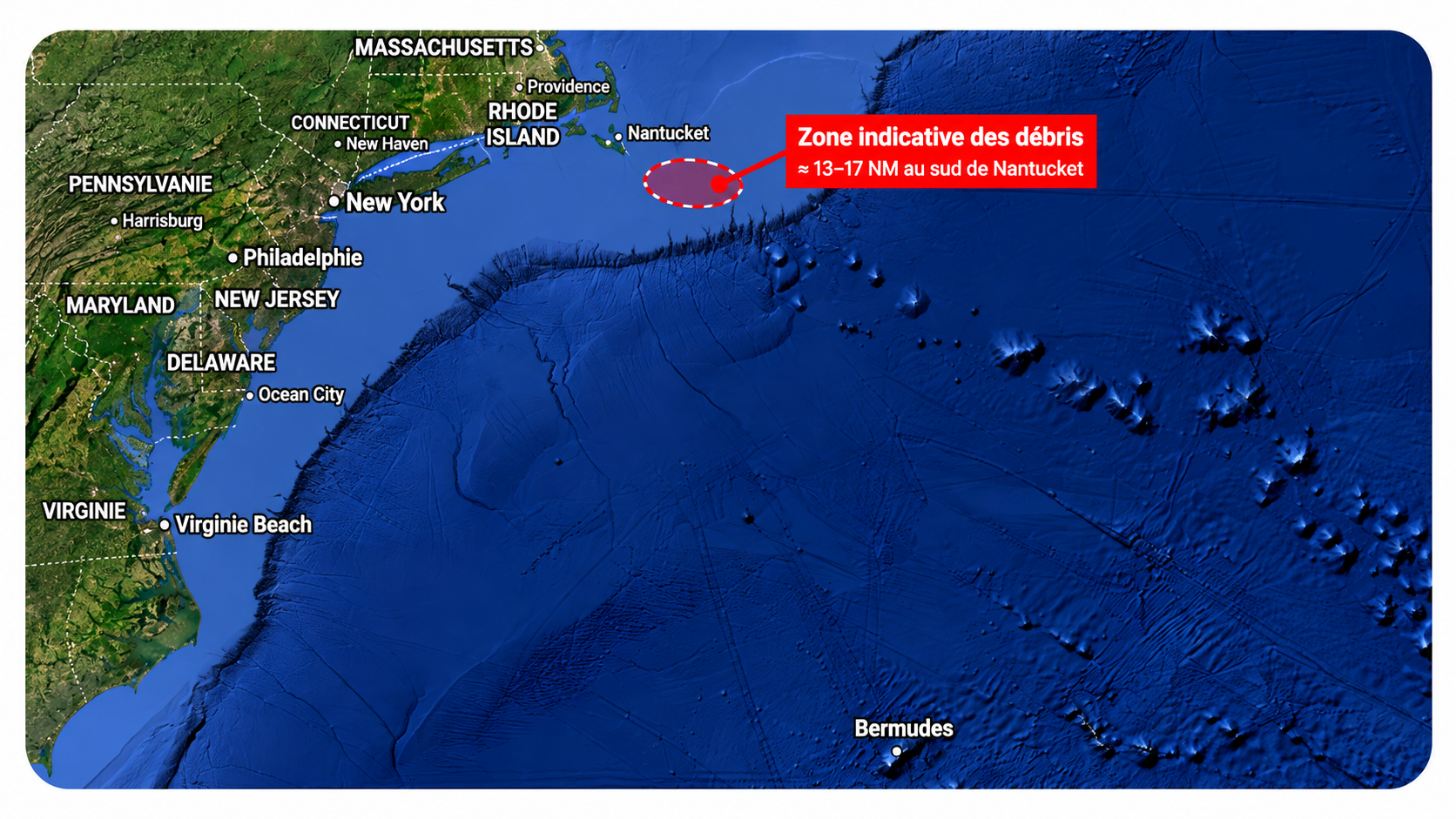
The response has included an HC-144 maritime surveillance aircraft, an MH-60 helicopter, a 47-foot motor lifeboat and the fast-response cutter USCGC William Sparling. By the latest update on Sunday, crews had covered about 2,840 square miles: roughly 7,360 square kilometres, with no survivor found at that stage. Sonar equipment is also due to examine the seabed around the debris area, where the water is about 80 to 90 feet (24 to 27 metres) deep.
The circumstances link the United States, Canada and Bermuda, but responsibility for the safety investigation is now clear. The Transportation Safety Board of Canada has opened investigation A26F0321 and is leading it because the accident occurred in international waters and Canada is the state of registration of C-GRJP. The U.S. National Transportation Safety Board is participating as the accredited representative of the United States. The TSB also plans to deploy investigators to take part in the search for and recovery of the aircraft. Bermuda retains a direct interest because the patient and accompanying relative were Bermudian.
What investigators will need to establish
With a formal investigation now open under Canadian TSB leadership, investigators will seek to reconstruct the aircraft’s final trajectory, the emergency communications, the nature of the electrical problem, the condition of recovered wreckage and any other available operational evidence. Public tracking data can help establish a timeline, but they are not a substitute for an accident investigation.
The U.S. Coast Guard has suspended the active search-and-rescue phase after about 66 hours of operations. Aircraft and vessels covered more than 4,400 nautical miles during the search, with no survivor found. Rear Admiral Matthew Lake, commander of the Coast Guard’s Northeast District, said suspending a search was not an easy decision and expressed condolences to the families.
Latitude Air Ambulance says it must now face the presumption that its four team members, the patient and the patient’s family escort died in the crash. The end of the active search for survivors does not end the investigation. Recovery work and examination of the wreckage will feed the Canadian-led investigation, with the U.S. NTSB participating as an accredited representative alongside other relevant authorities. The reported electrical problem before contact was lost remains an investigative lead, not an established cause.
What is confirmed and what remains unknown
At this stage, several points are established: C-GRJP departed Bermuda for Boston on a medical mission with six people aboard; the crew reportedly declared an emergency involving electrical difficulties; contact was subsequently lost; and the U.S. Coast Guard has found debris associated with the aircraft. No survivor was found before the active search was suspended; the cause of the accident remains unconfirmed. Those are the two critical issues to watch in the next official updates.
Sources: U.S. Coast Guard Northeast; Federal Aviation Administration; Transportation Safety Board of Canada, investigation A26F0321; U.S. National Transportation Safety Board; Skyport Bermuda; Associated Press; air-traffic-control communications reported by news organisations; public operational data.
Illustration: Gulfstream G100 air ambulance OE-GKW, a different aircraft from C-GRJP. Rob Hodgkins / Wikimedia Commons: CC BY-SA 2.0.
Related on AeroSillage: Catalina medical helicopter crash toll rises to three.


Leave a Reply