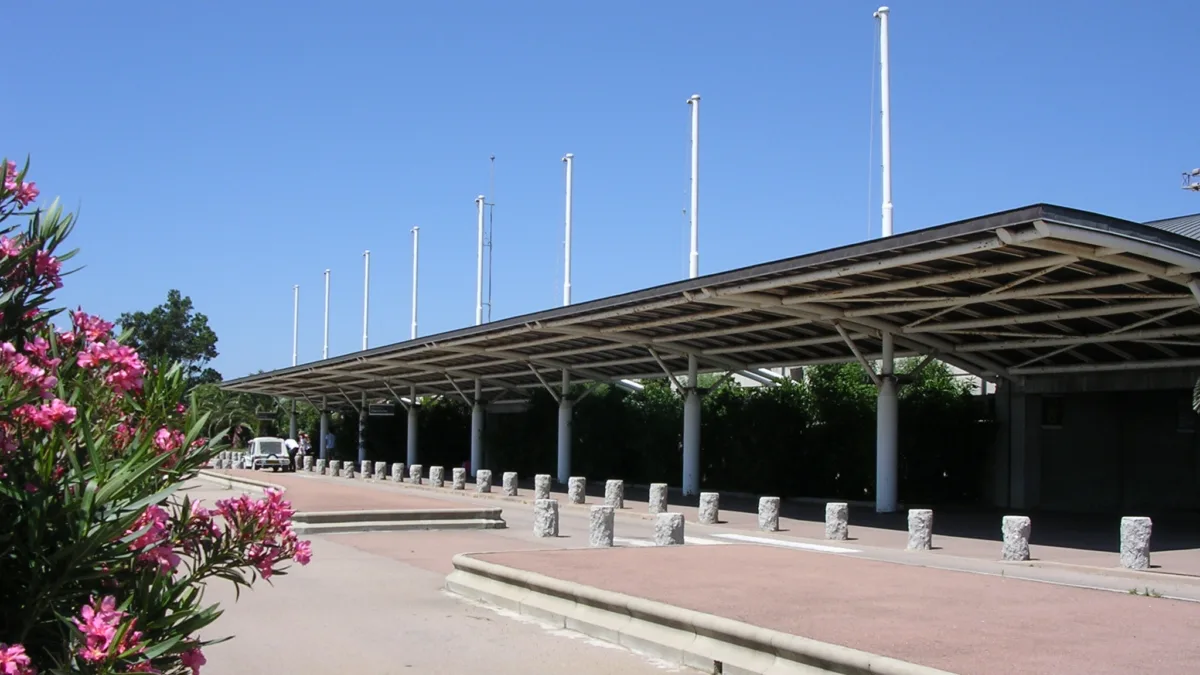
Just a few kilometers from Porto-Vecchio and Bonifacio, Figari-Sud Corse has become one of France’s most unusual regional airports. It handled 908,553 passengers in 2025, yet its traffic remains extraordinarily seasonal, forcing a compact airport to absorb a summer peak on a completely different scale from winter.
A small airport that changes scale in summer
Figari handled 908,553 passengers in 2025, up from 869,612 in 2024, an increase of 4.48%. The airport recorded 8,154 commercial flights during the year.
The figures are remarkable for an airport serving a relatively lightly populated area. Tourism explains much of the demand: Figari provides direct access to Porto-Vecchio, Bonifacio, Palombaggia, Santa Giulia, Rondinara and the wider southern Corsica region.
Seasonality is Figari’s defining feature. In December 2025 the airport handled only 21,172 passengers; in the summer peak, activity rises dramatically. Staffing, aircraft parking, security screening, baggage handling, car rental and local roads all have to absorb an intense July-August surge.
Air Corsica anchors a much broader seasonal network
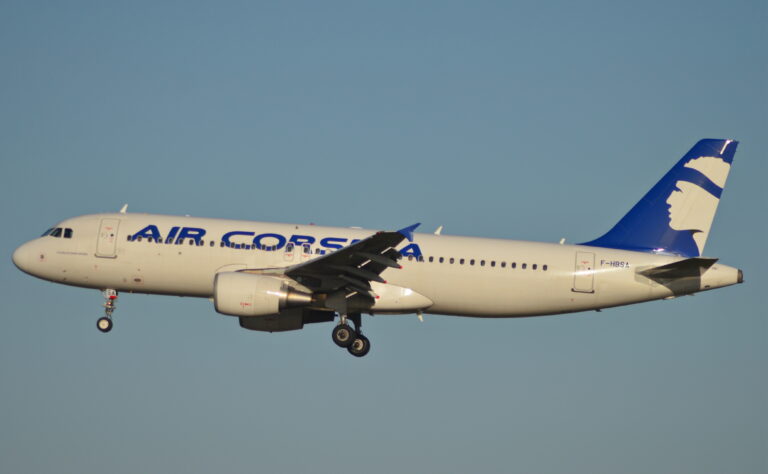
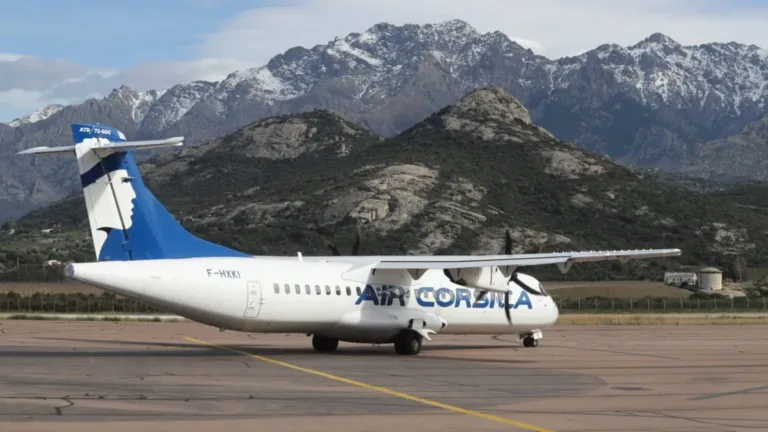
Year-round connectivity is built around Air Corsica, which operates services to Paris-Orly, Marseille and Nice. Those links are central to territorial continuity and resident travel.
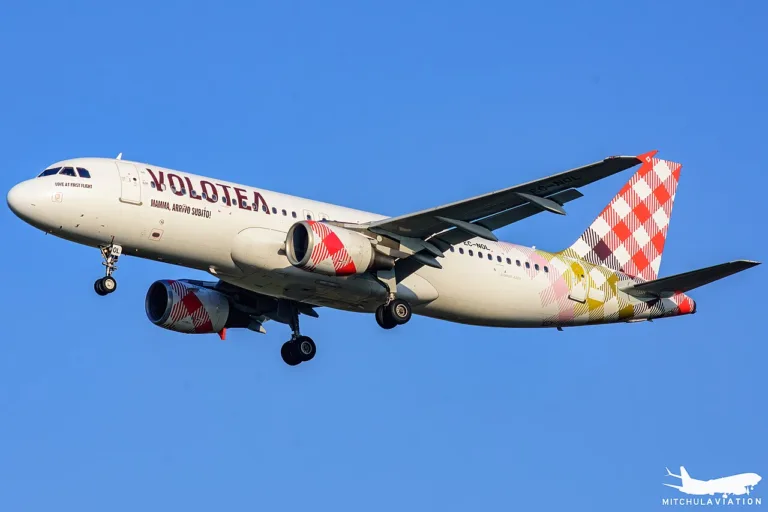
From spring through summer, the network expands sharply. The airport’s 2026 schedule includes services from Air Corsica, Air France, easyJet, Volotea, Ryanair, British Airways, Lufthansa, Luxair, Edelweiss and People’s.
In France, seasonal destinations include Bordeaux, Brest, Caen, Lille, Lyon, Nantes, Strasbourg, Toulouse, Paris-CDG and Paris-Beauvais in addition to year-round routes. Internationally, the airport is connected to cities including Frankfurt, London Gatwick, London Heathrow, Geneva, Zurich, Luxembourg, Milan and Brussels.
That direct access is one of Figari’s strengths: visitors can reach southern Corsica without flying to Ajaccio or Bastia and then driving for several hours.
Paris-Orly is served year-round by Air Corsica, while Paris-CDG receives seasonal services including flights by Air France and easyJet. The pattern reflects changing Corsican tourism, with more travelers favoring shorter stays and direct access to their final destination.
Business aviation adds another layer
Figari also has a distinctive business-aviation profile. The proximity of Porto-Vecchio, Bonifacio, Cavallo and high-end properties brings significant private-jet activity during the summer. On some July and August weekends, that traffic increases pressure on aircraft stands and other infrastructure.
The next challenge: reach one million without overloading summer
At 908,553 passengers in 2025, Figari is within roughly 100,000 annual passengers of the one-million threshold. International growth, direct routes and the tourism appeal of southern Corsica could take it there.
But growth is constrained by compact infrastructure and a very concentrated seasonal peak. The more sustainable opportunity may therefore be to extend demand into spring and autumn rather than simply adding more August flights.
A strategic gateway for southern Corsica
Figari-Sud Corse shows how a modest regional airport can attract a broad airline portfolio when the destination itself is powerful. Its next challenge is to grow without undermining the balance of the territory whose attractiveness drives that success.
Sources
Figari-Sud Corse Airport official 2025 statistics; 2026 destination and airline schedules.
Related: Air Corsica: public service, modern fleet and a growing European network, for the airline context behind Corsica’s regional connectivity.
Leave a Reply