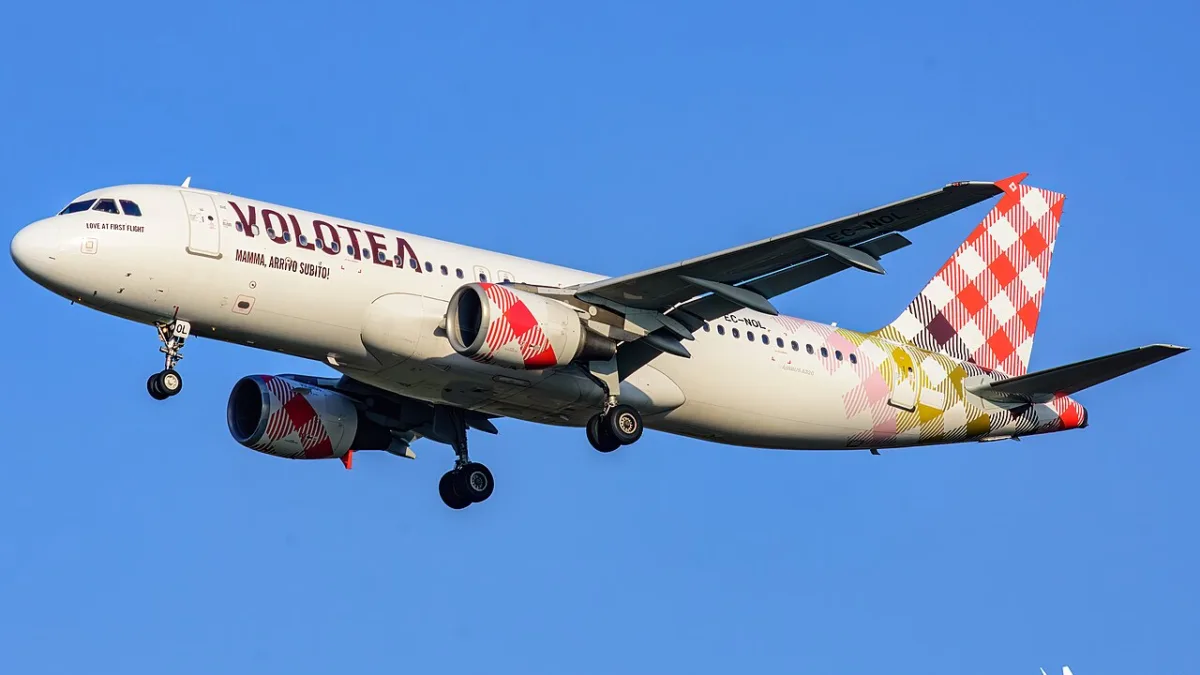
Travellers had already booked, often weeks or months ahead. Yet Volotea has suspended some services to and from Corsica for a three-week period, according to Corse-Matin, forcing affected passengers to rethink journeys that may also include accommodation, car hire and onward travel. The airline is still selling a substantial Corsica schedule, so this is not a withdrawal from the island. It is a targeted capacity cut, and that distinction matters for both passengers and the wider European regional-airline market.
Corse-Matin reported on 7 October 2026 that Volotea had suspended rotations to and from the island for three weeks as the sharp rise in jet-fuel costs puts pressure on its business model. The move comes at a sensitive time for the Spanish low-cost carrier, which is already reshaping its network, working on its debt position and considering a smaller fleet. AeroSillage recently examined that broader shift in our analysis of Volotea’s fleet and network retrenchment.
What the latest development does not mean is that Volotea has stopped serving Corsica. Its booking pages still show services to Ajaccio, Bastia, Figari and Calvi from a number of French regional airports, while the official Corsica tourism schedule lists routes continuing into late October or early November. The issue is narrower but more disruptive for those directly affected: some flights have been removed after seats had already been sold.
Why an already-booked cancellation is different
For a traveller, there is a fundamental difference between a route that was never placed on sale and a flight cancelled after a confirmed booking. In the latter case, the airfare may be only one part of a much larger travel plan. Hotels, rental cars, family arrangements and connecting journeys may all have been built around the original flight.
Recent passenger reports describe October bookings cancelled after purchase, in some cases leaving replacement travel at a significantly higher price. Those accounts are useful evidence of the passenger impact, but they are not an official tally of Volotea’s cancellations and should not be treated as one. What they do show is the practical vulnerability of passengers when a regional leisure route is removed late in the planning cycle.
Corsica makes that vulnerability more visible. On many mainland journeys, rail or another airport can provide a reasonably straightforward alternative. Island travel is different. A replacement may involve another airline, another day, another departure city or a connection through a larger hub. For some passengers, ferry travel may be an option, but it is not a like-for-like substitute for a short direct flight.
Jet fuel is part of the story, not the explanation for every flight
Fuel pressure at Volotea is not new. Earlier in 2026, the airline acknowledged cancelling a small share of its schedule as jet-fuel prices surged. Its French management said weakly filled or heavily loss-making flights had been selected in order to protect the wider operation. Volotea also introduced a temporary post-booking fuel adjustment mechanism before ending it for new bookings in June.
That history matters because it establishes a clear link between fuel economics and network decisions. But it would still be too simplistic to say that every current Corsica cancellation has been caused solely by kerosene prices. Airlines make individual capacity decisions using a wider set of variables: load factors, aircraft availability, base economics, crew planning, seasonality and expected yields.
The current booking picture reinforces that point. Volotea continues to advertise October services to Corsica, including routes to Ajaccio, Bastia, Figari and Calvi. The latest cuts therefore appear selective rather than a blanket suspension of the island network.
That selective approach fits the logic of a carrier trying to reduce financial exposure without abandoning one of its core regional markets. France is Volotea’s largest market, and Corsica has long been important to its strategy of linking medium-sized European cities directly rather than funnelling passengers through major hubs.
EU rules give cancelled passengers more than a refund option
For passengers whose flights fall under EU Regulation 261/2004, a cancellation triggers a choice. The operating airline must offer reimbursement of the ticket, re-routing to the final destination at the earliest opportunity, or re-routing at a later date convenient to the passenger, subject to seat availability and comparable transport conditions.
This is particularly important when a replacement ticket now costs much more than the original fare. EU passenger guidance also states that if an airline unilaterally refunds the original booking without offering the required choice between reimbursement and re-routing, the passenger may be entitled to recover the additional cost of a comparable replacement journey.
Compensation is a separate question. Many mainland France-Corsica sectors fall below 1,500 kilometres, for which the regulation provides a reference compensation amount of €250 when the eligibility conditions are met. Whether compensation is actually payable depends on factors including how far in advance the passenger was notified, what alternative itinerary was offered and whether the carrier can establish extraordinary circumstances.
Being told at least 14 days before departure normally removes the fixed-compensation entitlement, although the rights to reimbursement or re-routing remain. Notifications closer to departure require a more detailed assessment of the alternative offered and the reason for cancellation.
Higher fuel prices should not automatically be treated as extraordinary circumstances. Regulation 261 refers to events such as political instability, incompatible weather, security risks and certain air-traffic-management decisions. The legal assessment therefore depends on the specific circumstances surrounding an individual cancellation, not simply on the fact that operating costs have risen.
Corsica exposes the tension inside the regional low-cost model
Volotea’s growth has been built on direct routes that are often too thin for larger network carriers but attractive enough to support seasonal or several-times-weekly services. That model has brought clear benefits to Corsica by widening direct access from French regional cities and reducing the need to connect through Paris or Marseille.
It also creates a challenge when fuel costs rise sharply. A seasonal flight with weaker autumn demand can move from acceptable to uneconomic faster than a dense trunk route. Cutting a limited number of frequencies can therefore protect cash and aircraft utilisation while preserving the core network.
The airline is making these decisions while also navigating a broader financial restructuring. Volotea has been working on debt reduction and its future capital structure, while Aegean Airlines has publicly denied reports that it intends to take control of the company. AeroSillage covers that separate issue in our report on the Aegean-Volotea restructuring debate.
None of this means Volotea is leaving Corsica or France. It does mean passengers should pay closer attention to schedule changes during a period when the airline has stronger incentives to remove marginal capacity.
What travellers should do now
Passengers booked on Volotea services to or from Corsica in the coming weeks should monitor their booking directly and retain every message from the airline. If a flight is cancelled, the date of notification, the reason given and the alternative offered can all affect the passenger’s rights.
Travellers should also distinguish between accepting a commercial voucher and exercising their statutory choice between reimbursement and re-routing. A voucher can be useful, but it is not automatically the same as the options provided by EU law.
At this stage, there is no public, exhaustive list of all Corsica frequencies removed during the three-week period and no verified total for the number of passengers affected. That remains the key information gap. Volotea continues to sell and operate a significant island schedule while trimming selected flights.
The wider lesson is nevertheless important for regional air travel: a ticket can be confirmed long before the economics of the flight are finally tested. When fuel costs, seasonality and financial pressure converge, airlines can redraw the schedule, while passengers are left to rebuild the journey around it. In Corsica, where alternatives are inherently more limited, the consequences are particularly visible.
Sources: Corse-Matin, 7 October 2026; Volotea; Corsica Tourism Agency; Regulation (EC) No 261/2004 and the official Your Europe passenger-rights portal. Photo: Mitchell R Hope / Wikimedia Commons, CC BY-SA 2.0.

Leave a Reply