
American Airlines AA806 Tail Strike During Santa Ana Go-Around
American Airlines flight AA806 struck the runway with its tail during a low go-around at Santa Ana on October 29. The Boeing 737 MAX 8 landed safely on its second attempt.
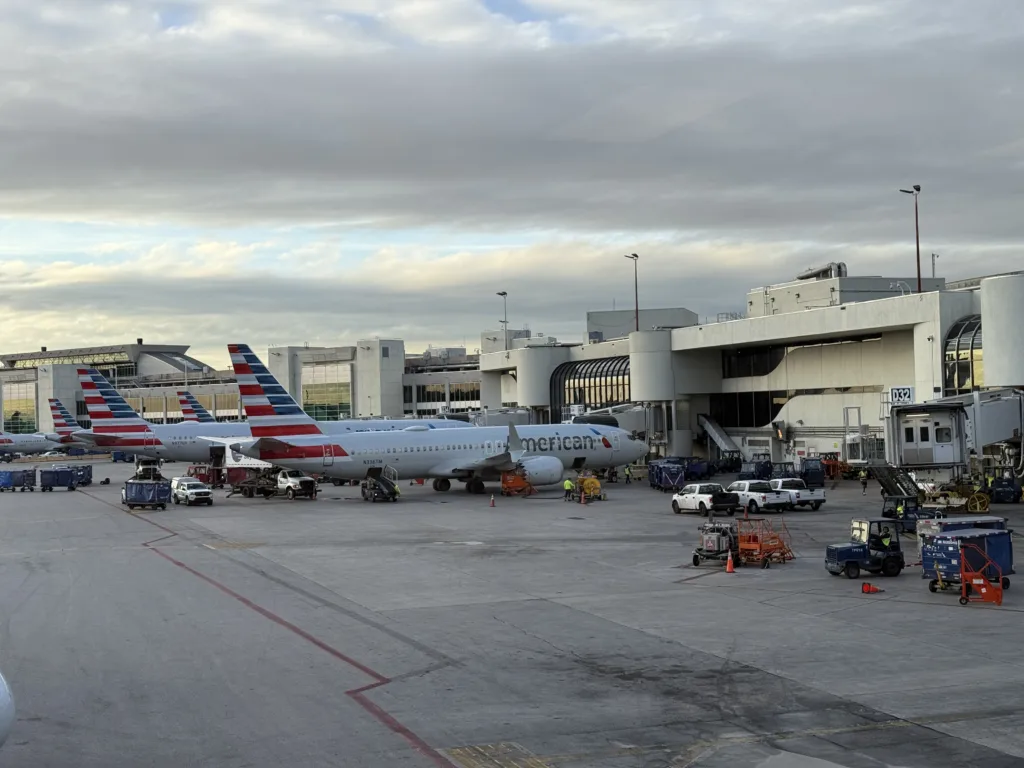
American Airlines flight AA806 struck the runway with its tail during a go-around at Santa Ana, California, on October 29, 2026. The Boeing 737 MAX 8 climbed away and landed safely on its second approach about 13 minutes later. A preliminary Federal Aviation Administration incident record identifies the tail strike, but its cause remains unknown. The event became public on November 9.
American AA806 strikes runway 20R during go-around
The aircraft was flying from Dallas/Fort Worth International Airport to John Wayne Airport in Orange County. According to AeroCorner’s account of The Aviation Herald report, the crew abandoned its approach to runway 20R at very low altitude. The aircraft’s tail then contacted the runway during the maneuver.
Citing the FAA’s preliminary occurrence entry, The Aviation Herald reported a tail strike during the go-around. However, the entry did not establish why the crew discontinued the approach. It also did not identify a mechanical fault or assign responsibility.
After the contact, the pilots climbed to approximately 3,000 feet and lined up for another approach. The jet landed on the same runway roughly 13 minutes after the aborted landing attempt. Therefore, the crew completed the scheduled trip to Santa Ana without diverting to another airport.
Boeing 737 MAX 8 N335SN lands on second attempt
The aircraft was a Boeing 737 MAX 8 registered N335SN. The FAA aircraft registry identifies it as a Boeing 737-8, the manufacturer’s designation for the MAX 8. Its manufacturer serial number is 44481.
Flight-history records for N335SN associate the jet with the Dallas/Fort Worth to Santa Ana service. Those records use Coordinated Universal Time, so they can show the flight under October 30. However, the tail strike occurred on October 29 in California local time.
AeroCorner’s review of FlightAware data placed the first low approach near 8:04 p.m. Pacific time. The tracking account placed the eventual landing near 8:17 p.m. These times describe the reported flight path, not a verified passenger arrival delay against the airline’s timetable.
Neither the FAA’s brief preliminary entry nor the available accounts provide a confirmed passenger count or a detailed damage report. Likewise, no verified technical finding explains the contact.
What makes a low-altitude go-around vulnerable to tail contact
A go-around is a routine safety maneuver when a crew decides not to complete an approach or landing. Pilots increase thrust and guide the aircraft back into a climb. Yet an aircraft beginning that maneuver close to the ground has little clearance beneath its tail.
The aviation safety resource SKYbrary’s tail-strike guidance describes how nose-up pitch and the timing of engine thrust affect tail clearance. For example, lifting the nose while the aircraft is still low can reduce the gap between its rear fuselage and the surface.
That guidance explains the general hazard, not the cause of AA806’s incident. Investigators would need to review the flight data, crew accounts and aircraft condition before identifying contributing factors. No official conclusion reviewed establishes a role for wind, handling or aircraft systems.
Safe landing confirmed, but aircraft downtime remains uncertain
The second approach succeeded, and the flight reached its intended airport. However, a tail strike can require inspection of the rear fuselage before an aircraft flies again. The available accounts do not establish what damage N335SN sustained or what repairs, if any, were necessary.
Published timelines for its return to service conflict. The Aviation Herald reportedly placed the return about 14 hours after landing. By contrast, the available flight history shows a Santa Ana to Charlotte departure on October 31. These records do not establish a verified maintenance release time.
Therefore, the extra 13-minute approach sequence should not be confused with total airline disruption or aircraft downtime. American Airlines has not issued a detailed public technical explanation in the sources reviewed.
Other aircraft-damage incidents can produce different operational outcomes. A WestJet 737 struck a catering truck during a tow at Toronto Pearson. Separately, an American Eagle flight returned to St. Louis after a reported cabin emergency. Neither event sheds light on AA806’s tail strike.
The confirmed sequence is a runway tail strike, a climb away and a safe second landing. Questions remain about the cause, structural damage and exact time out of service.
Read next
JOIN THE CONVERSATION
Let’s discuss this story.
A question, a clarification or a different perspective? Share it with us.