
American Airlines to connect more than 1,000 jets with Starlink from 2027
American Airlines will fit Starlink to more than 1,000 mainline aircraft from 2027. What the plan means for connectivity, timelines and passengers.
American Airlines is expanding its Starlink plans to every aircraft in its mainline fleet, taking the programme beyond 1,000 Airbus and Boeing jets. Announced on 8 October 2026, the decision puts long-haul aircraft alongside domestic narrowbodies, with installations scheduled to begin in early 2027. But the timeline for completion, onboard availability and passenger pricing still requires careful distinction.
American’s earlier programme covered more than 500 Airbus aircraft. Its latest announcement extends satellite connectivity to Boeing narrowbody and widebody jets, making the project one of the larger airline fleet deployments of Starlink. “Mainline” is a specific boundary: this announcement should not be read as a commitment to install the system on every independently operated regional aircraft flying under the American Eagle brand.
While the airline has identified early 2027 as the start of installations, it has not named a completion date or released a comprehensive aircraft-by-aircraft schedule. Passengers booking a 2027 trip should therefore avoid assuming their particular flight will feature the new system.
What does the 1 Gbps figure really mean?
American plans to install Starlink’s Performance Aero Terminal, advertised as capable of delivering up to 1 Gbps per terminal. That is a headline equipment capability, not a guaranteed 1 Gbps connection for an individual passenger. Actual performance depends on network capacity, traffic from other connected users and aircraft conditions.
The airline has highlighted streaming, real-time collaboration, browsing, online shopping and gaming as potential uses of the upgraded network. SpaceX’s Starlink team also promotes connectivity from gate to gate. The practical experience will depend on the aircraft installation, service rules and availability along a particular route.
For passengers crossing the Atlantic or travelling on other long sectors, reliable connectivity could transform several hours of flight time. Leisure travellers may want continuous messaging and entertainment; business passengers may value access to cloud applications and shared documents. Including Boeing widebody aircraft gives the programme an international dimension that a narrowbody-only installation would lack.
However, fleet modernisation takes time. Equipment must be fitted during planned maintenance or other appropriate ground periods, tested and integrated into aircraft operations. Even after the initial installation work begins, the percentage of available flights will rise gradually, not overnight.
Will Starlink Wi-Fi be free?
The 8 October announcement does not establish a universal fare condition for every future Starlink-equipped flight. An installed terminal, its technical performance and the commercial terms of access are different things. Travellers should rely on the airline’s booking information and current inflight Wi-Fi policies rather than assume that the hardware rollout alone guarantees free access.
A rollout across more than 1,000 jets creates a period when the onboard product will differ by aircraft. Equipment substitutions may change the connectivity available on a booked flight, even within the same route. For passengers, reliable service, transparent access terms and consistent coverage matter more than a theoretical peak speed or a headline fleet total.
American’s move is part of a larger contest over passenger experience. Inflight internet is increasingly judged on reliability, latency and consistency rather than the mere existence of a Wi-Fi symbol. Satellite services in low Earth orbit have raised expectations, while raising practical questions about rollout costs, aircraft downtime and network capacity at scale.
The AeroSillage perspective is that the key competitive promise is consistency, not the headline speed. American says its mainline fleet comprises more than 500 Airbus narrowbodies, more than 400 Boeing narrowbodies and more than 130 Boeing widebodies, carrying over 165 million passengers a year. Bringing three distinct aircraft groups into the same connectivity programme could narrow a frustration familiar to frequent flyers: the same airline may offer a markedly different online experience depending on which aircraft operates the flight. That is an editorial inference from the announced fleet coverage, not evidence that performance will be identical in practice.
The rollout also creates a new test for network planning and customer expectations. A passenger may buy a ticket months ahead, yet an aircraft substitution could determine whether Starlink is available while installations remain incomplete. Clear flight-level information may therefore matter almost as much as the technical specification. American has not published the sequence in which those aircraft groups will be equipped, so any claim about the first transatlantic routes would be premature.
Three developments will show whether the promise becomes a dependable service in 2027: the first equipped aircraft operating passenger flights, the published progression of installations across aircraft types, and independently observed connection quality on short- and long-haul journeys. A 1 Gbps terminal specification is a starting point; the useful measure for travellers will be what works reliably on their own flight.
For passengers, the key distinction is between the start of installations in early 2027 and network-wide availability: a fleet rollout does not mean every aircraft will offer the service on day one.
American Airlines Newsroom, official release dated 8 October 2026.
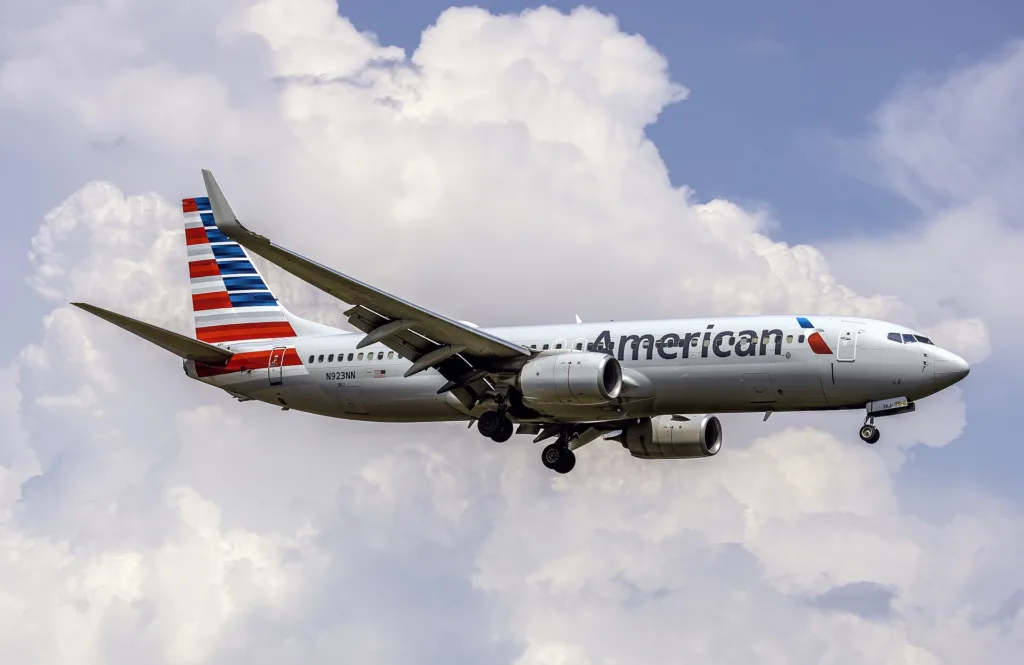
Archive image: American Airlines Boeing 737-800, registration N923NN, photographed on 31 July 2024. © Acroterion / Wikimedia Commons, CC BY-SA 4.0. The photo does not depict an aircraft confirmed to have Starlink installed.

JOIN THE CONVERSATION
Let’s discuss this story.
A question, a clarification or a different perspective? Share it with us.