
American Airlines 737 crew reports drone passing within 100 feet near Chicago
Thirty metres is almost no distance at all when the aircraft beside you is a passenger jet. Pilots of an American Airlines Boeing 737-800 reported a drone passing close to their aircraft
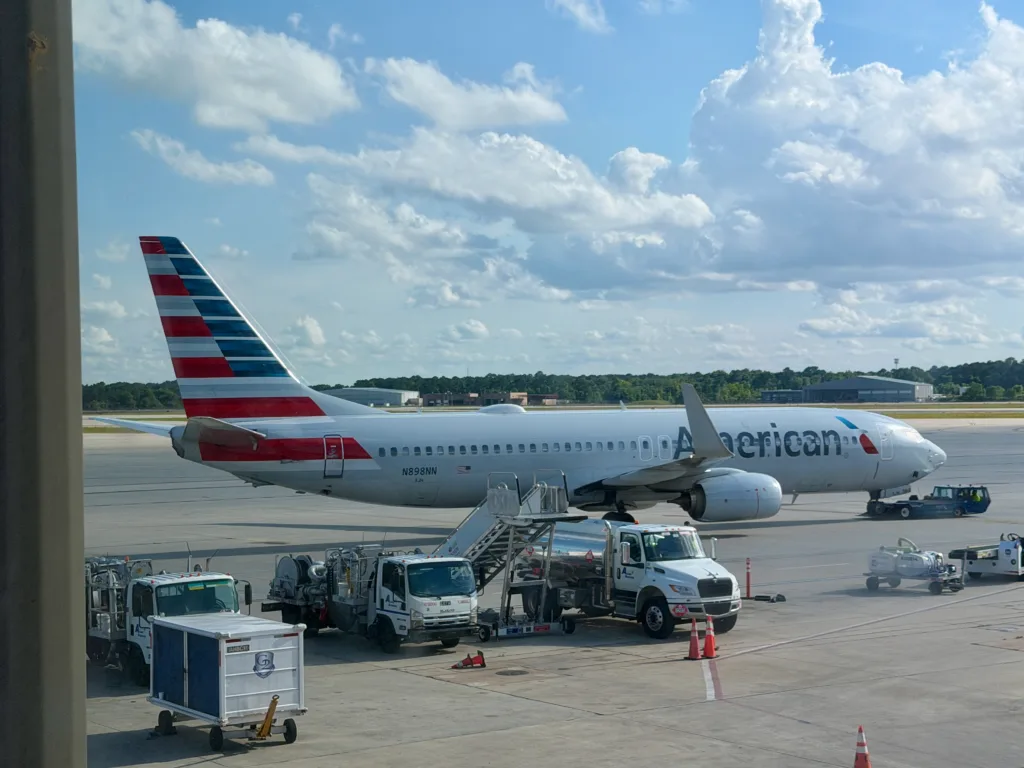
Thirty metres is almost no distance at all when the aircraft beside you is a passenger jet. Pilots of an American Airlines Boeing 737-800 reported a drone passing close to their aircraft after departure from Chicago O’Hare. The incident occurred on Saturday, 10 October, aboard flight AA1936 to Newark, according to a report published by aviation outlet AIRLIVE on 14 October. The captain reportedly estimated a separation of just 100 to 200 feet, or roughly 30 to 60 metres.
AIRLIVE identifies the aircraft as Boeing 737-800 N893NN. The crew had taken off from Runway 22L and were conducting their normal climb when they allegedly spotted an unmanned aircraft near the Lake Michigan shoreline at approximately 7,000 feet. There is no report of physical contact, a sudden evasive manoeuvre or aircraft damage. The flight continued to Newark and landed normally.
That separation is an estimate attributed to the crew, not a confirmed investigative measurement. The sighting is concerning, but the publicly available account does not establish the drone’s exact flight path or contain a detailed FAA investigation report. It would be misleading to claim that the crew narrowly prevented a disaster on the basis of the distance estimate alone.
From the cockpit, a small drone may be difficult to detect in time to react. It presents a much smaller visual target than an aircraft, and a fast closing speed can leave a crew with only seconds to assess what they are seeing. Many small unmanned aircraft also lack the cooperative surveillance equipment that allows conventional traffic to be displayed by airline collision-avoidance systems. Visual detection therefore remains important, even for crews operating sophisticated jets.
The reported separation is a crew estimate, not an independently published measurement. Confirming the object’s identity, position and proximity would require further evidence. The wider hazard of drones near flight paths is real, but the reported sighting must not be described as a confirmed collision or as a fully established near-miss distance.
Drone operations near major US airports are governed by airspace restrictions and authorisation requirements. The rules depend on location, altitude and whether permission has been obtained. A remotely piloted aircraft operating where a commercial departure is climbing could create both a regulatory issue and an operational hazard. Even without a collision, an unexpected object in controlled airspace can increase workload at a demanding stage of flight.
Flight AA1936’s uneventful arrival should not be twisted into evidence that nothing happened, nor should an unverified proximity estimate be exaggerated into a dramatic near-catastrophe. The case illustrates how difficult it can be to detect and manage small airborne objects around major hubs. Further confirmation from the FAA or additional flight records would help establish exactly how close the two aircraft came.
Sources : AIRLIVE, 14 October 2026 ; AA1936 flight history, Flightradar24.


JOIN THE CONVERSATION
Let’s discuss this story.
A question, a clarification or a different perspective? Share it with us.