
American Eagle CRJ900 Returns to St. Louis After Oxygen Masks Deploy, Passengers Evacuate
American Eagle flight AA5089 returned to St. Louis on 17 October. Passengers reported oxygen masks and an emergency evacuation; the cause remains unknown.
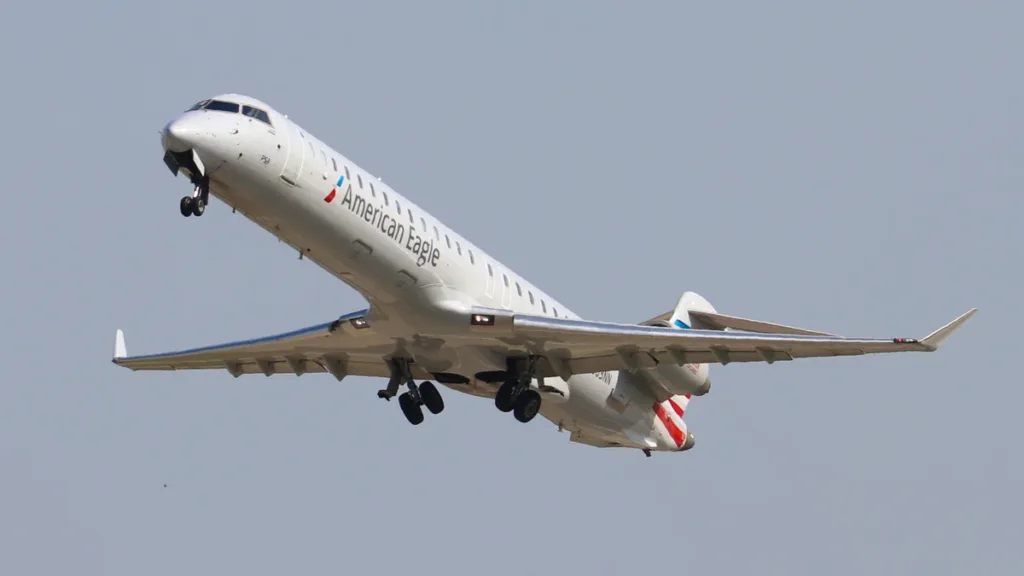
An American Eagle flight from St. Louis to Philadelphia returned for an emergency landing on Saturday, 17 October 2026, after the pilot reported cockpit fumes, according to air traffic control exchanges cited by ABC6 Philadelphia. Passengers described oxygen masks dropping and haze or smoke in the cabin before the crew ordered an evacuation on the airfield. The aircraft, a Bombardier CRJ900 operated by PSA Airlines for American Airlines, landed safely and was removed from service for a maintenance inspection.
The flight had already faced a lengthy delay. Passengers interviewed by St. Louis television station KSDK, whose interviews were also reported by NBC Philadelphia, said they had been told before departure that the engines would not start. The aircraft was scheduled to leave at around 6 a.m. local time but took off about two hours later. That earlier problem was described by passengers, yet there is no established technical connection between the delayed departure and the subsequent emergency.
Roughly 15 minutes into the flight, travelers said the passenger oxygen masks deployed. Some reported a grinding or buzzing noise, an unusual burning smell, and haze in the cabin. Their accounts describe what happened in the cabin, but do not identify the underlying technical problem. Flight-tracking information reviewed by AeroCorner indicates that the aircraft climbed to about 21,000 feet before descending towards 10,000 feet on its return to St. Louis.
An airport spokesperson, quoted by local station FOX 2, said the pilots contacted air traffic control at approximately 8:43 a.m. to request an emergency landing. The aircraft touched down at about 8:59 a.m. Emergency responders attended, and passengers were instructed to leave the jet. Witnesses described some travelers exiting over the wing before moving away from the aircraft. The number of people on board has not been publicly confirmed in the reports reviewed.
What the crew and airline reported
In a statement carried by NBC Philadelphia, American Airlines confirmed that flight AA5089, operated by PSA Airlines, returned to St. Louis shortly after takeoff following a reported odor. The airline said the aircraft landed safely and was taken out of service for inspection by its maintenance team. The radio exchanges reported by ABC6 Philadelphia add that the pilot described fumes in the cockpit and requested emergency assistance. Controllers had also warned of birds near the airport before departure, but no bird strike has been established. American Airlines apologized to customers and thanked the crew for its professionalism.
The return to St. Louis interrupted the journey to Philadelphia. ABC6 Philadelphia reported that the airline accommodated passengers on later flights that day. One passenger told KSDK that American Airlines had emailed four $12 meal vouchers for her travelling party, an offer she considered inadequate. That account does not establish what assistance every passenger received. Because AA5089 was a domestic US service, the EU’s fixed flight-disruption compensation rules do not apply. Further assistance depends on the carrier’s commitments and each traveler’s booking circumstances.
Local initial reports indicated that no injuries had been officially reported. However, an online post from someone identifying themselves as a passenger mentioned an injury during the evacuation; this account has not been independently verified. The available reports did not establish a final official injury tally or provide a detailed account of damage to the aircraft.
What the oxygen masks tell us
Passenger oxygen masks may deploy when a cabin-pressure threshold is reached, or they may be released manually by the crew. “Cabin altitude” describes the equivalent atmospheric pressure inside the aircraft, not its actual height above the ground. The descent recorded on the flight track does not establish which event triggered the masks. An aircraft inspection or investigation would be needed before attributing the emergency to a particular system or component.
Flight-tracking records identify the aircraft as CRJ900 registration N574NN, not the aircraft pictured in the archive photograph accompanying this article. American Airlines withdrew the aircraft from service for inspection. Its findings may help explain the reported fumes and why the oxygen masks deployed.
Updated 20 October 2026 (Paris time).
JOIN THE CONVERSATION
Let’s discuss this story.
A question, a clarification or a different perspective? Share it with us.