
Aeroflot orders 90 more MC-21-310 aircraft
Aeroflot has placed a firm order for 90 additional MC-21-310 aircraft, taking its total commitment to 108 jets with deliveries planned through 2032.
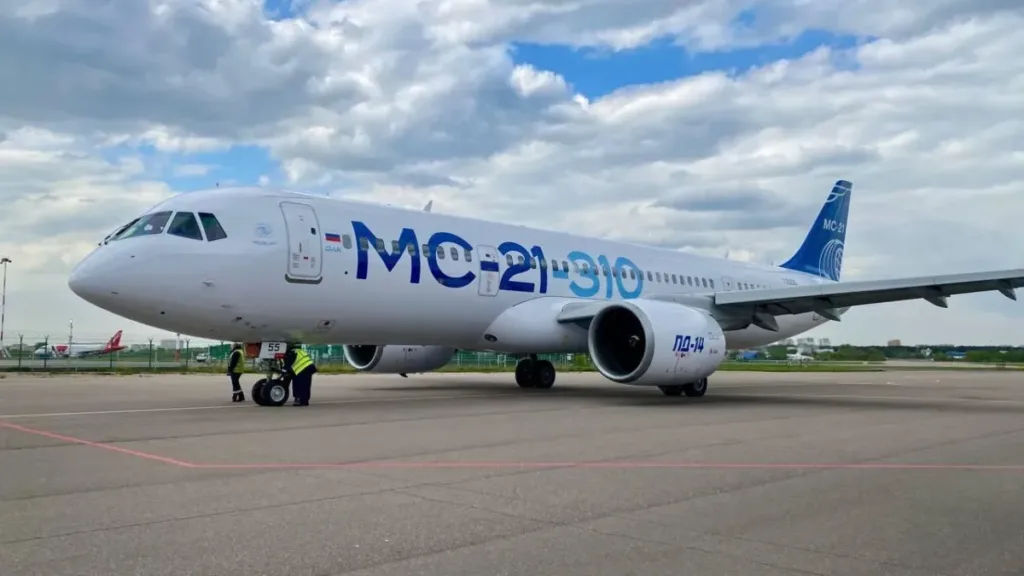
Aeroflot’s new order for 90 MC-21 jets gives Russia’s aircraft industry a delivery programme stretching to 2032. The harder question is whether that programme can move from contracts to reliable scheduled flights. Signed on 18 September 2026 with companies in the Rostec group, the agreement calls for deliveries between 2029 and 2032 while certification and industrial ramp-up of the extensively reconfigured Russian-built aircraft remain critical milestones.
The contract involves Aeroflot, United Aircraft Corporation (UAC), Aviacapital-Service and United Engine Corporation. Added to an earlier agreement for 18 MC-21 aircraft in 2023, the new order brings Aeroflot’s contracted commitment to 108 jets. The timetable is unusually specific: 14 deliveries in 2029, 18 in 2030, 24 in 2031 and 34 in 2032. Those figures turn the headline order into a year-by-year manufacturing test. By the final year, the supplier would have to deliver 34 aircraft to Aeroflot alone while meeting any other commitments.
Aircraft are only one part of the package. It also includes simulators, pilot and technical training and a 22-year after-sales support arrangement. Those provisions matter operationally: an airline cannot add useful capacity simply by taking delivery of airframes. Crews must be qualified, spares and software must be available, and maintenance needs to sustain dispatch reliability across an expanding fleet.
Certification is the first hurdle
The MC-21-310 uses Russian PD-14 engines. Following sanctions and the withdrawal of Western suppliers after Russia’s invasion of Ukraine, engineers had to redesign large parts of the aircraft around domestically sourced systems. Rostec says roughly 80 systems and components were affected by this import-substitution work. That makes certification of the new configuration, followed by consistent industrial output, central to the credibility of the timetable.
Aeroflot is separately expecting its first 18 MC-21s under the 2023 deal in 2027–28. The airline has said it intends to begin with relatively short services, including Moscow–Saint Petersburg and Moscow–Nizhny Novgorod, where aircraft can be supported and substitutions arranged more readily. Rather than an incidental route choice, this is an operationally cautious way to introduce a new type while monitoring reliability and maintaining the schedule.
The agreement creates a delivery target, not aircraft immediately available for airline service. Certification, industrial production rates, maintenance support and crew training must all advance before the MC-21s can operate reliably at scale. The firm order alone does not establish that Aeroflot’s future capacity needs will be met.
For Aeroflot, the aircraft are intended to shape future domestic capacity as the group continues operating fleets containing Airbus A320-family and Boeing 737 aircraft. For UAC, the order provides production visibility but creates substantial delivery and support obligations. A certification delay or difficulty establishing a robust parts supply chain could have consequences across several years of airline fleet planning.
The MC-21 also carries a political and industrial purpose: reducing Russia’s dependence on Western aerospace suppliers in a market constrained by sanctions. Yet passengers and airlines will ultimately judge it by less symbolic measures — whether aircraft arrive when promised, operate consistently and can be maintained efficiently.
The immediate milestones are therefore the first commercial deliveries, entry into routine passenger service and the gradual increase from 14 to 34 deliveries per year under the new contract.
Sources: Rostec, official announcement, 18 September 2026; Interfax, delivery schedule; Interfax, first aircraft and introduction plans; Russian Ministry of Transport.
Read next

JOIN THE CONVERSATION
Let’s discuss this story.
A question, a clarification or a different perspective? Share it with us.