
VietJet Faces Worldwide Asset Freeze in $250 Million Aircraft Leasing Dispute
A UK court has ordered a worldwide freeze on VietJet's assets over an aircraft leasing dispute. What the ruling does, and what it means for flights.
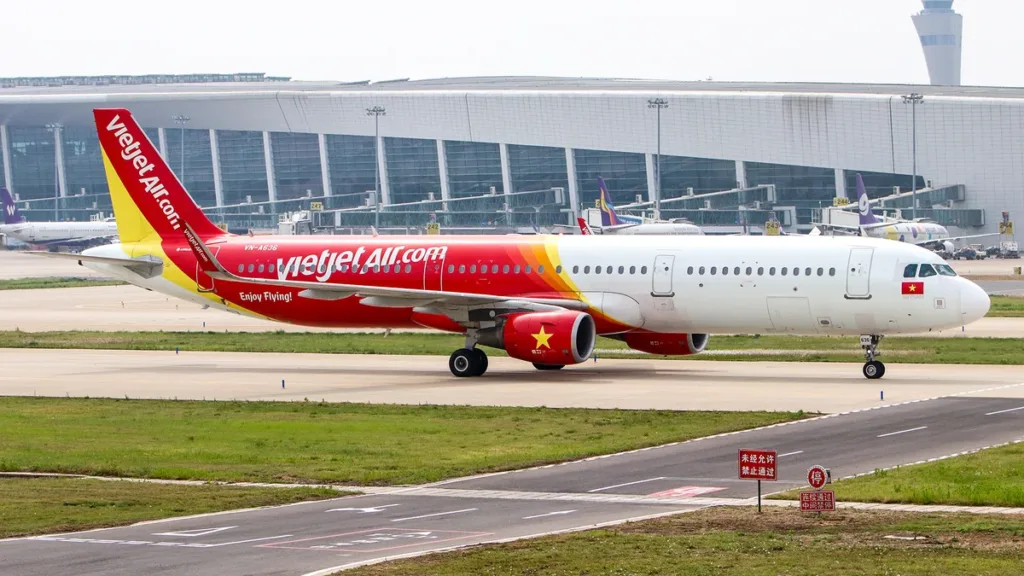
England’s High Court granted a worldwide freezing order against VietJet Aviation on 15 October 2026, escalating a long-running aircraft finance dispute. The Vietnamese airline owes approximately US$250 million under English judgments arising from four Airbus A321 aircraft. The decision is a significant restriction on how the airline may deal with its assets, but it is not an immediate seizure of its entire fleet or an order to stop flying.
The Commercial Court, through Mr Justice Pushpinder Singh Saini, granted a post-judgment worldwide freezing order intended to prevent assets being moved beyond the reach of creditor FW Aviation (Holdings) 1 Limited. Such an injunction seeks to preserve assets while enforcement proceeds; it does not itself hand ownership to the creditor. The judgment discusses allowances for ordinary business dealings involving Vietnamese assets and operational assets abroad. The precise effect on a particular asset will depend on the order and on enforcement in the relevant jurisdiction.
The case began with leases covering two Airbus A321-271s and two A321-211s. They were financed through Japanese Operating Leases with Call Options, or JOLCOs, structures combining aircraft leasing with financing and a potential purchase option. After rent defaults during the Covid restrictions, lenders moved to terminate the subleases in October 2021. Jersey-registered FW Aviation, ultimately controlled by FitzWalter Capital, acquired the lenders’ rights, including claims for sums owed and rights connected to the aircraft.
English litigation then produced several judgments. The airline’s liability was established in July 2024, with further financial awards in April 2025 and July 2026. According to the October freezing-order judgment, VietJet had paid just US$2 million towards the judgment debt, in May 2025. Its efforts to contest enforcement have extended across jurisdictions: Vietnamese courts declined to recognise the English judgments, and FW Aviation had not recovered the outstanding balance through its international enforcement attempts.
The aircraft orders at the heart of the dispute
A key concern for the judge was not the aircraft already operating VietJet’s routes but the economic value tied to its future Airbus and Boeing orders. A place in an order book is not the same as owning a delivered jet. Nevertheless, deposits, pre-delivery payments and contractual rights associated with those orders can be valuable assets available to satisfy a judgment.
The court examined arrangements transferring rights connected with aircraft orders and pre-delivery payments to Angelica Holding Limited, a related company incorporated in the Cayman Islands. Mr Justice Saini found compelling evidence of a real risk that assets could be placed beyond enforcement and questioned the commercial explanation given for the transactions. VietJet argued that the structures were normal financing or refinancing arrangements rather than an attempt to frustrate its creditor.
This finding contrasts with a ruling in July 2025, when an earlier worldwide freezing application failed because the creditor had not established the necessary risk. New evidence changed that assessment. Separately, on 30 September 2026, Mr Justice Butcher concluded that appointing receivers to assist enforcement over certain VietJet assets, initially excluding assets in Vietnam, was appropriate in principle. The law firm Slaughter and May, acting for FW Aviation, says a further order on 15 October appointed receivers. A freezing injunction aims to preserve assets; receivers are intended to help realise them.
What it means for aircraft deliveries and passengers
The order creates a serious legal and financial challenge for VietJet, particularly where assets or contractual rights linked to future aircraft deliveries might otherwise be sold, transferred or refinanced. Its consequences could extend into negotiations with financing partners. But the ruling alone does not prove that any aircraft have been seized, deliveries postponed or routes cancelled.
For passengers, tickets do not become invalid simply because a worldwide freezing order has been made. There is no automatic grounding of VietJet’s fleet. What matters next is whether enforcement steps, financing arrangements or decisions by the airline produce identifiable operational changes. Those developments, rather than speculative disruption, will determine whether customers need to take action.
Primary documents: 15 October judgment, [2026] EWHC 2633 (Comm), and the 30 September receivership judgment.

JOIN THE CONVERSATION
Let’s discuss this story.
A question, a clarification or a different perspective? Share it with us.