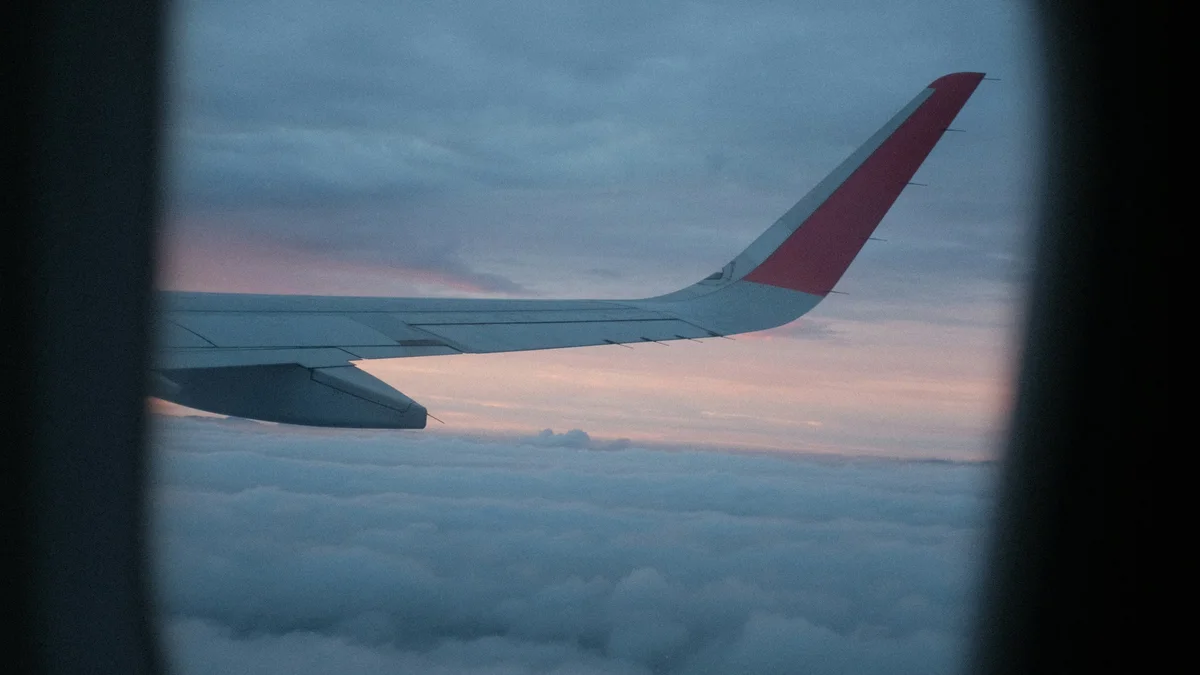
If you have ever looked closely at an airplane window, you may have noticed a tiny hole near the bottom of one of the inner panes. At 35,000 feet, that can look a little unsettling. But the hole is not damage — it is part of the window’s design.
That tiny opening helps manage pressure inside the window assembly and also helps control moisture between the panes. In other words, it is there to make the window work properly in a pressurized airplane.
Airplane windows are made of multiple panes
What you touch from your seat is not the only layer separating you from the outside air. Passenger windows are built as multi-pane assemblies, with different layers performing different jobs.
The Federal Aviation Administration requires windows on pressurized transport aircraft to be designed for the repeated pressure loads and temperature differences they experience in flight. FAA guidance also describes passenger cabin windows as having multiple panes, with structural panes capable of carrying cabin pressurization loads.
So what does the tiny hole actually do?
The small opening is often called a bleed hole or breather hole. It connects the air space between panes with the pressurized cabin.
That matters because the pressure outside an airliner at cruise altitude is far lower than the pressure inside the cabin. By allowing pressure between the inner layers to equalize with cabin pressure, the window assembly can direct the main pressure load to the pane designed to handle it.
The hole does not go straight through the entire window to the outside atmosphere. Cabin air is not simply leaking out through it.
Why pressure matters at cruising altitude
Airliners typically cruise around 30,000 to 40,000 feet, where the atmosphere is much thinner than it is at sea level. The cabin is therefore pressurized to create a safer and more comfortable environment for passengers and crew.
That creates a pressure difference between the inside and outside of the airplane. The fuselage, doors and windows are all designed to withstand that load over thousands of pressurization cycles.
FAA guidance for transport-category aircraft specifically addresses the structural design of windows in pressurized cabins and requires them to remain safe even after certain failures.
The hole can also help with condensation
There is another useful effect. At cruise altitude, the outer part of the window can become extremely cold while the cabin remains warm.
Moisture in cabin air can condense on cold surfaces. The small vent path allows limited airflow through the space between panes, helping moisture move and reducing the chance of persistent fogging inside the window assembly.
That is one reason the view usually remains clear even when the temperature outside is far below freezing.
What happens if one pane cracks?
Passenger windows are designed with redundancy. FAA maintenance guidance describes structural panes that are capable of carrying cabin pressurization loads, rather than relying on one fragile sheet of material.
That does not mean a cracked window can be ignored. Crews and maintenance teams treat visible window damage seriously, and an aircraft may need inspection or repair depending on which layer is affected and how severe the damage is.
But seeing the tiny factory-made hole is completely different from seeing an actual crack. The hole is supposed to be there.
Why airplane windows are rounded
The shape of the window is another part of the engineering. Modern passenger windows have rounded corners rather than sharp square ones because rounded shapes distribute stress more smoothly through the surrounding structure.
The importance of stress concentration became painfully clear in the early era of pressurized commercial aviation. Today, window shape, mounting structure, materials and fail-safe design are all considered together during certification.
Is the tiny hole dangerous?
No. Under normal conditions, the tiny hole is exactly where it is supposed to be.
It is part of the pressure-management design of the window assembly, not a puncture through the airplane. If you ever notice actual cracking, deformation or anything that looks damaged, telling a flight attendant is appropriate. But the small round hole itself is normal.
A small detail with an important job
Airplane cabins are full of details passengers rarely notice until they start looking closely. The tiny hole in the window is one of the best examples.
It helps balance pressure between parts of the window assembly and contributes to moisture control, while the structural panes deal with the much greater pressure difference between the cabin and the outside atmosphere.
So the next time you are in a window seat over the United States — or anywhere else — there is no reason to worry about that little opening. It is a feature, not a flaw.
Related on AeroSillage: Why do you need airplane mode on your phone? and our Safety & Regulation desk.
Main sources
Federal Aviation Administration (FAA) — AC 25.775-1, Windows and Windshields; AC 25-20, Pressurization, Ventilation and Oxygen Systems Assessment; FAA maintenance guidance for passenger cabin windows.
Photo: Dennis Siqueira / Unsplash.



Leave a Reply