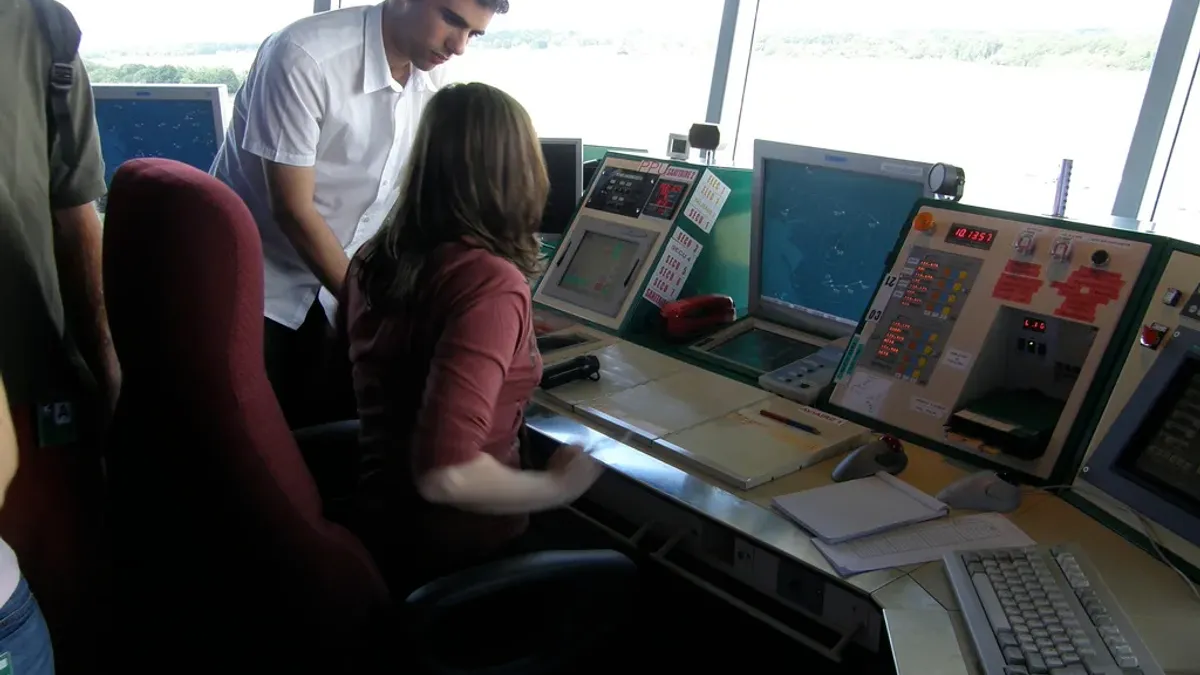
A cut fibre in New Jersey and a connectivity failure at a Scottish control centre showed the same thing within hours: air traffic control does not need to “go down” completely to disrupt thousands of flights. Modern aircraft may be fully serviceable, but if controllers lose a critical communications, flight-data or network function, the safe response is to reduce traffic immediately.
Two recent outages show how local failures become network events
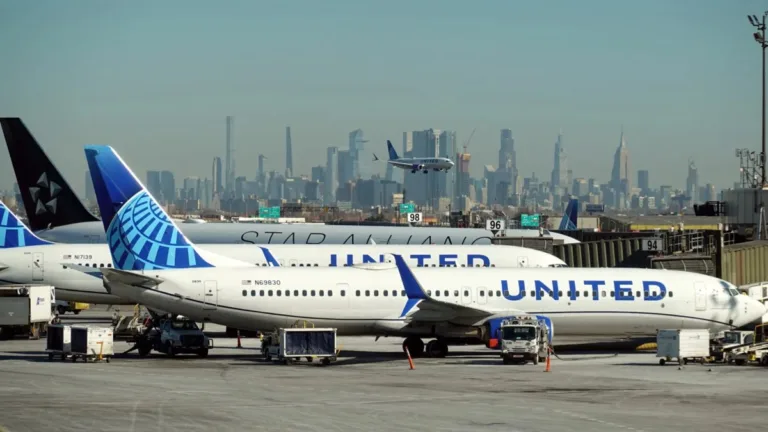
On September 21, 2026, the FAA imposed traffic restrictions across the US Northeast after telecommunications problems linked to a damaged fibre route in New Jersey. Newark, JFK, LaGuardia, Philadelphia and Boston were among the airports affected. Reuters reported roughly 7,000 US flights delayed or cancelled during the day.
The same day, NATS reported a connectivity problem at Prestwick in Scotland. Manchester, Glasgow, Belfast and other airports saw delays and cancellations. The fault was restored relatively quickly, but it came less than two weeks after a separate UK flight-data software failure that had produced around 2,000 cancellations.
A network of redundant systems, never completely invulnerable
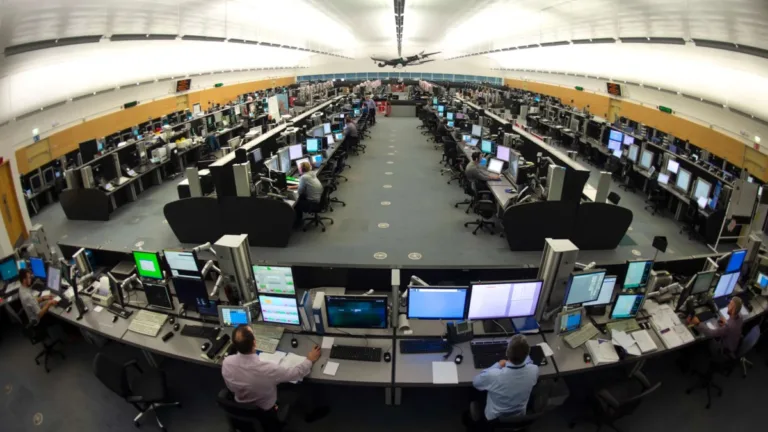
A modern control centre depends on several technical layers working together:
- surveillance, including radar and ADS-B;
- communications, such as radio, operational telephony and inter-centre links;
- flight-data processing and flight-plan distribution;
- controller support tools for conflict detection, sequencing and trajectory prediction;
- technical networks carrying data between sites;
- flow management, which limits how many aircraft are allowed into a sector.
A radar failure is therefore different from a communications failure, and a flight-data problem is different again. Some faults allow degraded operations; others force capacity to fall sharply.
Critical systems are built with backups, alternate procedures and failover capability. But a “main” system and its backup can still share an upstream dependency, a physical route, a software layer or a common power or telecoms environment.
Resilience therefore means more than duplicating hardware. It means separating dependencies, testing degraded modes and ensuring controllers can continue safely with fewer tools.
Why safety means reducing traffic first
When a control centre loses capacity, the safest response is usually to stop additional aircraft entering the constrained airspace. Departures are delayed, routes are changed and traffic-flow restrictions are applied.
That is why a passenger can be stuck in Paris, Dublin or Madrid even when the departure airport itself is operating normally: the bottleneck may be hundreds of kilometres away on the planned route.
In Europe, EUROCONTROL’s Network Manager coordinates these restrictions across the continent.
France is modernising a still-complex ATC architecture
French civil air traffic control is provided by the DSNA, part of the DGAC. It manages roughly 1 million square kilometres of airspace and handled more than 3.39 million flights in 2024.
The en-route system is organised around five main control centres: Brest, Athis-Mons, Reims, Aix-en-Provence and Bordeaux. Eleven regional air-navigation services also handle approach and airport control across major parts of the country and overseas territories.
France is still in the middle of a long technology transition. The 4-FLIGHT controller environment, developed with Thales, works with the Coflight flight-data processing system.
4-FLIGHT is already operational at Reims, Aix-en-Provence and Athis-Mons. Brest and Bordeaux are expected to move later, with parliamentary work pointing toward completion around 2028.
During this transition, old and new generations of systems coexist. That reduces the risk of changing everything at once, but it also creates interfaces, maintenance complexity and a need to retain expertise on legacy equipment.
Yes, in principle. No complex network is immune from a software defect, telecoms failure, configuration error, hardware fault or a shared-infrastructure problem.
The expected response, however, would not normally be a “loss of control” of aircraft. It would be a precautionary reduction in sector capacity, followed by ground delays, rerouting and, if the event lasted long enough, cancellations.
Outage, cyberattack and cascading delay are different problems
The US and UK examples are a useful warning against assuming that every computer-related disruption is malicious. The US incident involved telecommunications infrastructure; the earlier UK event was attributed to a software defect.
ATC networks are critical infrastructure and are protected accordingly, but technical failure and cyberattack are not interchangeable terms.
Airline schedules are chains of aircraft rotations and crew duties. A two-hour delay on one sector can delay the next flight, push crews toward legal duty limits, break passenger connections and cause aircraft to miss airport slots or curfews.
This is why a failure lasting tens of minutes can create disruption lasting many hours after the technical problem itself has been fixed.
The US, UK and France are all modernising ATC infrastructure. These systems cannot be replaced like office computers: each change has to be tested, certified, introduced gradually and accompanied by extensive training.
For a period, new and legacy systems must work side by side. That transition is unavoidable, but it increases the importance of interface testing and contingency planning.
Robust, but never invulnerable
The recent outages do not show that air traffic control has become unsafe. They show the opposite: when a critical function becomes unreliable, authorities reduce capacity rather than accept extra risk.
The price of that caution is punctuality. A single fibre cut or software fault can delay aircraft that are themselves perfectly serviceable. The challenge is not to promise that failures will never happen, but to ensure that technical failure remains a traffic problem rather than a safety problem.
Main sources
Reuters on the September 21 US and UK outages; DGAC/DSNA material on French air traffic management, 4-FLIGHT and DSNA 2030; French Senate and Cour des comptes work on ATC modernisation; EUROCONTROL network-management documentation.
Leave a Reply