
U.S. Seeks $30.1 Billion for Air Traffic and Airports
The White House is seeking $30.1 billion more for U.S. air traffic systems, FAA towers and airports. The November 13 request follows major flight disruptions and a federal audit of the FAA's modernization program.
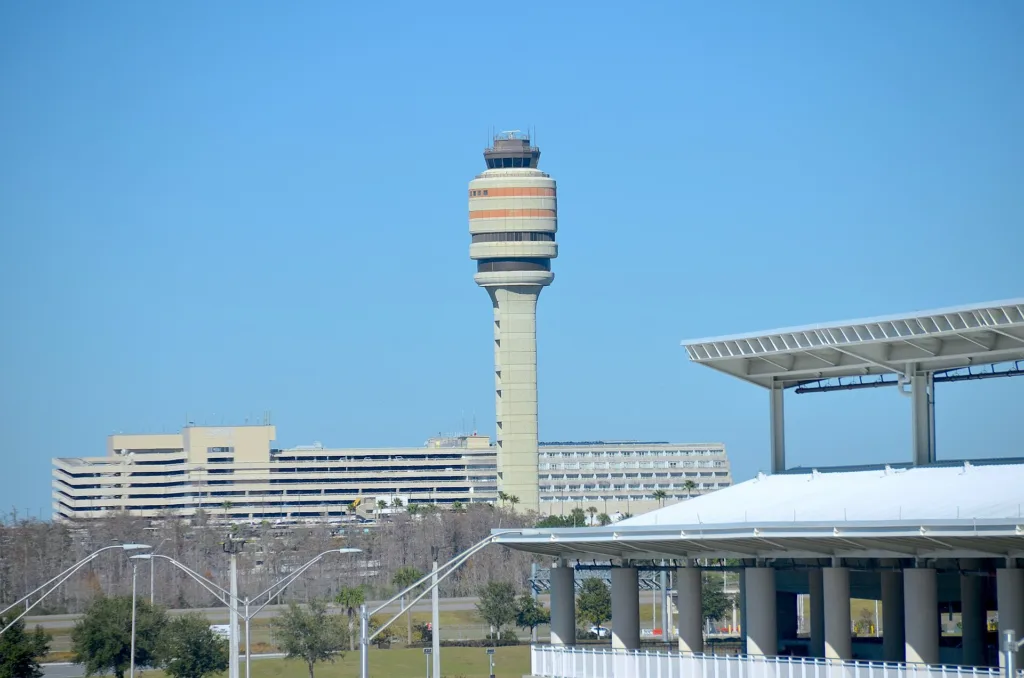
The White House wants $30.1 billion more to upgrade U.S. air traffic control and airports. Announced November 13, 2026, the request directs proposed investment toward controller technology, towers and aging terminals. Congress must approve the money before the new projects can move forward.
White House divides $30.1 billion between technology, towers and airports
The White House and Department of Transportation are asking Congress to finance three major upgrades, Reuters reported on November 13. Their proposal assigns $10.1 billion to air traffic technology, $2 billion to control towers and $18 billion to airport projects.
The airport allocation includes $10 billion for aging terminals. Those buildings handle check-in, security processing, gate access and passenger connections. Washington has not named the airports that would receive the money.
Meanwhile, the $10.1 billion technology proposal targets a shared automation platform, new controller workstations and cloud-based systems. These tools would improve information sharing while keeping human controllers responsible for managing flights.
The $2 billion tower component would replace or improve FAA control towers. AeroSillage previously reported on new digital control towers in Florida and Alaska. However, neither the number of towers receiving funding nor a list of selected airports was confirmed in the November 13 reporting.
Congress must approve the money before projects can receive it
Congress has not approved this $30.1 billion. Lawmakers must authorize the additional spending before agencies can award new projects. Therefore, the announcement does not start construction or establish airport completion dates.
Transportation Secretary Sean Duffy has pressed for a broader overhaul. In September, he supported the Modern Skies Act, introduced by Senator Eric Schmitt. That bill sought roughly $30 billion for aviation infrastructure. The November request sets out a specific new spending breakdown.
Existing FAA modernization efforts already have substantial funding. Congress approved $12.5 billion in July 2025 for air traffic upgrades and controller hiring. Nevertheless, the administration says more investment is needed to complete a wider transformation of the national aviation system.
FAA technology problems are affecting flights today
Equipment failures have already disrupted thousands of U.S. flights. According to Reuters, September outages affected travelers across the Northeast. When controllers lose dependable communications, they may restrict departures until technicians restore service.
The FAA still operates legacy systems that date back decades. On November 5, the Department of Transportation announced a new information display system for more than 400 FAA facilities. It is designed to replace older equipment that still uses floppy disks.
Separately, federal officials say they have replaced 68% of the FAA’s legacy copper network with fiber. That is progress toward a more resilient communications system, not proof that outages have ended.
For passengers, more reliable equipment could mean fewer technology-driven delays. However, the proposal includes no verified target for reducing cancellations or delay minutes. The gains depend on procurement, installation and successful testing.
Government auditors warn about the FAA’s project schedule
The FAA must also manage a massive installation effort. In its September 14 audit, the Government Accountability Office found 11,389 separate project schedules without one integrated master schedule.
As a result, technicians could visit the same facility repeatedly for different installations. GAO cited St. Louis, where crews were scheduled for site preparation in April 2027 and again in January 2028. The watchdog also found no reliable estimate of the program’s full lifetime cost.
GAO recommended a comprehensive cost estimate and a coordinated installation schedule. Poor planning could prolong reliance on outdated systems and create further disruptions during the overhaul.
AeroSillage previously examined the FAA overhaul’s existing funding and scheduling risks. The November 13 request advances that story by identifying an additional spending package for airports and air traffic operations.
What happens next for U.S. airlines and passengers
Major U.S. airlines support additional funding, Reuters reported. Their interest is operational: more reliable air traffic systems could reduce interruptions that ripple through aircraft rotations, crews and connecting flights.
Airport operators could seek funding for terminals and other facilities. However, Washington has not identified individual grant recipients. Passengers should not expect immediate changes at their airport because of this announcement.
The next milestone is congressional action on the additional request. Until lawmakers approve funding and agencies publish specific projects, the $30.1 billion remains a proposal. The FAA’s current modernization work continues under previously approved resources.
Read next
JOIN THE CONVERSATION
Let’s discuss this story.
A question, a clarification or a different perspective? Share it with us.