
FAA Air Traffic Overhaul Faces $30 Billion Funding Question
Auditors found 11,389 uncoordinated project schedules in the FAA's $12.5 billion air traffic overhaul. Its administrator faces a hearing as a further $30 billion remains unapproved.
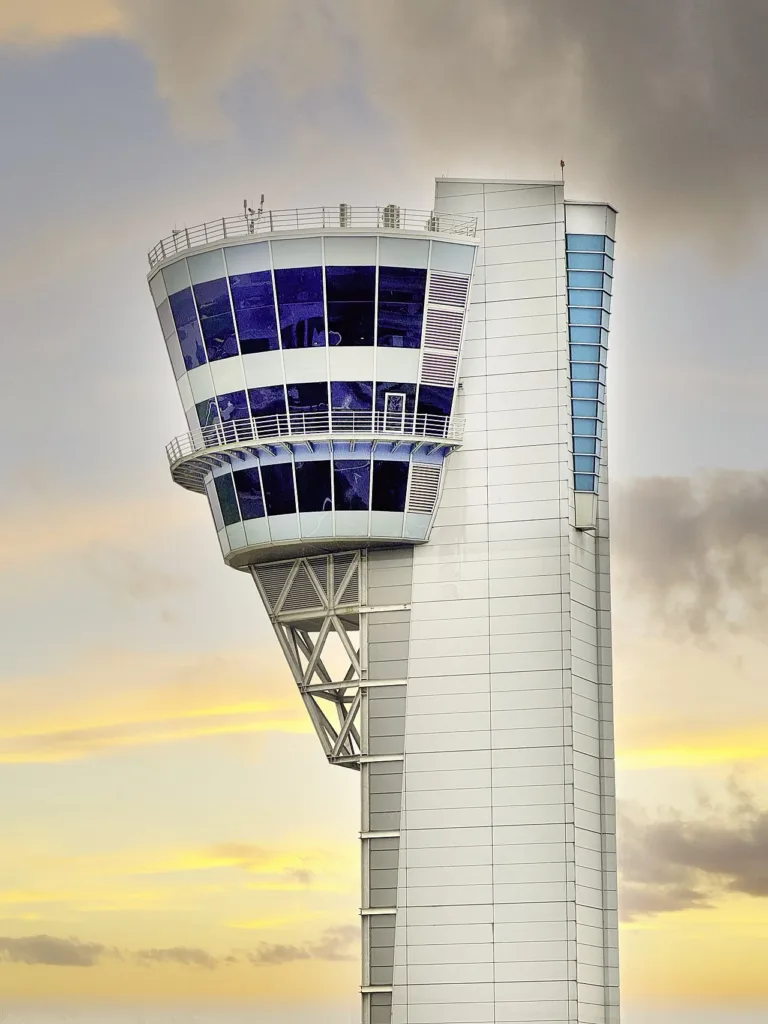
The FAA is trying to rebuild America’s air traffic control network with $12.5 billion in federal funding, but auditors found 11,389 project schedules that have not been combined into a single plan. Federal auditors also say the agency lacks a comprehensive estimate of what the entire modernization will cost.
FAA Administrator Bryan Bedford is expected to face questions about the effort at a November 10, 2026, House hearing. Meanwhile, the administration is seeking another $30 billion for broader upgrades. That additional money is a proposal, not an approved appropriation.
Auditors found thousands of uncoordinated installation plans
The Government Accountability Office reported in September that the FAA had 11,389 separate project schedules. It had not fully linked them into a master timetable.
As a result, contractors could plan different installations at the same facility without fully accounting for how their work overlaps. Controllers still need working communications and surveillance systems during each changeover.
The GAO also found no well-documented estimate covering the system’s full operating life. Its preliminary costs omitted some government work, most first-phase operating expenses and second-phase costs.
These omissions create risks of delays and overruns. However, the GAO did not declare that the modernization had failed.
What the $12.5 billion is supposed to replace
Congress appropriated $12.5 billion in July 2025 for the Brand New Air Traffic Control System initiative. It is using most of that funding for its first phase, which contains 13 major programs.
They include replacing aging communications links, surveillance equipment, weather systems and tools used by controllers. The agency aims to complete phase one by December 2028.
For example, the GAO said the FAA had replaced 2,560 of 5,170 aging copper communications connections by May 2026. Fiber-optic cables can support more reliable, higher-capacity links.
Another target is the paper flight progress strip. Controllers have traditionally used these physical strips to track aircraft and coordinate movements. Digital replacements can share information more directly between positions.
Still, new hardware must be installed without interrupting live air traffic services. That’s why coordination between projects is not merely an accounting concern.
The proposed $30 billion is not a second approved budget
Phase two would introduce newer automation for tracking aircraft and managing traffic flows. The FAA estimated roughly $10.2 billion for those system upgrades, excluding facilities. It has not set firm start or completion dates.
Separately, the administration has requested another $30 billion for wider air traffic infrastructure and technology. That figure should not be confused with the $10.2 billion estimate for one part of phase two.
Neither amount is an established final cost for the entire overhaul. The GAO also says the FAA needs a reliable estimate that includes construction, installation, operation and long-term support.
Congress will question FAA progress on November 10
Bedford is scheduled to testify before the House Transportation and Infrastructure Committee on November 10. Reuters reported the hearing date on November 6. The hearing remains a future event at the time of this article.
Lawmakers can examine whether the FAA has identified installation conflicts and developed a credible schedule. They can also ask how the agency will measure progress beyond purchasing equipment.
The GAO recommended stronger cost and schedule planning. FAA officials said they were developing an approach to integrate projects, including testing an automated scheduling tool. However, auditors said no timeline for resolving the problem had been established.
Why passengers should care about the spending
Old equipment can fail, forcing controllers to reduce traffic or reroute aircraft. Those restrictions can spread delays across multiple airports, especially at busy hubs. Modernization is meant to reduce this vulnerability.
Yet a new system does not improve operations the day a contract is signed. Installation, testing and controller training must follow. Spending totals alone therefore cannot show whether passengers will face fewer disruptions.
Related efforts include the FAA’s digital departure clearance rollout and its cockpit familiarization program. These initiatives address different parts of the wider air traffic system.
What matters now is accountability. The FAA has started replacing obsolete technology, but Congress still lacks a complete picture of the work’s total price and coordinated timeline.
Read next

JOIN THE CONVERSATION
Let’s discuss this story.
A question, a clarification or a different perspective? Share it with us.