
FAA Opens Digital Towers at Airports in Florida and Alaska
The FAA says digital air traffic control towers are operating at airports in Florida and Alaska, with five more sites planned. Controllers remain in charge as cameras and panoramic displays replace tower-window views.
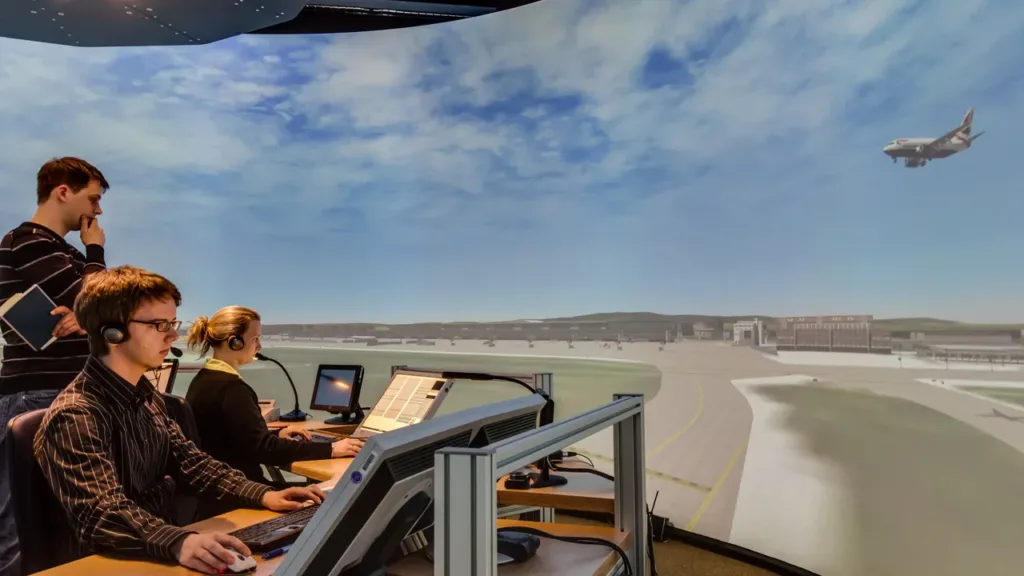
The Federal Aviation Administration has put digital air traffic control towers into operation at two U.S. airports, replacing the traditional window view with live camera feeds and panoramic screens. On November 6, 2026, the agency announced the milestone, naming Bartow Executive Airport in Florida and Kenai Municipal Airport in Alaska. Five more airports are slated to receive the technology.
Controllers still direct aircraft. However, they now monitor runways, taxiways and nearby airspace through high-definition images rather than relying solely on a tower cab’s windows. The FAA says the systems can give smaller airports access to control services without the expense of constructing a conventional tower. It has not published a per-airport savings figure.
Two airports are operating digital towers
Bartow’s digital tower entered service in September 2026, according to the FAA program timeline. Kenai is the second operational location identified in the agency’s November 6 announcement.
The rollout therefore did not begin at both airports on November 6. That date marks the FAA’s public announcement of the two-site milestone.
Next, the agency plans installations at five more airports:
- Winter Haven Regional Airport, Florida
- Venice Municipal Airport, Florida
- Montgomery County Airpark, Maryland
- Johnston Regional Airport, North Carolina
- Durango-La Plata County Airport, Colorado
The FAA has not announced firm opening dates for those five systems. Nor has it said they will all begin operations simultaneously.
How controllers manage traffic without tower windows
Digital towers use cameras and sensors to capture a continuous 360-degree view of the airfield. Screens inside a control room show aircraft, vehicles and surrounding airspace in real time. The system also reproduces ambient airport sounds.
Beyond the live picture, available tools include aircraft identification labels, automatic target detection, infrared imaging and low-light views. These can help a controller identify traffic or a developing hazard.
Yet this is not automated air traffic control. Human controllers still issue clearances, communicate with pilots and coordinate aircraft movements. For pilots, radio instructions and normal air traffic procedures remain in place.
A digital tower is not necessarily a remote tower. The control room may sit at the airport or elsewhere. Under current FAA guidance, certain federally funded installations must be on airport property or land leased to the airport sponsor.
Safety checks focus on delays, failures and training
The FAA selected Frequentis’s smartVISION system after years of evaluation. In September 2026, it issued the technology a system design approval for a defined class of smaller airports.
That approval has limits. It applies to eligible single-runway airports operating in Class D airspace, under the applicable non-federal or contract-tower framework. Each installation must also meet commissioning requirements.
During testing at the FAA’s William J. Hughes Technical Center in New Jersey, evaluators checked image accuracy and system reliability. They also assessed controller training and responses to equipment failures.
One test measured how quickly an event on the airfield appeared on a screen. A delayed image could affect a controller’s decisions. Accurate video timing is therefore a safety requirement, not simply a picture-quality issue.
The FAA’s airport implementation guidance also requires a closed, physical connection between the sensor installation and control center. Wireless transmission is not currently permitted for that link.
Fifty million dollars supports further deployment
Federal legislation allocated $50 million in 2025 to advance digital towers at qualified airports. The FAA describes the technology as a potentially less expensive alternative to constructing conventional towers.
Still, that amount is a program allocation. It does not establish the cost of each project or prove that the first two towers have saved money. The agency has not published a quantified reduction in delays or accidents from these deployments.
For smaller communities, the practical opportunity is broader access to staffed air traffic control services. The technology might also improve visibility in darkness or difficult lighting. However, the FAA has not claimed that cameras eliminate weather limits or operational risks.
Digital towers are not replacing major airport towers
The initial approval covers a limited operating environment. Before the systems could replace federally owned towers, the FAA says it must complete additional work.
That distinction also separates this project from other modernization efforts. The agency is pursuing digital departure clearances and has restarted cockpit familiarization flights for controllers. Neither program changes the scope of digital tower approvals.
For now, the immediate news is clear: two airports are using the technology, and five more have been named. The next measure of success will be safe commissioning and consistent operations at those additional sites.
Read next
JOIN THE CONVERSATION
Let’s discuss this story.
A question, a clarification or a different perspective? Share it with us.