
Southwest 737 MAX Made 38 Flights With Hidden Rudder Damage
The NTSB traced Southwest Flight 746's rudder anomaly to wind damage and missed inspections. The jet flew 38 times without a reported rudder problem.
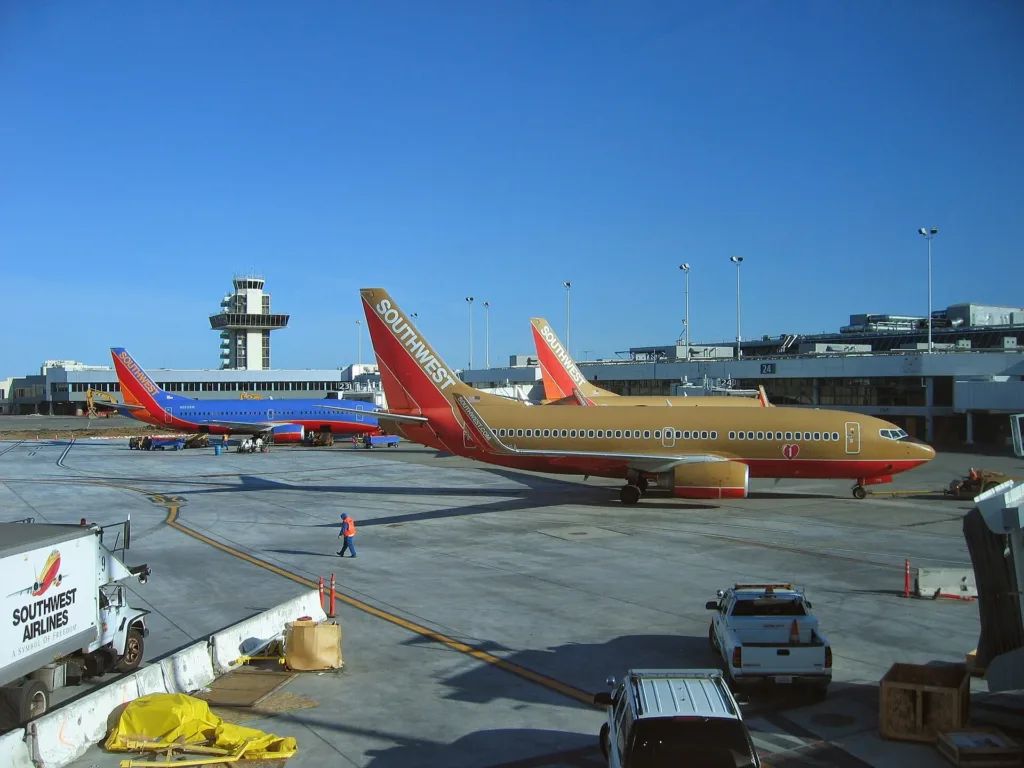
Southwest Airlines flew a damaged Boeing 737 MAX for 38 flights without a reported rudder problem after powerful winds struck the parked jet in New Orleans. The National Transportation Safety Board reached that conclusion in its final report released November 5, 2026. A later flight developed abnormal tail movements at 34,000 feet. Nevertheless, all 181 people aboard landed safely in Oakland.
The NTSB identified three failures behind the missed damage: an incomplete maintenance test, unclear inspection guidance from Boeing and inadequate wind-alert procedures at Southwest. That aircraft was a 737-8, registration N8825Q. Its May 25, 2024, Phoenix-to-Oakland flight was numbered 746.
Storm winds damaged the Southwest 737 MAX in New Orleans
On May 16, 2024, thunderstorms struck Louis Armstrong New Orleans International Airport while N8825Q was parked overnight. Weather reports recorded gusts reaching 73 knots, or about 84 mph. According to the NTSB’s final findings in investigation DCA24LA206, those winds likely moved the rudder and damaged its supporting structure.
The rudder sits on the aircraft’s vertical tail. Pilots use it to help control movement left and right around the aircraft’s vertical axis. A backup hydraulic mechanism moves the rudder if needed. In this case, investigators found damage where that standby mechanism attached to the tail.
However, Southwest did not perform the special inspection intended for extreme winds. Boeing’s maintenance guidance lacked a specific wind-speed trigger. Southwest also lacked a clear procedure for alerting maintenance control about strong winds affecting parked aircraft.
Thirty-eight flights passed without a reported rudder problem
The aircraft resumed service on May 17. Through May 23, it completed 38 flights without a reported rudder-control anomaly, the NTSB found. Therefore, the hidden structural damage remained undiscovered through more than a week of commercial operations.
On May 23, maintenance personnel carried out a scheduled hydraulic-system test in Houston. The task required someone to confirm visually that the rudder moved and returned correctly. Instead, the work was signed off without that required observation, according to investigators.
The report describes another missed chance to identify the damage. During a May 24 flight, pilots noticed unusual behavior from the yaw damper, a system that suppresses side-to-side aircraft motion. Subsequently, another flight operated with that system disabled under an approved equipment procedure.
The flight on May 25 was the next major warning. It is therefore misleading to describe all subsequent flights as entirely free of symptoms.
Flight 746 experienced tail oscillations at 34,000 feet
Flight 746 departed Phoenix for Oakland on May 25 with 175 passengers and six crew members. During cruise, the pilots felt the tail move from side to side while the aircraft rolled slightly. This combined motion is called a Dutch roll.
Flight-recorder data showed about 20 seconds of oscillation in the rudder and its pedals. However, investigators found no substantial change in heading or bank angle. The autopilot remained engaged, and the crew continued to Oakland. Everyone landed without injury.
After arrival, technicians removed the aircraft from service. They found damage to the tail structure around the standby rudder-control mechanism. The NTSB classified the structural damage as substantial despite the safe landing.
NTSB faults maintenance test and wind-inspection procedures
Investigators linked the damage to the extreme wind event in their probable-cause finding. It also identifies the incomplete hydraulic-system test as a contributing factor. Separately, the agency cited gaps in Boeing’s inspection threshold and Southwest’s internal wind-notification process.
Southwest inspected 231 Boeing 737 MAX aircraft after the event and reported no similar damage. In addition, the airline introduced monitoring of flight-recorder data for unusual rudder movement. It also established a process for weather specialists to notify maintenance control when extreme wind requires further inspection.
These steps do not prove that every hazard has disappeared. Still, they address the specific chain of failures identified by investigators.
What the findings mean for airline safety
A passenger could not have identified the damaged bracket from the cabin. Instead, the case shows why operators need reliable triggers for inspections after unusual weather. A required test must also check the actual movement of a flight-control surface, not simply complete a checklist.
The final report describes an aircraft-specific chain of events. It does not establish a fleet-wide defect affecting every 737 MAX. For background, read AeroSillage’s Boeing 737 MAX safety and certification history and its coverage of FAA air traffic safety modernization.
Read next
JOIN THE CONVERSATION
Let’s discuss this story.
A question, a clarification or a different perspective? Share it with us.