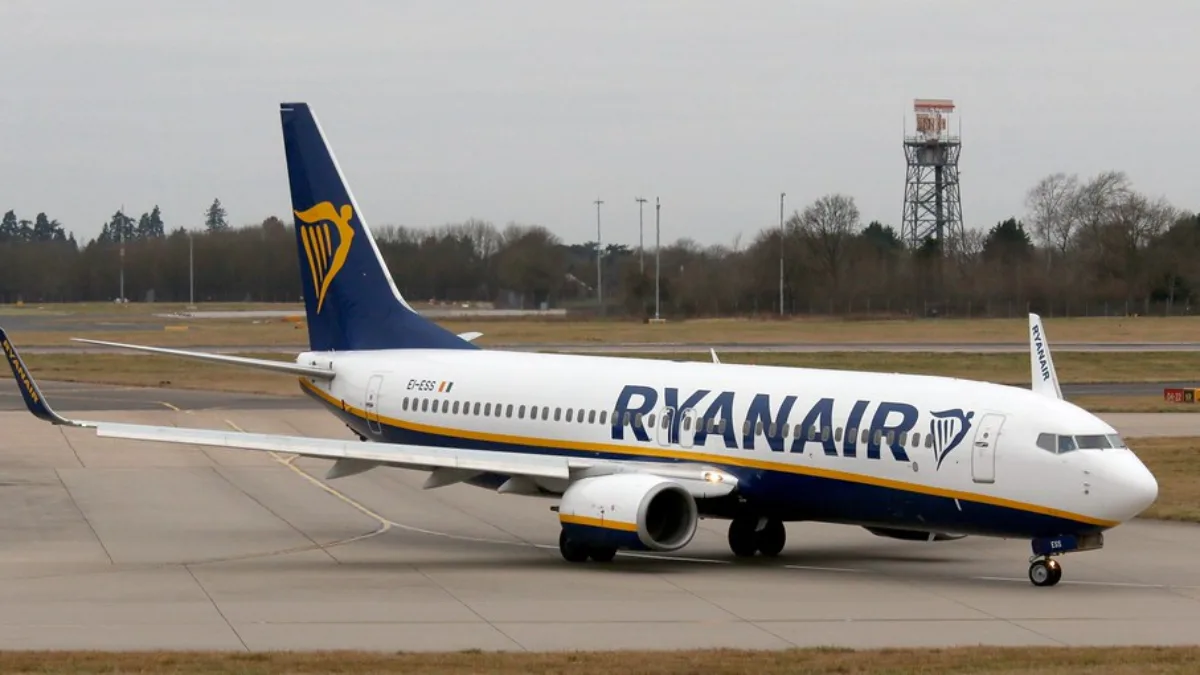
A Malta Air Boeing 737-800 operating for Ryanair landed at Manchester with fuel “significantly below” the regulatory final reserve, according to an AAIB investigation report published on September 24, 2026. The October 3, 2025 incident followed three windshear-related go-arounds and an initial diversion request to Manchester that was not accepted.
What we know
The Boeing 737-800, registration 9H-QBD, was operating a scheduled flight from Pisa to Glasgow Prestwick. Strong winds were forecast, and the crew had loaded additional fuel to provide extra margin for holding or diversion.
At Prestwick, two windshear encounters led the crew to discontinue two approaches. A diversion request to Manchester was then not accepted, so the aircraft headed to Edinburgh. Another windshear warning there prompted a third go-around. The crew subsequently declared an emergency and diverted to Manchester, where the aircraft landed with fuel significantly below its final reserve.
The AAIB classified the event as a serious incident and reported no accident during the landing.
What changed after the incident
The investigation highlights the decision chain surrounding diversions. Following the event, Manchester Airport reminded stakeholders that a diversion request should be accepted when the airport has sufficient capacity to receive the aircraft. It also clarified that acceptance of a diversion is not a decision for the ground-handling agent.
This matters because each discontinued approach in difficult weather consumes part of the crew’s available fuel margin. The choice of alternate airport and the speed at which an aircraft can be accepted there can therefore become directly relevant to operational safety.
Why it matters
“Final reserve” fuel is not intended as a routine extension of flight time; it is the last protected buffer in fuel planning. The incident shows how several individually manageable factors: adverse weather, repeated go-arounds and a change of diversion airport: can combine and quickly narrow the crew’s options.
The report also has wider operational relevance because Manchester formalised its guidance on accepting diversions whenever capacity allows.
What to watch
Airlines, airport operators and ground handlers may review the report’s lessons, especially how diversion requests are coordinated when crews face constrained fuel margins and deteriorating weather.
Sources
- UK Air Accidents Investigation Branch (AAIB): Boeing 737-800 9H-QBD investigation
- AAIB: report publication notice
Related: Ryanair trims traffic target as fuel prices rise, another recent Ryanair story where fuel remains central to operations and economics.

Leave a Reply