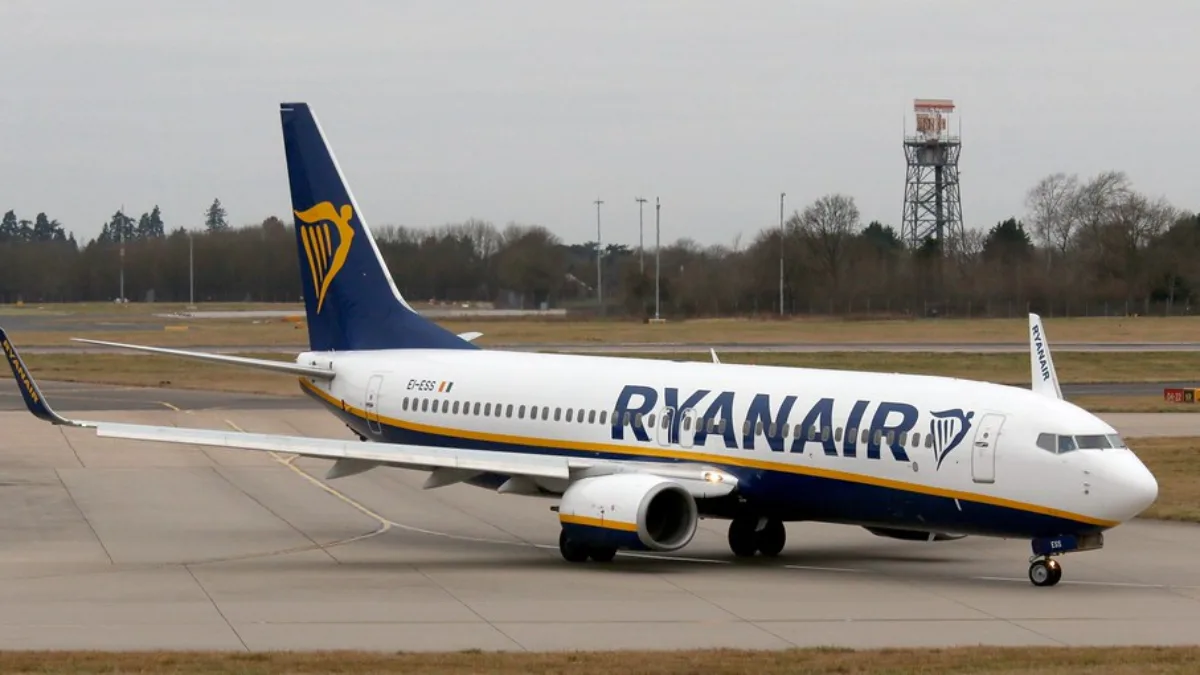
Europe’s Entry/Exit System (EES) has been fully operational since April 10, 2026, and the end of the temporary flexibility period on September 6 has turned airport border processing into a major operational issue. Ryanair wants the European Commission to extend the derogation until April 2027, arguing that long queues have already disrupted passengers. Brussels continues to defend EES as a major security and border-modernisation project.
What EES changes
EES automatically records the entry and exit of non-EU nationals travelling for short stays across the external borders of 29 European countries using the system.
It stores travel-document details, entry and exit dates and biometric data including facial images and fingerprints. For covered travellers it progressively replaces routine passport stamping and helps identify overstays and fraudulent documents.
Who is affected?
The system mainly concerns non-EU short-stay travellers. UK nationals are one of the largest affected groups when crossing an external Schengen border, which makes the issue especially important for airlines with a large British customer base.
EU citizens and nationals of Iceland, Liechtenstein, Norway and Switzerland are not registered in EES.
Why September 7 became a key date
The rollout included temporary derogations allowing national authorities to reduce or suspend some EES operations when congestion became severe.
That flexibility expired on September 6, 2026. On September 7, Ryanair argued that Europe had removed an important operational safety valve and called for the derogation to be extended until at least April 2027.
Ryanair says some queues reached two or three hours
The airline cited delays of up to two or three hours at airports including Krakow, Lisbon, Milan and Rome during summer 2026. Earlier, it had also highlighted long waits at French airports.
Those are Ryanair’s own observations, not a uniform Europe-wide measurement. Queue times vary according to airport layout, staffing, equipment, passenger mix and time of day.
The concern is not coming from Ryanair alone
IATA and other aviation stakeholders have also called for flexibility where border-processing capacity is insufficient.
This matters because the problem is not only political rhetoric: several parts of the industry recognise that even small increases in average processing time can create very large queues when several flights arrive together.
France is one of the countries being watched closely
France combines some of Europe’s busiest airports with a large volume of non-EU traffic and important UK flows.
The performance of passport-control staffing and biometric infrastructure at airports such as Paris-CDG, Orly and major regional platforms therefore has direct consequences for airline punctuality and passenger connections.
Why British travellers are central to the debate
Since Brexit, UK nationals making short stays in Schengen are treated as third-country travellers and are among the biggest populations affected by EES.
That is particularly important for Ryanair because the UK is one of its largest historic markets and hundreds of routes connect British airports with continental Europe.
What happens if a passenger misses the flight at passport control?
A long border-control queue is not automatically treated the same way as an airline-caused cancellation or delay.
If the flight leaves normally but the passenger fails to reach the gate in time, compensation and rerouting rights can depend on the ticket, itinerary and exact circumstances.
This is why airports and airlines are urging affected passengers to allow more time for border processing.
Connections are especially exposed
The risk becomes more serious when a connection requires an external-border check. An extra 20 or 30 minutes can erase the margin between two flights.
Network airlines face missed-connection costs, but low-cost airlines are not immune: tight rotations and strict gate deadlines leave little room for passengers delayed upstream at border control.
Is Ryanair right to call it “chaos”?
Partly, but the word needs perspective. Serious queues have been documented and Ryanair is not alone in raising concerns.
However, not every airport is experiencing multi-hour waits. The airline also has a long-established communications strategy of heavily publicising operational problems to pressure governments and EU institutions.
The Commission’s argument: security and better border control
The European Commission says EES strengthens Schengen’s external border by replacing manual stamps with digital records, improving overstay detection and helping identify fraudulent travel documents.
By July 2026, the Commission said EES had already recorded more than 145 million entries and exits.
For Brussels, abandoning or indefinitely weakening the system because of start-up congestion would undermine a major border-modernisation project.
Why airports can be affected very differently
A large hub may have many booths, kiosks and border officers; a smaller airport may face severe congestion if several non-EU flights arrive together.
First-time biometric registration can also take longer than a traditional passport stamp. At scale, even a modest increase in average processing time quickly becomes an operational problem.
The deeper issue: border control is now part of airline punctuality
An airport can have enough runways, terminal space and gates yet still suffer disruption because passport control is saturated.
Airline punctuality increasingly depends on biometric kiosks, IT reliability and the number of border officers available when passenger waves arrive.
What travellers should do
- Non-EU traveller entering or leaving Schengen: allow extra time for border control.
- First EES passage: expect the process to take longer because biometric enrolment may be required.
- Connection involving a border check: avoid very short connection times.
- Busy airport: check airport and airline guidance on the day of travel.
- Ryanair flight: remember that the gate deadline still applies even if queues form earlier in the journey.
September 7 opened the real operational test
Summer 2026 may have been only a rehearsal. Until September 6, authorities still had a temporary mechanism for easing EES operations during severe congestion.
That period is now over. The key question is no longer whether EES works technically: it already processes huge passenger volumes: but whether Europe can run it at full constraint without permanently degrading border flow and airline punctuality.
Sources
European Commission; Ryanair statements; IATA and industry positions; Financial Times and Guardian reporting on EES congestion and flexibility.

Leave a Reply