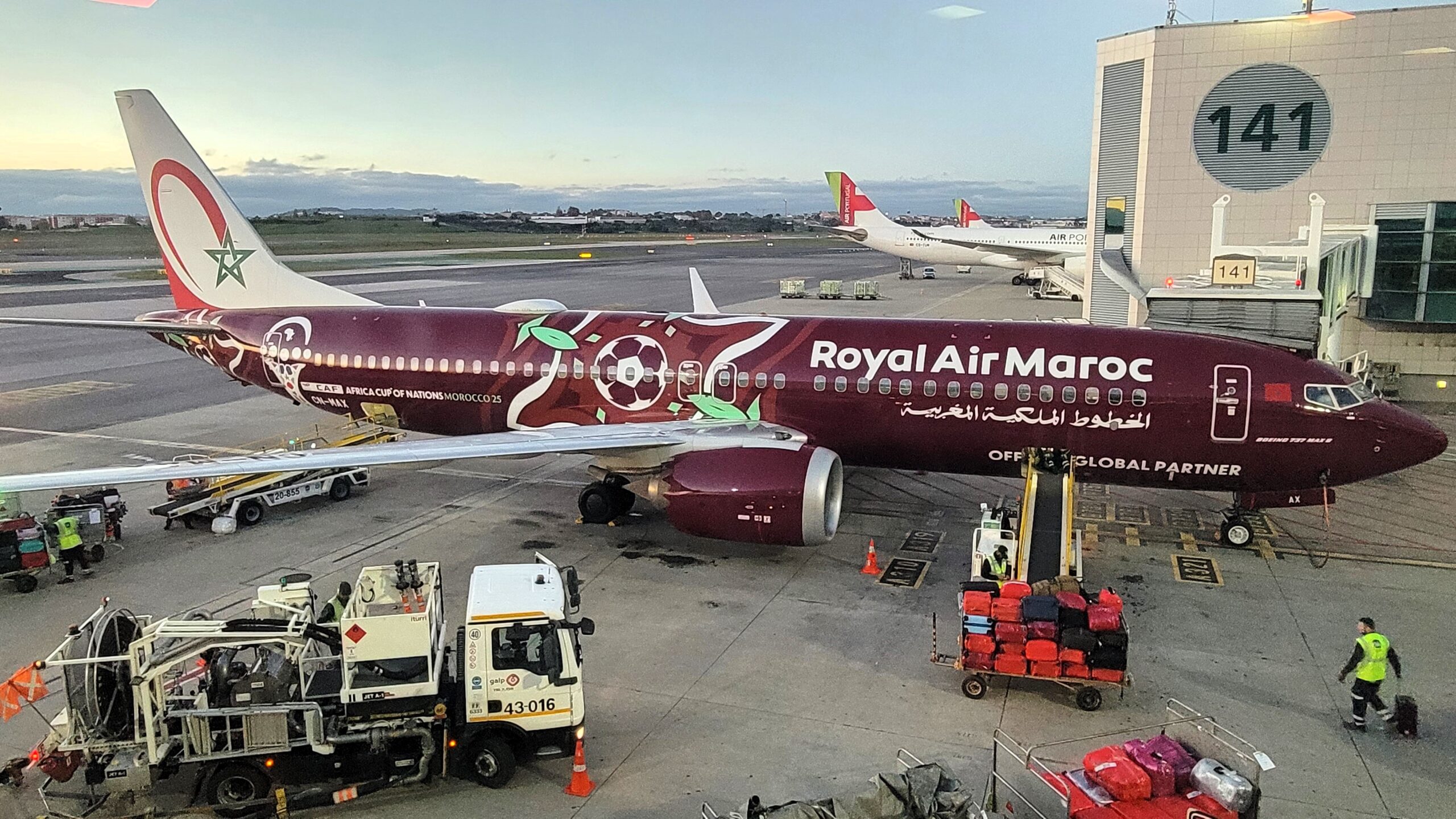
Royal Air Maroc is putting nearly 8.2 million seats on sale for summer 2026, around 23% more than in summer 2025. The increase is not simply a seasonal capacity record: it is part of a broader attempt to strengthen Casablanca as an intercontinental hub while expanding direct links to Europe, Africa and the Americas.
A record level of capacity
RAM announced 86 international destinations for summer 2026 across Africa, Europe, the Americas, Asia and the Middle East.
The airline’s institutional information places the fleet at roughly 67–69 aircraft, depending on the counting perimeter and update date.
The capacity increase comes as Moroccan air traffic grows quickly and airport infrastructure is being expanded under the national Airports 2030 strategy.
The real objective is to feed Casablanca
More seats only create strategic value if schedules are coordinated well enough to connect sub-Saharan Africa with Europe and North America through Mohammed V.
RAM therefore needs both strong local Moroccan demand and efficient transfer flows. The hub model depends on punctual inbound banks, fast baggage transfer and enough terminal capacity to absorb peaks.
737 MAX and 787 play complementary roles
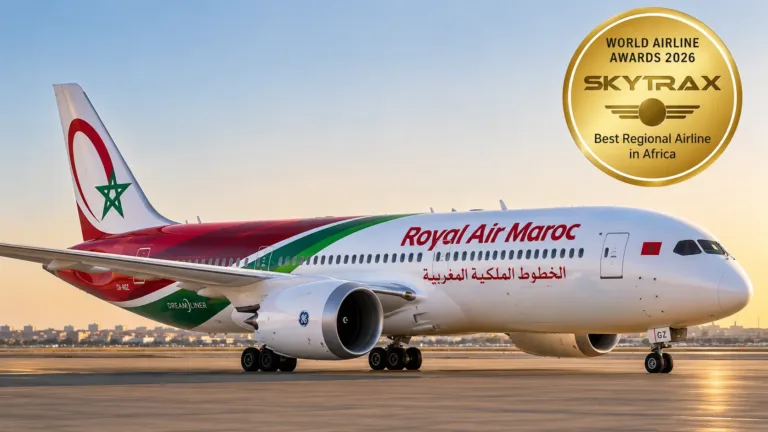
Royal Air Maroc’s published fleet includes around 17 Boeing 737 MAX 8s, 27 Boeing 737-800s, 7 Boeing 787-8s and 6 Boeing 787-9s, alongside Embraer 190s, ATR 72-600s and a 767 freighter.
The 737 MAX supports dense medium-haul routes and feed into Casablanca. The 787 family is the main tool for transatlantic and other long-haul expansion.
The strategy is therefore not simply to add destinations, but to build a sufficiently dense schedule to feed the hub throughout the day.
Summer 2026 is an operational stress test
The 8.2 million-seat programme tests more than commercial demand. It also puts pressure on punctuality, baggage handling, crews, aircraft utilisation and airport processes.
The new Casablanca terminal, expected in 2029, is intended to take Mohammed V to around 35 million passengers a year. Until then, RAM has to manage growth through existing infrastructure.
Competition is increasing on several fronts
Low-cost carriers are expanding between Morocco and Europe, while major network airlines compete for connecting traffic to Africa and the Americas.
That means RAM cannot judge success only by seat growth or market share. It has to protect yield and make the additional capacity profitable.
The real challenge: turn capacity into reliable, profitable growth
Morocco has strong tourism and diaspora demand, giving RAM a favourable base. But the airline’s next stage is to prove that a larger network can remain operationally stable.
AeroSillage view: the real success metric for summer 2026 is not simply 8.2 million seats offered. It is whether Royal Air Maroc can convert those seats into profitable traffic while maintaining punctuality, connection quality and a consistent passenger experience.
Main sources
Royal Air Maroc corporate communications, key figures and fleet data; ONDA Airports 2030 documentation.

Leave a Reply