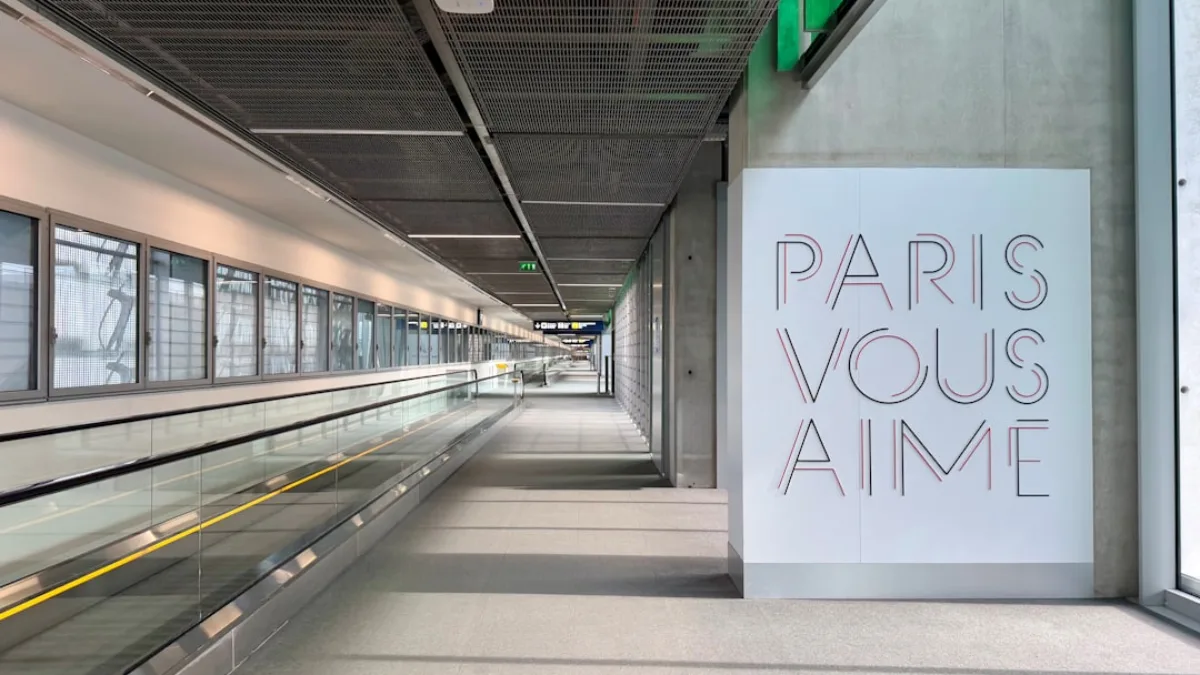
A police union mobilisation took place at Paris-Charles de Gaulle on 15 September 2026, with UN1TÉ Île-de-France organising a gathering at Terminal E. The CDG action formed part of a wider dispute over pay, staffing, careers and working conditions, but it was separate from the national Alliance Police Nationale gathering held in central Paris the same day.
A local action at Terminal E
Information published on the morning of 15 September confirmed that UN1TÉ Île-de-France had called officers to gather at Terminal E from late morning into the early afternoon. Participants had also been invited to assemble in Paris before travelling to the airport by bus.
The union’s demands covered issues including pay, indexation, recognition, staffing and career conditions. Those concerns overlapped with the broader national police protest, but the CDG mobilisation had its own location and organisation.
Enhanced checks, not an airport shutdown
Later that day, AFP reported stricter or work-to-rule style police checks at Paris-CDG and Orly. Those checks were the clearest documented operational effect of the mobilisation on the Paris airport system.
No general terminal closure, airport-wide suspension of border control or broad flight stoppage was confirmed. That distinction matters for passengers: police action can slow parts of the airport journey without stopping the airport itself.
Why the different union actions had to be separated
Alliance Police Nationale organised a national gathering at the Champs-Élysées-Marcel-Dassault roundabout in Paris, while UN1TÉ Île-de-France focused its local action on CDG. Their concerns overlapped, but their calls, locations and public positions were not identical.
Reporting the actions separately avoids implying a level of coordination that was not established and prevents local disruption at CDG from being overstated.
What passengers needed to know
The presence of a police mobilisation did not automatically mean that flights would be cancelled or terminals closed. The practical risk was more limited: slower checks, longer processing times or localised passenger-flow disruption.
Travellers therefore needed to monitor airline and airport information and allow additional time where necessary, rather than assume the airport had stopped operating.
Why the episode matters for aviation operations
CDG is one of Europe’s largest hubs, so even a local action involving border or security personnel can quickly become operationally visible. The episode illustrates the difference between a labour dispute, a measurable airport impact and a full traffic disruption. Those are three separate levels of severity and should not be conflated.
Main sources
UN1TÉ
Alliance Police Nationale
CNEWS
Europe 1
AFP reporting from 15 September 2026.
Related on AeroSillage: Paris CDG: new terminal names and expansion through 2034.
Leave a Reply