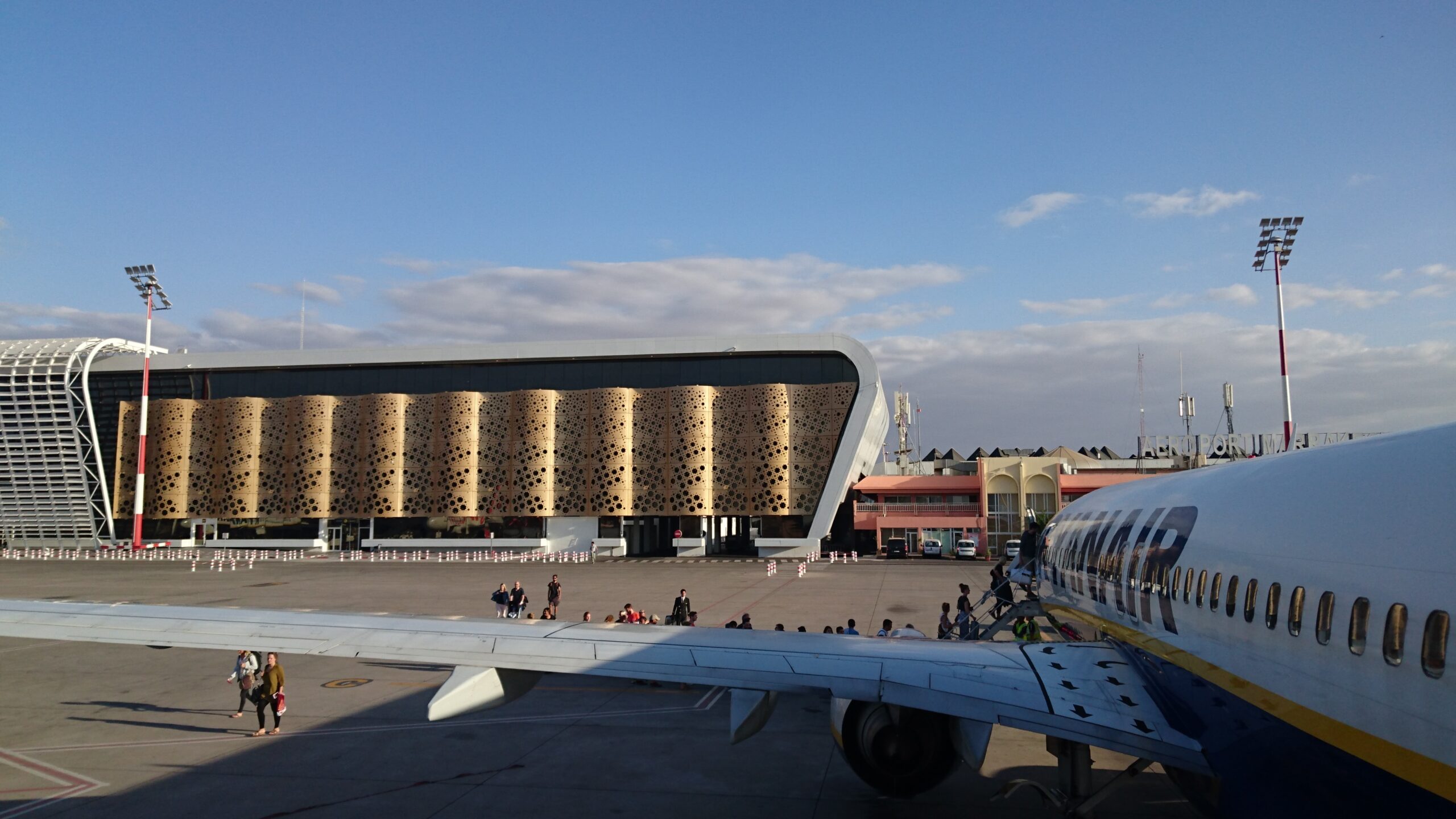
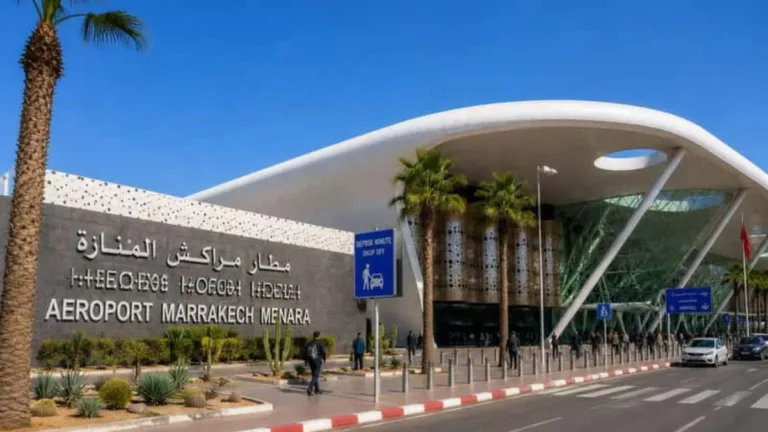
Marrakech-Menara is no longer simply the tourist gateway to the “Red City”. With more than 10 million passengers in 2025: close to 28% of Morocco’s air traffic: the airport has become the country’s second major international gateway and is already operating far beyond the capacity for which it was historically designed.
For passengers, its biggest advantage remains unusually practical: the airport sits only a few kilometres from the medina, Guéliz and Hivernage. The challenge for ONDA is to expand capacity without losing that accessibility.
Traffic has almost doubled historic capacity
ONDA cites a historic annual capacity of about 5.3 million passengers. Marrakech-Menara has now almost doubled that level.
Growth is being driven by Marrakech’s tourism boom, European low-cost airlines, Royal Air Maroc and an expanding direct network from France, the UK, Spain, Germany, Italy, Belgium and other markets.
Peak demand during European school holidays, major events and preparations for the 2030 World Cup make the capacity issue increasingly urgent.
A major expansion: around 130,000 m² of terminal space
The development programme is designed to raise capacity to around 11.5 million passengers per year. Terminals 1 and 2 are to be expanded and reorganised to reach a total area of roughly 130,000 m².
The programme includes a new baggage-sorting system, additional check-in zones, more security and border-control capacity and new international boarding areas.
Airside works are equally important. Runway access is to be doubled to reduce waiting times, while aircraft parking is to be expanded to around 40 Code C stands. ONDA also foresees a broader reorganisation of apron areas toward 2040.
Passenger processing and services are being upgraded together
Marrakech-Menara is part of ONDA’s wider airport-modernisation strategy, including more digital passenger processing and broader use of mobile boarding passes.
In 2026, Marrakech-Menara was also named Best Regional Airport in Africa by Skytrax, based on passenger-satisfaction surveys.
The airport offers the services expected from a major international leisure gateway: Wi-Fi, currency exchange, medical assistance, tax refund, car rental, business-aviation services and assistance for passengers with reduced mobility.
Food and retail include brands such as Illy, Paul, Starbucks, Segafredo, La Table du Marché, Matsuri and Pomme de Pain. ONDA has also announced the arrival of Bacha Coffee, the Marrakech-born brand, as part of its commercial upgrading strategy.
Getting into Marrakech: bus, taxi and private transfer
The airport is roughly 4–6 km from the main central districts. The ALSA airport shuttle, generally identified as route 19, links the airport with central Marrakech at intervals of around 20–30 minutes.
A typical 2026 fare is about MAD30 one way, roughly €2.80, with returns commonly around MAD50. The journey to the Jemaa el-Fna area normally takes around 20–30 minutes depending on traffic.
Since 2023, Marrakech-Menara has used the official Kech.Cab system. Travellers give their destination at the counter, pay by card or cash and receive a ticket assigning a taxi from the official rank.
Typical 2026 fares to the medina, Jemaa el-Fna, Guéliz or Hivernage are around MAD150–180, with night fares sometimes approaching MAD200.
The main advantage is predictability: the price is known before entering the vehicle.
Pre-booked transfers can be useful for families, groups and late arrivals. Observed prices start at roughly €13–15 per vehicle for central Marrakech and can rise to €25–30 for premium services or more distant destinations.
Rail and parking: what exists now and what changes before 2030
Unlike Casablanca Mohammed V, Marrakech-Menara does not have a rail station integrated into the terminal. Marrakech’s ONCF station is in the city and requires a road transfer.
Rail connectivity is nevertheless changing rapidly. ONCF is building the Kenitra–Marrakech high-speed extension, nearly 430 km of new infrastructure intended to bring Tangier–Marrakech journey times to around 2 hours 40 minutes.
That should strengthen Marrakech as a national gateway, but it must not be confused with a direct airport rail link, which is not currently operational.
The airport has three car parks with roughly 1,550 spaces. Published ONDA tariffs remain modest: about MAD6 for one hour, MAD22 for 5–12 hours and MAD42 for 12–24 hours for outdoor parking.
An airport that has become strategic for Morocco
Marrakech-Menara is now part of a broader national aviation and tourism strategy. It must absorb city growth, major international events and rising airline capacity ahead of 2030.
The airport’s proximity to Marrakech remains its strongest passenger advantage. The real test of the expansion will be whether that convenience survives as traffic continues to rise.
Main sources
ONDA airport-development programme; ONDA 2025 traffic data; ONDA taxi, bus and parking information; ONCF 2030 rail programme.
Leave a Reply