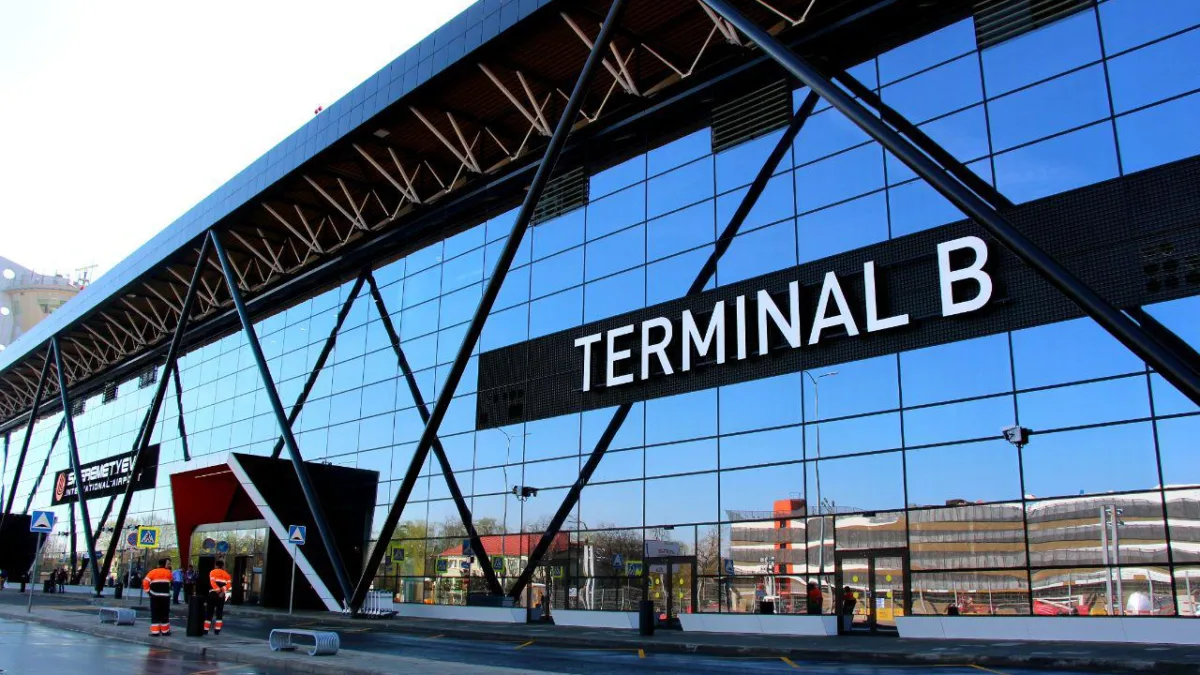
Moscow’s four main airports faced temporary restrictions overnight on September 19-20 after a large drone attack against the Russian capital. Domodedovo, Zhukovsky, Vnukovo and Sheremetyevo suspended or sharply limited arrivals and departures before restrictions were lifted on Sunday morning.
What is known
Rosaviatsia, Russia’s federal air-transport agency, imposed restrictions at the four airports, saying the measures were needed to ensure flight safety.
Traffic resumed later, but airlines still had to absorb accumulated delays and cancellations. Aeroflot adjusted its schedule, while international flights were also affected. A Turkish Airlines service to Vnukovo turned back, and a Pegasus flight was diverted to Saint Petersburg.
Russian authorities described the attack as the largest yet directed at Moscow. Mayor Sergei Sobyanin said 450 drones targeting the capital had been intercepted. Those figures came from Russian authorities and could not all be independently verified, although AP, Reuters and Russian media confirmed the exceptional scale of the attack and reported damage to a refinery and residential buildings.
Why a short closure can disrupt an entire day
The unusual feature was that all four major Moscow airports were constrained during the same sequence. When only one airport closes, some traffic can be absorbed elsewhere. When Domodedovo, Sheremetyevo, Vnukovo and Zhukovsky are all affected, nearby diversion options become far more limited.
Reopening does not immediately restore normal operations. Aircraft may be out of position, crews may approach duty-time limits and departure and arrival slots must be rebuilt.
Russian aviation already under pressure since 2022
Since Russia’s invasion of Ukraine, EU sanctions have barred Russian aircraft from EU airspace and restricted exports of aircraft, parts and aviation services to Russia.
At the same time, security risks have increased. EASA continues to maintain a conflict-zone information bulletin covering Russian airspace west of the 60th meridian East, including the Moscow flight-information region.
What it means for airlines and passengers
Airlines serving Moscow must now manage not only sanctions-related constraints but also closures imposed at very short notice. That increases the need for diversion fuel, fallback airports and flexible crew planning.
Passengers face a higher risk of missed connections and late changes, including diversions after departure if restrictions change while a flight is en route.
Sources
Rosaviatsia; Associated Press; Reuters; Türkiye Today; Council of the European Union; EASA.
Related on AeroSillage: Luxembourg-Findel: drones disrupt flights again.
Leave a Reply