Groupe ADP in Turkey: sanctioned airline services raise compliance questions
Reporting about airports operated by a Groupe ADP subsidiary in Turkey raises questions about airline services and sanctions rules.
An investigation into services provided at airports operated by a subsidiary of France’s Groupe ADP has raised difficult questions about international sanctions compliance. The Financial Times reported on 12 October 2026 that TAV Airports’ activities in Turkey involved services connected with Russian and Iranian airlines subject to Western restrictions. The companies involved maintain that they comply with the law.
Why Antalya features in the investigation
Western restrictions also affect other parts of Russia’s aviation industry, as examined in AeroSillage’s report on Moscow’s search for aircraft capacity abroad. That broader context does not, however, establish a legal breach by any airport operator.
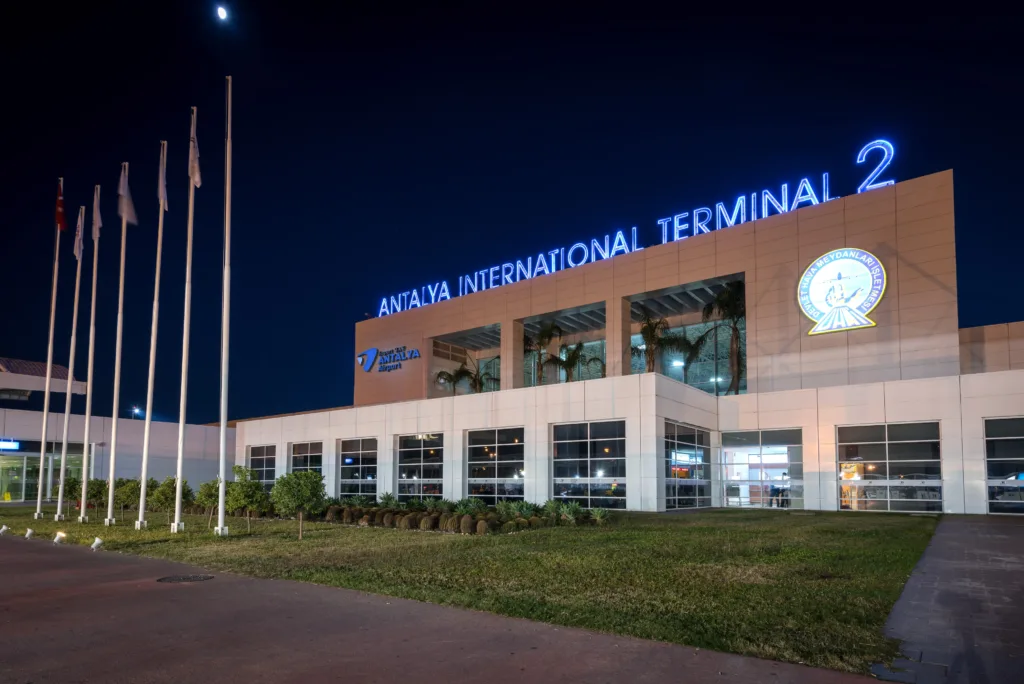
The reporting focuses in part on flights operated by Russia’s Ural Airlines at Antalya Airport. Ural is subject to European Union sanctions, while Antalya is run through an operating structure involving TAV and Germany’s Fraport. Ground handling activities linked to TAV’s Havaş subsidiary are also relevant to the story.
The newspaper additionally examined flights by Iranian carriers subject to US sanctions through airports operated in Turkey and Georgia. The existence of such flights does not, by itself, resolve whether any specific company breached a particular sanction: the legal scope, services provided and entities responsible all matter.
Airport operations and flight permissions are different
National aviation authorities determine which services may operate in their airspace and at their airports. Airport operators manage infrastructure, while ground-handling businesses provide various services to aircraft and passengers. A group may be present through several corporate entities, potentially subject to different legal obligations.
The case illustrates the challenge for European-owned companies operating outside the EU. Restrictions can differ between jurisdictions and may also involve obligations aimed at preventing sanctions from being undermined through overseas subsidiaries.
The Financial Times reported at least 54 Ural Airlines flights displayed at Antalya from 21 September. The European Union sanctioned the Russian carrier in June 2024, and later rules introduced in February 2025 required covered companies to make their best efforts to prevent overseas entities from undermining the sanctions regime. Those dates are important in assessing the compliance questions raised by the investigation.
However, a flight appearing on an airport’s departure board is not proof that an airport operator has violated a sanction. The precise service, the contracting entity and the applicable jurisdiction must all be considered. The US restrictions concerning certain Iranian airlines also operate under a separate legal framework. Treating all the carriers and restrictions as interchangeable would obscure the central legal issue.
The Financial Times reported at least 54 Ural Airlines flights displayed at Antalya from 21 September. This is a significant factual element, but a flight listing does not by itself identify the company providing each service or establish that a prohibited transaction occurred. Ural Airlines has faced EU sanctions since June 2024, while a February 2025 development strengthened expectations that covered businesses use their best efforts to prevent overseas entities from undermining restrictions.
Responsibility must be examined separately for Turkish authorities that grant flight permissions, the airport operator and any ground-handling contractor. US restrictions concerning Iranian airlines also differ from EU measures on Russian entities. The legal question is therefore not simply whether an aircraft visited an airport, but what service was supplied, by whom, and under which applicable rule.
Groupe ADP’s French public-interest profile makes overseas compliance an important story, but the investigation does not establish that Paris Charles de Gaulle itself handled the flights under scrutiny. Nor is a legal breach established merely because an international subsidiary has a commercial role at the airport. The companies’ responses and the absence of a confirmed enforcement finding are essential context, not minor caveats.
According to the Financial Times, TAV says its activities complied with applicable local requirements and involved certain essential services. Groupe ADP and Fraport likewise point to their compliance obligations. No sanctions breach has been established by the reporting alone.
Three separate questions matter here: whether an airline is subject to sanctions, what specific airport service was provided, and which jurisdiction’s restrictions govern that transaction. A service delivered in Turkey does not automatically fall under the same rules as one supplied inside the European Union. Naming a sanctioned carrier is therefore not, on its own, evidence of unlawful conduct.
For airport groups operating across borders, compliance also becomes an operational challenge. They must assess counterparties and services while maintaining the airport’s day-to-day functioning. The important unresolved issue is how those checks were applied in the cases examined, rather than assuming that an allegation has already been proved.
For the aviation industry, the broader issue goes beyond a single airport: multinational operators must navigate legal duties, local operating requirements and reputational scrutiny when serving politically sensitive routes.
Which legal obligations apply to each company?
The investigation concerns several distinct corporate roles: France-based Groupe ADP, its international subsidiary TAV Airports, the Antalya operating partnership and ground-handling providers. Their commercial relationships do not make their legal duties identical. European Union sanctions, obligations regarding non-EU subsidiaries and US restrictions have different scopes. Any assessment must start with the service supplied, the contracting legal entity and the rule that actually applies to it.
An airline’s appearance on an airport departure board does not identify the company that provided a particular service, the fee charged or whether the transaction was prohibited. Nor does compliance with host-country aviation rules automatically resolve every question raised under European sanctions policy. Both propositions can be true at the same time; neither amounts to a finding of wrongdoing. This distinction is necessary to avoid turning questions about legal exposure into an unsupported accusation.
Groupe ADP’s importance to France gives the story considerable public interest, but the activities under scrutiny are overseas operations where Turkish authorities decide which flights may operate. It would be misleading to imply that the contested flights were operated through Paris Charles de Gaulle itself. The companies say they follow applicable law, and no competent authority has established a violation in the facts reported so far.
Sources: Financial Times, 12 October 2026; 21News, 12 October 2026.
Read next