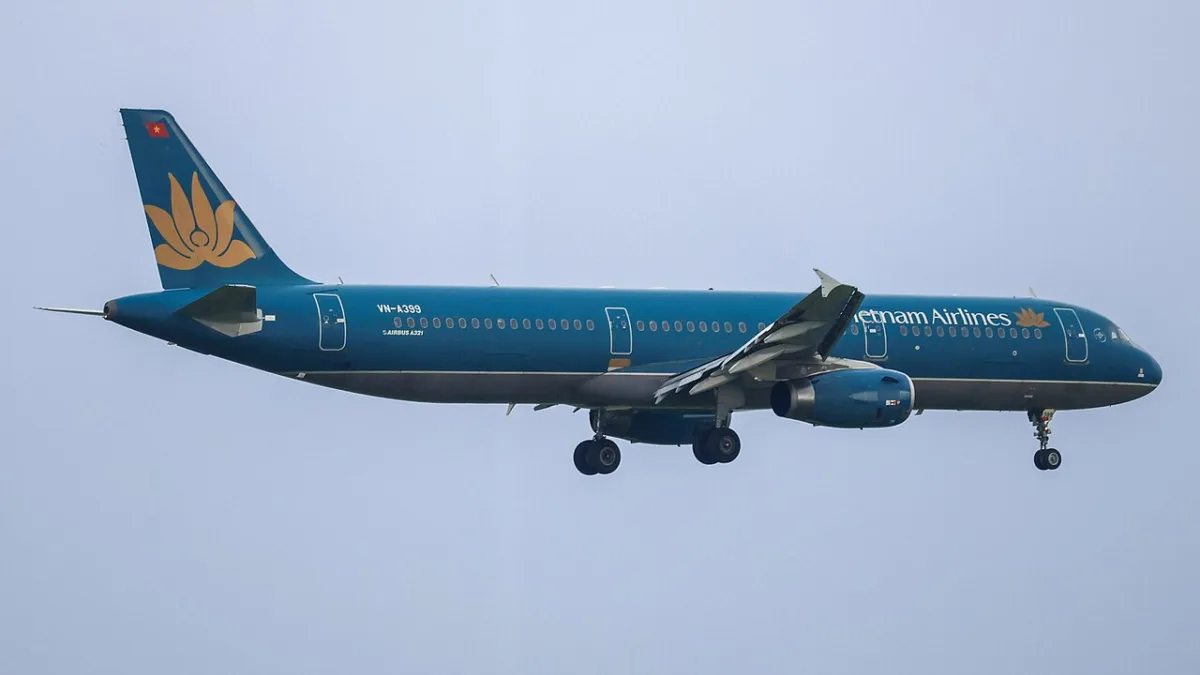
Russia’s airline capacity problem is no longer confined to maintenance hangars. Moscow has formally asked Vietnam to consider wet-leasing aircraft to Russian carriers, a move that would bring foreign jets, crews, maintenance and insurance into a market increasingly constrained by sanctions and by the slow arrival of domestically produced replacements.
Russian Transport Minister Andrei Nikitin confirmed on 9 September 2026 that the proposal had been sent to the Vietnamese side and was under consideration. No wet-lease agreement has been announced, but the request itself is significant: Russia is actively looking abroad for short-term airline capacity while its own fleet availability deteriorates.
Why wet lease matters
A wet lease, often described as ACMI, usually includes the aircraft, crew, maintenance and insurance. That is very different from simply transferring an aircraft into a Russian airline’s fleet.
For Moscow, such an arrangement could provide immediate lift without waiting for additional MC-21 or Tu-214 deliveries. For a Vietnamese operator, however, the commercial opportunity would come with a much more complicated sanctions and compliance calculation.
Vietnam’s major airlines operate predominantly Airbus and Boeing fleets. European sanctions prohibit the export to Russia of aircraft, spare parts and aviation technology, while related maintenance and technical assistance are also restricted. Any attempt to use Western-built aircraft on behalf of a Russian carrier would therefore require careful review of export-control, insurance, financing and manufacturer obligations.
The fleet availability numbers are becoming harder to ignore
Industry figures reported by Euronews on 7 October suggest that 130 of 673 aircraft operated by Russia’s eleven largest airlines are currently unavailable, roughly 19% of the fleet. The normal out-of-service share is reported to be around 10%.
Outside the Aeroflot group, the picture is even tighter: 93 of 322 aircraft are reportedly idle, close to 29%.
These are industry figures rather than a single audited Rosaviatsia fleet-status publication, so they should not be read as a definitive official inventory. But they fit a broader trend that has been visible since 2022: Russian carriers are trying to keep large Airbus and Boeing fleets operational without normal access to Western manufacturer support, spare parts and maintenance networks.
Vietnam is an operationally attractive partner
Vietnam offers something Russia needs: sizeable airlines, a growing aviation market and fleets that could, in theory, provide additional capacity quickly.
On 24 September, the Civil Aviation Authority of Vietnam hosted a Russian Transport Ministry delegation in Hanoi. Representatives of Vietnam Airlines, Vietjet Air and Sun PhuQuoc Airlines attended. The Vietnamese authority described the talks as part of an effort to strengthen air transport cooperation between the two countries.
It did not announce a wet-lease agreement. That distinction is important. Political and regulatory discussions are continuing, but no Vietnamese aircraft transfer to a Russian airline has yet been publicly confirmed.
Russia’s domestic aircraft cannot close the gap overnight
Russia’s long-term answer is to replace dependence on Western aircraft with locally produced types, led by the MC-21 and Tu-214. The problem is timing.
In April 2026, Russian industry officials said the first batch of 18 serial MC-21 aircraft was scheduled for delivery across 2026 and 2027. Rostec later said it expected certification flight testing of the import-substituted version to be completed in the first quarter of 2027 before wider serial production ramps up.
The first serial fully import-substituted MC-21-310 flew on 3 August, an important milestone, but one aircraft does not solve an airline-capacity shortage.
The Tu-214 is on a similar path. UAC said commercial airline deliveries of the modernised type are due to begin in 2027. Until production rates increase substantially, those aircraft cannot replace hundreds of Western-built jets at the pace Russian airlines would ideally need.
The compliance problem travels with the aircraft
A Vietnamese wet lease would not remove sanctions risk; it would redistribute it.
The aircraft could remain under a Vietnamese operator’s control, with Vietnamese crews and maintenance systems, but its use for Russian commercial operations could still raise questions for lessors, insurers, parts suppliers, manufacturers and financial institutions.
That is why the proposal is more complicated than a normal seasonal ACMI deal. A carrier considering it would have to weigh short-term revenue against the risk of disrupting relationships that support the rest of its global operation.
A temporary bridge — if Vietnam accepts
For Russia, wet-leased aircraft could act as a bridge while domestic production ramps up and unavailable aircraft return to service. For Vietnam, the economics might be attractive if spare capacity exists.
But the decision would sit at the intersection of aviation operations, sanctions law and industrial policy.
That makes the Russian request revealing even before a contract is signed. Moscow is not merely trying to lease more aircraft; it is trying to buy time while its commercial fleet and domestic manufacturing base move through a difficult transition.
Sources: Russian Transport Ministry via Interfax, 9 September 2026; Civil Aviation Authority of Vietnam, 25 September 2026; Council of the European Union; industry fleet figures reported by Euronews, 7 October 2026; Interfax, Rostec and UAC on MC-21 and Tu-214. Photo: S5A-0043 / Wikimedia Commons — CC BY 4.0.
Leave a Reply