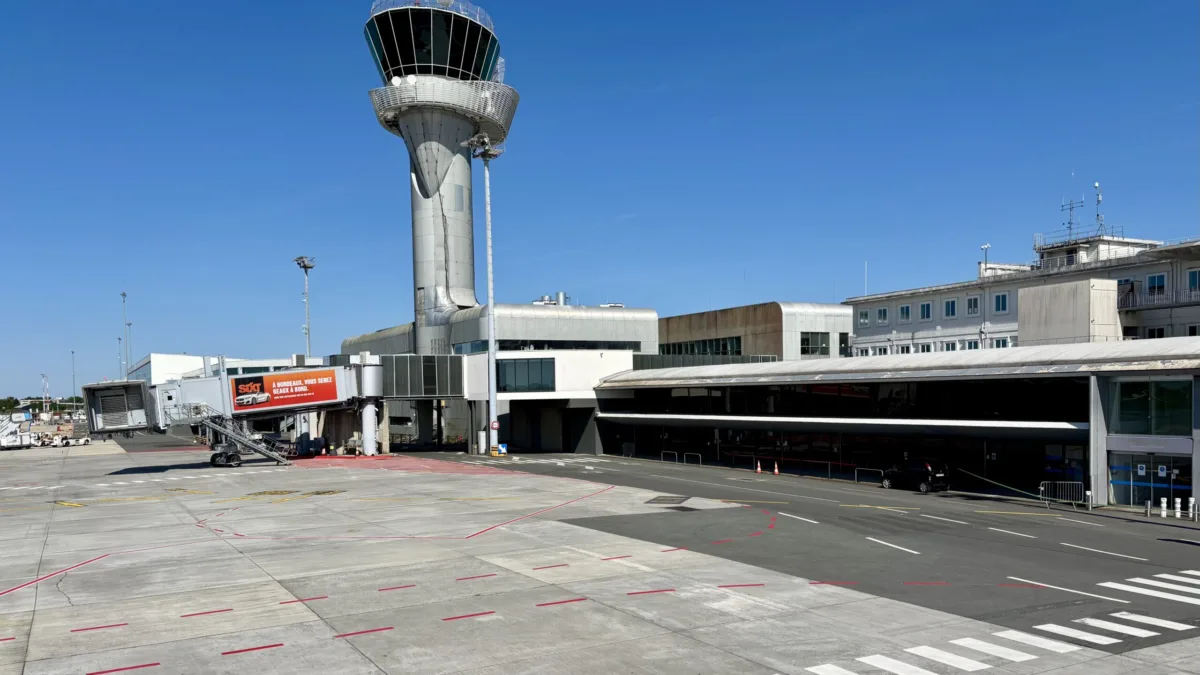
France has one of Europe’s densest airport networks. Beyond major regional gateways such as Nice, Marseille, Lyon and Nantes, many smaller airports face declining domestic traffic, dependence on low-cost airlines, rising costs and a recurring question: how long can local authorities continue supporting every platform?
A dense network with very different realities
French regional airports are far from homogeneous. Nice, Marseille, Lyon, Toulouse, Bordeaux, Nantes and Basel-Mulhouse are major aviation markets handling millions of passengers and serving both business and leisure demand.
Dozens of smaller airports, however, rely on a limited number of routes, sometimes operated by only one or two airlines. That concentration makes them far more vulnerable to network decisions taken elsewhere.
An economic model under pressure: low-cost, weaker domestic traffic and taxation
Over the past two decades, low-cost carriers allowed many secondary cities to gain direct links across Europe. The model can quickly generate passenger growth and improve a region’s accessibility.
But dependence is also a weakness. When an airline closes a base or withdraws a route, the impact can be immediate. Bordeaux offered a striking example when Ryanair left at the end of the 2024 summer season.
According to the DGAC, low-cost carriers handled 79.9 million passengers in metropolitan France in 2025, representing 44.8% of total traffic. Growth slowed to 3%, compared with 8% between 2023 and 2024.
High-speed rail, remote work, changing business-travel habits and environmental policy have weakened several domestic air markets. The DGAC noted in 2026 that French domestic traffic was still declining and had fallen to levels comparable with the early 1980s.
For some small airports, Paris historically provided the backbone of demand. When an Orly or Charles de Gaulle service disappears or loses frequency, replacing it can be difficult.
Since 2025, aviation taxation has become a major issue for airlines. The higher solidarity tax on airline tickets introduced on March 1, 2025 weighs particularly on domestic journeys because it applies to both legs of a round trip.
DGAC analysis published in late 2025 concluded that the increase influenced passenger prices, airline costs and the weaker momentum of French air traffic. A lost route may be manageable for a large airport, but structurally damaging to a platform with only a handful of destinations.
Territorial utility and public subsidies are the core debate
The equation is not purely financial. On islands, in mountain regions or in areas poorly served by high-speed rail, airports can perform a connectivity role that is difficult to replace.
Some routes therefore operate under public-service obligations and receive public support. The relevant question is not simply whether an airport makes money, but what value it creates for its region through tourism, business access, healthcare, family travel and economic development.
Many local authorities see airports as tools of regional development. Critics argue that some nearby platforms survive only because of public aid whose value is hard to justify, including marketing support used to attract airlines.
Yet removing those incentives abruptly can also cause carriers to leave. The policy challenge is therefore to distinguish genuine territorial utility from traffic that exists only because subsidies make the route artificially attractive.
Will traffic concentrate around stronger regional gateways?
The long-term trend may favor stronger regional gateways. Airports with large catchment areas, several million potential passengers and multiple connections are naturally more attractive to airlines.
Smaller platforms dependent on a single carrier have far less negotiating power. Some cities may eventually face a choice between sustained public support, greater coordination with a nearby airport, or accepting a significant reduction in traffic.
Utility or profitability?
The central question is probably not whether France has “too many airports.” It is which airports still answer a real economic or territorial need, and under what conditions their funding remains acceptable.
The coming years may accelerate an existing divide: stronger regional airports connected to Europe and the wider world, and a secondary network increasingly required to demonstrate its practical value.
Sources
French Civil Aviation Authority (DGAC), air-transport analysis and 2025 low-cost traffic data.
Related: Figari-Sud Corse: how a small airport scaled up, a concrete example of the opportunities and limits facing French regional airports.
Leave a Reply