
FAA Lifts Ground Stop After Outage; 4,700 Flights Canceled
The FAA lifted its nationwide ground stop after more than four hours on November 13. More than 4,700 flights were canceled Friday, with airlines still working through widespread disruption Saturday.
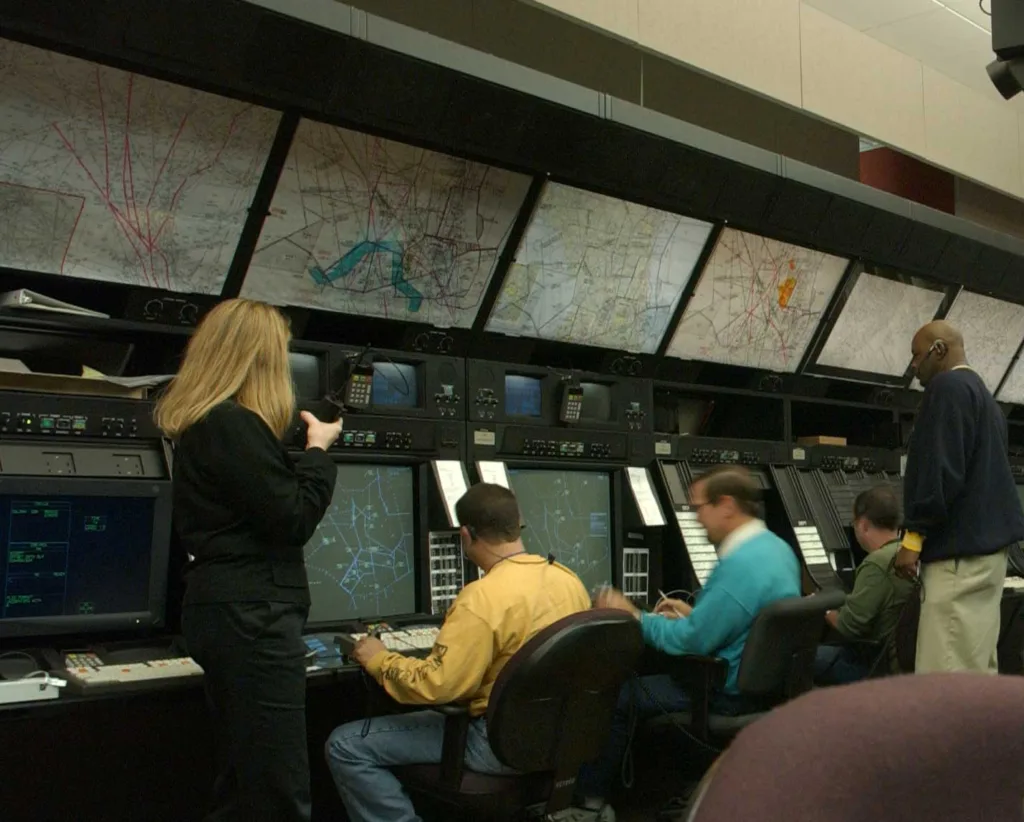
A nationwide FAA ground stop halted U.S. departures for more than four hours Friday after an air traffic communications failure. More than 4,700 flights were canceled across the country on November 13, 2026. The FAA lifted the restriction at 8:15 p.m. Eastern. Yet airlines entered Saturday with displaced aircraft, crews and passengers, leaving flight schedules in disarray.
How the FAA ground stop unfolded on November 13
In its November 13 statement, the FAA reported communications problems affecting Air Route Traffic Control Centers. These centers manage flights across large regions. The agency ordered departing flights to remain on the ground while technicians investigated.
According to Transportation Secretary Sean Duffy, the trouble began at 3:36 p.m. Eastern. Radar information and communications became inconsistent across centers and approach-control facilities. The nationwide departure stop followed shortly afterward.
Aircraft already airborne could continue toward their destinations. Therefore, the ground stop did not close U.S. airspace or require every aircraft to land. Some international departures received individual clearance during the restrictions.
Officials identified the communications problem and confirmed the air traffic system was operational, Transportation Secretary Sean Duffy said in a November 13 briefing. The FAA thoroughly tested the system before allowing departures to resume, according to the Associated Press. Nationwide takeoffs resumed at 8:15 p.m. Eastern. However, widespread airline cancellations continued afterward.
More than 4,700 flights canceled Friday; Saturday delays continue
More than 4,700 U.S. flights were canceled Friday and 10,000 were delayed, Reuters reported on November 14, citing Flightradar24. The figures cover the entire day; they do not isolate every cancellation caused by the FAA outage. By the time Reuters published its update, roughly 700 Saturday flights had already been canceled.
Airlines must reposition aircraft and find available pilots and cabin crews before restoring their schedules. A plane that missed its Friday destination may be unavailable for several Saturday departures. Meanwhile, displaced travelers compete for seats on remaining flights.
United Airlines said it would cancel most of its remaining Friday departures. JetBlue also cut nearly all remaining flights, except certain Europe-bound services. Air Canada canceled its remaining Friday flights between Canada and the United States, ABC News reported.
These airline decisions help explain why the disruption continued after the FAA restored departures. They do not mean the nationwide ground stop remained in force Saturday.
Officials point to overloaded aging communications equipment
Transportation Secretary Sean Duffy pointed to aging network switches and routers overwhelmed by data, Reuters reported. The resulting communications problems reached multiple air traffic facilities and forced the FAA to stop departures nationwide. Investigators had not established the precise trigger of the overload in the initial briefing.
Homeland Security officials said they had found no indication of a cyberattack. However, that early assessment does not replace a completed technical investigation. The FAA’s initial public statement said technicians were examining the outage.
Controllers rely on consistent radar information and communications to separate aircraft safely. When data or radio links become unreliable, limiting departures reduces pressure on the remaining operational system.
The shutdown was the longest nationwide departure halt since the September 11, 2001, attacks, Reuters reported. In January 2023, a separate FAA system failure stopped domestic departures for about 90 minutes. Friday’s grounding lasted more than four hours.
Refund rules for passengers whose flights were canceled
Passengers should check their airline’s app or website before leaving for the airport. A departure that is permitted by the FAA can still be canceled because its aircraft or crew is elsewhere.
Under the U.S. Department of Transportation’s refund rules, airlines must refund canceled tickets when passengers decline rebooking, travel credit or another offer. This right covers eligible flights to, from or within the United States, regardless of why the flight was canceled.
For significant delays or schedule changes, travelers who reject the revised itinerary can also qualify for refunds. Under DOT rules, domestic arrival delays of at least three hours generally meet the significant-delay threshold. For international trips, the threshold is six hours. Travelers who take a replacement flight generally do not receive a ticket refund.
Meal, hotel and cash compensation obligations are separate questions. A nationwide FAA outage is different from a disruption caused by an airline’s own operations. Travelers should consult their carrier’s published commitments rather than assume that U.S. law guarantees hotel costs.
Passengers traveling between Canada and the United States should also check which Canadian passenger-protection provisions apply. Canadian requirements differ from U.S. refund rules and depend on the itinerary and circumstances.
Outage increases pressure on FAA modernization plan
The shutdown came on the same day the White House requested another $30.1 billion to modernize U.S. air traffic control and airports. That proposal preceded the outage; officials did not announce it as a response to Friday’s shutdown.
Washington wants funding for controller technology, air traffic towers and aging airport terminals. AeroSillage has detailed the White House’s $30.1 billion aviation funding request, which still requires congressional approval.
The incident also shows how a technical failure can spread far beyond one airport. Our earlier report explains why air traffic control outages can disrupt thousands of flights.
Nationwide takeoffs have resumed, but the operational backlog remains. Investigators must establish what triggered the network overload. Meanwhile, airlines must reposition aircraft and crews to restore normal schedules.
Read next
JOIN THE CONVERSATION
Let’s discuss this story.
A question, a clarification or a different perspective? Share it with us.