
Brussels Airport passport checks take up to three times longer under EES
Brussels Airport says processing some arriving visa holders can take two to three times longer under EES. It plans eight more passport desks in December 2026.
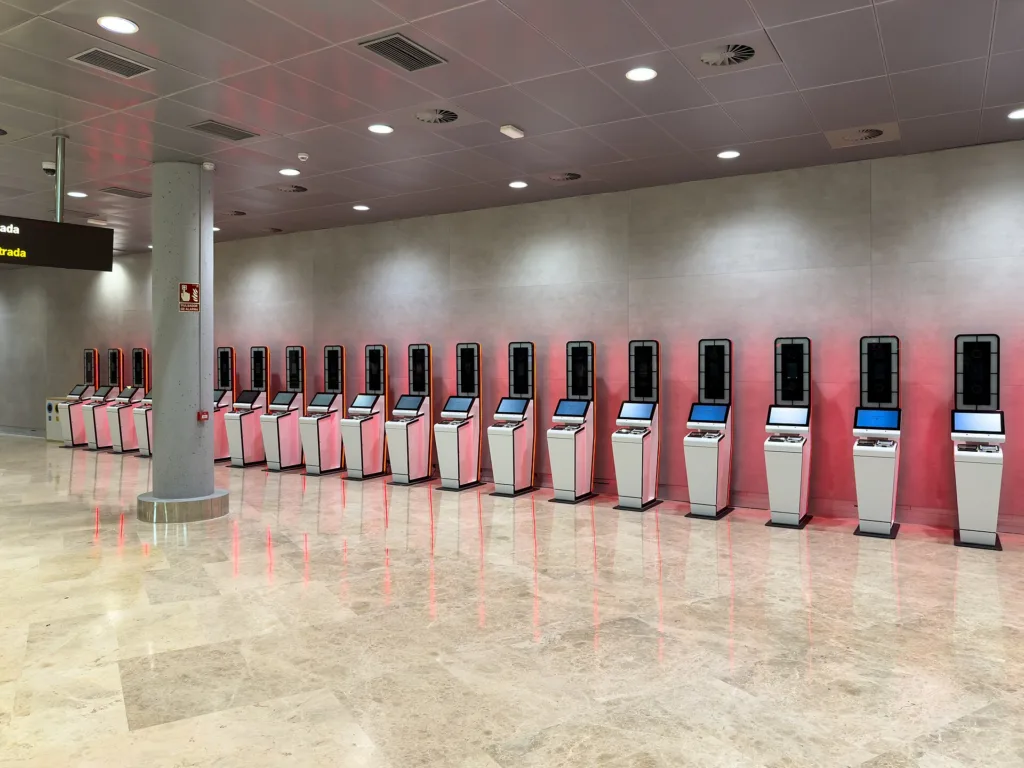
For some passengers arriving at Brussels Airport, Europe’s new biometric border checks are taking two to three times as long as the process they replaced. The airport says that comparison applies on average to arriving visa passengers during the morning peak, not to every traveller or to the entire time spent queuing. It has announced another eight staffed passport desks for December 2026 and six additional automated gates for early 2027.
That distinction matters for British travellers: the Entry/Exit System (EES) covers many non-EU visitors making short stays in the Schengen area, but it does not mean every arrival faces the same checks. Brussels Airport’s guidance sets out the exclusions, including eligible residence-permit and long-stay visa holders. EU and other exempt nationals are outside registration. Eligible short-stay visitors may fall within EES whether or not they needed a visa; children under 12 do not provide fingerprints.
Why additional desks may not immediately shorten queues
Brussels Airport explained in a 23 October statement that processing times had improved a little in August before worsening in September, as biometric enrolment expanded and some travellers previously able to use automated gates had to switch to staffed positions.
The airport had already enlarged its manual-control facilities in 2025, increasing arrival positions by 20% and departure positions by 25%. The eight desks planned for December would expand current staffed arrival capacity by a further 66%, which the airport says would bring it to roughly twice the level of a year earlier. That is planned infrastructure: travellers cannot rely on it for flights taking place now.
Six more e-gates, requested from Belgium’s federal police in May, are expected in early 2027 and would lift automated arrival capacity by 50%. But equipment alone is not enough. The airport says technical problems involving public-authority suppliers have prevented certain functions of approximately 60 preregistration kiosks from being used by eligible non-European travellers. Adding desks can increase physical capacity without necessarily fixing the underlying digital process.
EES records the entry and exit of eligible non-EU visitors undertaking short stays of up to 90 days in a 180-day period. It associates travel-document details with a facial image and, where required, fingerprints, progressively replacing passport stamps. A first enrolment may be slower than a subsequent crossing; neither registration nor an automated gate removes the ordinary border decision.
Why the problem extends beyond Brussels
The airport industry’s concern is not limited to Belgium. In an October statement, ACI EUROPE and Airlines for Europe said queues at some Schengen airports regularly exceeded two hours and could reach five in exceptional peaks. That five-hour figure is a wider European example, not a measured daily waiting time at Brussels Airport.
The groups want more than additional staff: their proposals include improving the reliability of verification, reducing unnecessary repeat biometric checks, widening access to kiosks and gates and allowing more flexibility when queues become excessive. Brussels is simultaneously investing in local capacity and urging changes to the system itself.
Travellers should check whether EES applies to them, have their documents ready and consider the effect that a slow arrival could have on their onward plans. That is not a blanket instruction to arrive at Brussels Airport several hours early for departure: the airport asks passengers to do so only when specifically advised.
Brussels Airport expects the eight additional staffed desks in December 2026 and the six automated gates in early 2027; both remain future measures.
Sources: Brussels Airport, 23 October 2026; Brussels Airport, EES guidance; ACI EUROPE and Airlines for Europe, 12 October.
Read next
JOIN THE CONVERSATION
Let’s discuss this story.
A question, a clarification or a different perspective? Share it with us.