
Pegasus disputes claim of a wrong-way take-off at Frankfurt
Pegasus confirmed a wrong-way runway alignment at Frankfurt on 20 October 2026 but disputes claims that flight PC996 attempted to take off.
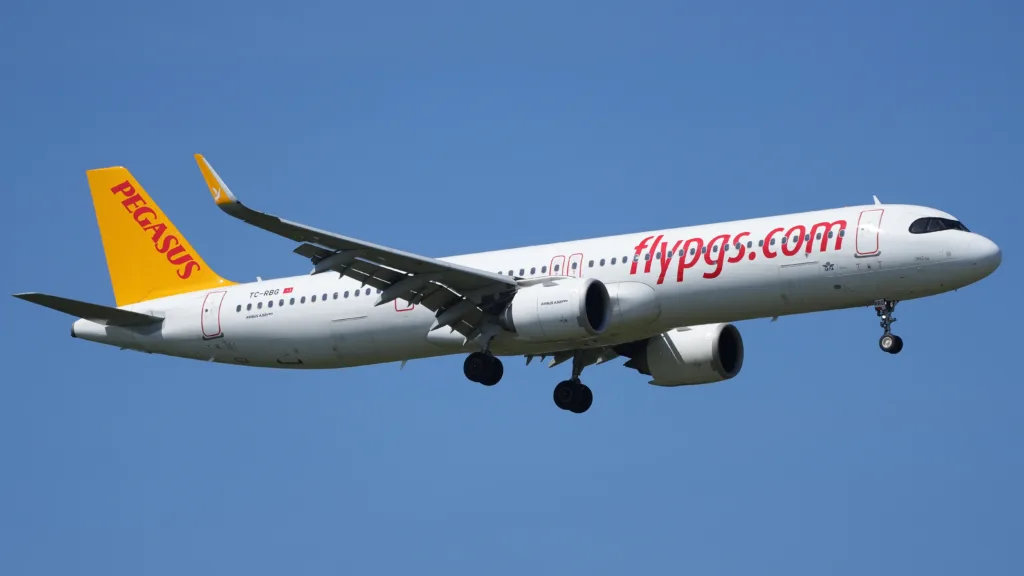
Pegasus Airlines accepts that one of its Airbus A321neos lined up facing the wrong way on Frankfurt’s Runway 18. What remains disputed is whether the crew actually tried to take off. The aircraft, TC-RDO, was preparing to operate flight PC996 to Istanbul Sabiha Gökçen on 20 October 2026. Reports published three days later claimed the crew began accelerating northwards until air traffic control intervened. Pegasus says its pilots spotted the error before any take-off attempt.
The accounts differ on whether the crew began a take-off run. aeroTELEGRAPH, citing The Aviation Herald, and AIRLIVE reported an apparent take-off roll interrupted at around 35 knots. A Pegasus statement subsequently reproduced by AIRLIVE said the crew recognised the incorrect orientation, coordinated with controllers, left the runway and returned for a safe departure. The airline expressly rejected the allegation that the tower had stopped an attempted take-off.
Why the direction matters at Frankfurt
Runway 18 is Frankfurt’s south-facing departure runway. Unlike the parallel 07/25 runways, where the operating direction can change with the wind, its take-offs are directed south, on a heading of about 180 degrees. Airport operator Fraport explains how this runway normally functions alongside the main system. A clearance for Runway 18 was therefore not a choice between opposite take-off directions.
According to the initial account, the A321neo entered from Taxiway S, some 1,260 metres from the runway’s northern end. Rather than turning left to face south, it turned right and lined up towards the north. Pegasus acknowledges the wrong-way alignment. That is the point at which the two accounts converge; the aircraft’s actions immediately afterwards are still contested.
Early reports suggested a movement of around 530 metres before the aircraft left at Taxiway M, followed by a departure for Istanbul about seven minutes later. Those figures have not been independently verified. The aircraft’s flight history records its subsequent journey, but ordinary flight-tracking data cannot establish precisely what happened during the disputed ground manoeuvre.
What investigators may still establish
German air navigation service provider DFS told The Aviation Herald that the occurrence had been passed to the competent authorities. Germany’s federal accident investigation body, the BFU, would decide whether to investigate and on what scale. That notification should not be described as confirmation that a formal investigation was already under way.
The available reporting does not establish why the crew initially lined up facing north, or whether cockpit orientation, communication or some other factor played a role. Nor does it justify blaming individual pilots or controllers. A verified reconstruction would need evidence capable of resolving the reported acceleration and Pegasus’s denial.
Flight PC996 did reach Istanbul. The confirmed safety issue is the incorrect runway alignment; whether there was an actual take-off attempt remains an unresolved disagreement between the sources. That is a narrower, but more defensible, account than declaring that controllers prevented a disaster.
Sources: AIRLIVE and Pegasus statement, 23 October; aeroTELEGRAPH; Flightradar24; Fraport; HaberAir.
Read next

JOIN THE CONVERSATION
Let’s discuss this story.
A question, a clarification or a different perspective? Share it with us.