
Boeing 777F production remains halted despite supplier settlement
Boeing 777F assembly remained halted as of 23 October 2026, despite settlement of a supplier dispute with Vaero. Missing trailing-edge rib kits continue to constrain production.
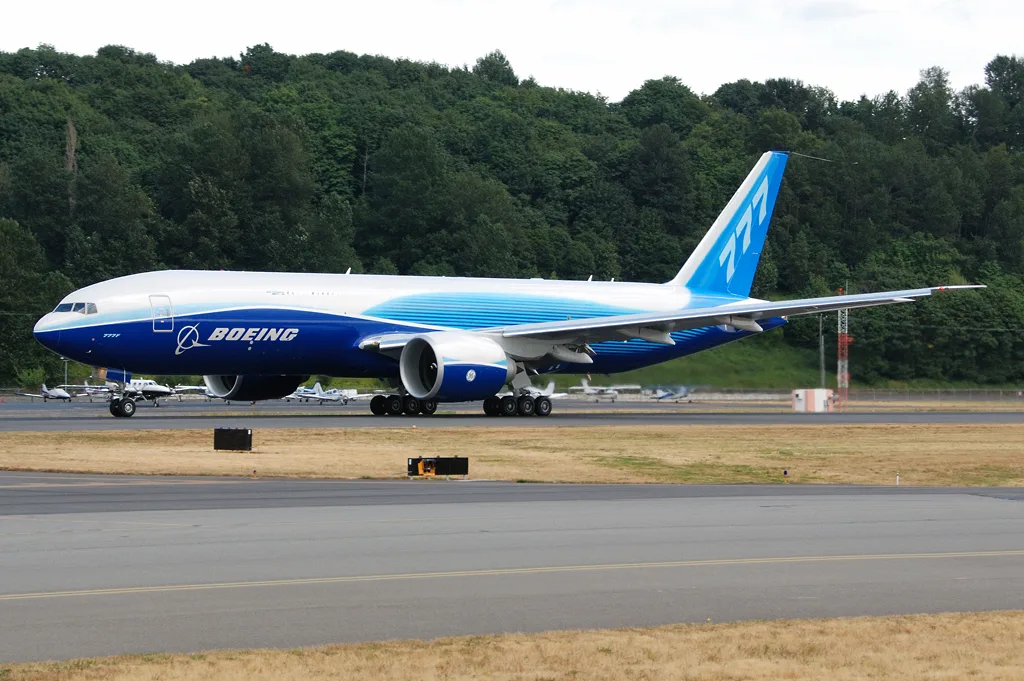
A supplier dispute that Boeing says could cost it up to $6.5 million a day has left its 777 freighter assembly operation at Everett without a confirmed restart date. The figure comes from Boeing’s August lawsuit, not an independently audited account of losses. According to a Reuters investigation published on 23 October 2026, production had been stalled for nearly two months, despite the manufacturer and its supplier settling their dispute in late September.
The missing items are trailing-edge rib kits, structural components fitted towards the rear of an aircraft wing. Boeing alleged that Florida-based Vaero, identified in the court case as the sole source of the relevant parts for affected programmes, had stopped deliveries. A shortage of these relatively small components was enough to stop work on much larger aircraft.
Two freighters taken off the assembly line
A Boeing worker cited by Reuters said two partly assembled 777Fs had been removed from final assembly because work could not continue without the kits. Aviation consultancy IBA identified one as an aircraft intended for FedEx; the freight company did not respond to Reuters’ request for comment. Neither report establishes a revised delivery date.
Three people familiar with the situation told Reuters that 777F manufacturing remained halted on 23 October, weeks after the companies reached a legal settlement. The distinction is significant: resolving the contractual dispute did not immediately restore the flow of components to the factory.
Boeing had delivered 21 of the current-generation freighters during 2026, according to figures cited by Reuters. Some aircraft whose wings were assembled before the shortage may still be delivered before year-end. The stoppage should therefore not be mistaken for a complete cessation of deliveries or for a problem affecting every model carrying the 777 name.
The consequences extend beyond the 777F
The same kits are used in Boeing’s 767 programme, which remains important for freighter orders and for the KC-46 military refuelling aircraft. Reuters’ sources said 767 production had also been disrupted, although one employee reported that some components had arrived after the settlement. That does not yet amount to confirmation that normal output has resumed.
Two people familiar with the issue also told Reuters that Boeing was looking at making the rib kits itself. The idea reflects a larger concern for aircraft manufacturers: a part supplied by a single company can hold up several production lines at once.
There is an important limit to the story. Boeing’s newer 777X has a different composite-wing design and was not affected by this particular shortage. Nor has the company confirmed a date when the 777F line will restart. Boeing declined to comment on Reuters’ findings, and Vaero did not answer the agency’s enquiries. The company has not announced a restart date for the 777F line.
Read next
The reported 777F stoppage shows how one missing component can hold up a much larger production programme. Do you think aircraft manufacturers should prioritise having alternative suppliers for critical parts, even if that increases costs?