
The aviation journal
Press review
Essential aviation news, in perspective

JetBlue rejects debt restructuring, SATA strike hours change, Atlantic Airways orders A320neos, Air Mauritius reviews A350s and NYCO gains GEnx approval.
Financial pressure at JetBlue leads this Wednesday’s aviation briefing, after its chief executive rejected suggestions that debt restructuring was being considered. Travellers in the Azores face a new afternoon strike window from 28 October. Elsewhere, Atlantic Airways has committed to two A320neos, Air Mauritius is rethinking its long-haul fleet plans, and a French lubricant has gained approval for Boeing 787 engines following extended Air France trials.
JetBlue rejects debt restructuring as its bonds come under pressure
JetBlue’s chief executive Joanna Geraghty has ruled out talks with creditors, a debt restructuring or a request for US government financial support. Her comments to Reuters on Tuesday 27 October came after a steep fall in the value of bonds linked to the airline’s TrueBlue loyalty programme raised fresh questions about how its turnaround will be financed.
Reuters puts JetBlue’s debt and finance lease obligations at approximately $8.4 billion. On 26 October, the TrueBlue-backed bonds were trading at roughly $47 per $100 of face value, compared with about $80 at the start of the month. That is a measure of investor concern rather than evidence that the airline has entered insolvency proceedings.
The carrier reported a $257 million third-quarter loss, up from $143 million a year earlier, with fuel costs a major contributor. It says it has $2.2 billion in available liquidity and sufficient resources to meet its needs for at least the next 12 months. JetBlue continues to target an operating profit in 2027, although that remains a forecast rather than a confirmed recovery.
Sources: Reuters interview, 27 October 2026.
Azores ground-handling strike moves to afternoon hours from today
Passengers using airports in the Azores face a different period of potential disruption from Wednesday 28 October. SATA Group says the strike by ground-handling employees represented by SINTAC and SITAVA now runs from 4pm to 7pm local time each day until 3 November. The earlier phase, between 21 and 27 October, was scheduled from 7.30am to 10.30am.
The operator has activated a contingency plan for SATA Air Açores and Azores Airlines. It warns of possible delays and operational adjustments but has not, in this notice, confirmed a specific number of cancellations for 28 October. Travellers should therefore check their individual flight rather than assume every departure during the affected hours will be cancelled.
Passengers whose journeys are affected may rebook without a change fee or fare difference for travel between 18 October and 10 November, provided the alternative flight is outside the strike period. SATA also recommends online check-in and travelling with cabin baggage where practical. The advice applies to both the inter-island network and the group’s wider services where handling operations are affected.
Sources: SATA Group, official contingency notice.
Atlantic Airways places firm order for two Airbus A320neos
Atlantic Airways, the flag carrier of the Faroe Islands, has ordered two additional Airbus A320neo aircraft as it works towards a single-type, new-generation fleet. Airbus announced the firm order on 27 October, describing it as part of the airline’s plan to replace older A320 variants and simplify operations.
The Faroese carrier currently has four A320-family aircraft, split evenly between two A320ceos and two A320neos. Neither a delivery schedule nor a timetable for retiring the older jets was included in the announcement. The purchase should not therefore be interpreted as a confirmed permanent expansion from four to six aircraft.
Operating a more uniform fleet could reduce complexity in maintenance, crew planning and spare-parts management, particularly for a small airline serving an island community reliant on links with mainland Europe. Airbus also cites lower fuel use for the neo compared with the earlier generation. The actual benefit will depend on the routes flown and how Atlantic Airways implements its fleet renewal.
Sources: Airbus, announcement dated 27 October.
Air Mauritius reviews A350 expansion and considers smaller jets
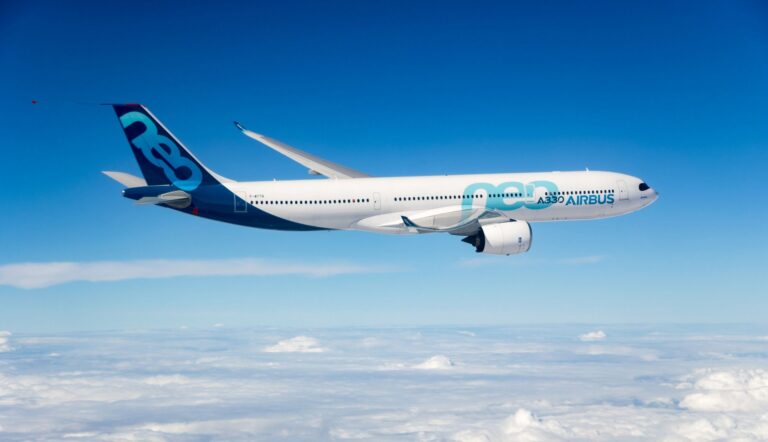
Air Mauritius is reassessing three Airbus A350-900s ordered in 2023 while considering the introduction of up to five narrowbody aircraft. The review forms part of a wider restructuring programme presented by chief executive Andre Viljoen, according to Le Journal de l’Aviation’s report of 27 October.
This is a review, not a confirmed cancellation of the A350 order. The airline’s own fleet listing shows four A350-900s already in service, alongside two A330-900neos, one A330-200 and four ATR 72 turboprops. The strategic work, informed by Seabury Aviation Partners, seeks to match aircraft capacity more closely to the economics of individual routes.
Smaller jets could allow more frequent services on selected regional and medium-haul routes without the cost of deploying a widebody. Air Mauritius is also examining fuel expenditure and the organisation of its operations. The eventual aircraft choice, delivery dates and contractual outcome for the three outstanding A350s have not been settled publicly.
Sources: Le Journal de l’Aviation, 27 October 2026 ; Air Mauritius, current fleet information.
Air France flight trials lead to new Boeing 787 engine-oil approval
French lubricant manufacturer NYCO says GE Aerospace has approved its Turbonycoil 600 turbine oil for GEnx-1B engines fitted to Boeing 787 aircraft. The announcement, issued on 26 October, follows more than three years of in-service testing with Air France, covering nearly 7,000 flight hours across several engines.
NYCO reports that oil analysis and subsequent engine inspections found good thermal stability, effective protection against wear and low levels of carbon deposits. The qualification adds another approved lubricant for operators and maintenance organisations using the GEnx-1B. It does not imply an immediate fleet-wide switch by Boeing 787 airlines.
The product already had approvals for other engines, including the GE90 and CF6. For airlines operating mixed fleets, broader approval may help simplify purchasing and stock management, although each operator must still follow the relevant engine manufacturer’s maintenance requirements. The development is an engineering and supply-chain story rather than a change to passenger-facing services.
Sources: NYCO, official release of 26 October.
JOIN THE CONVERSATION
Let’s discuss this story.
A question, a clarification or a different perspective? Share it with us.