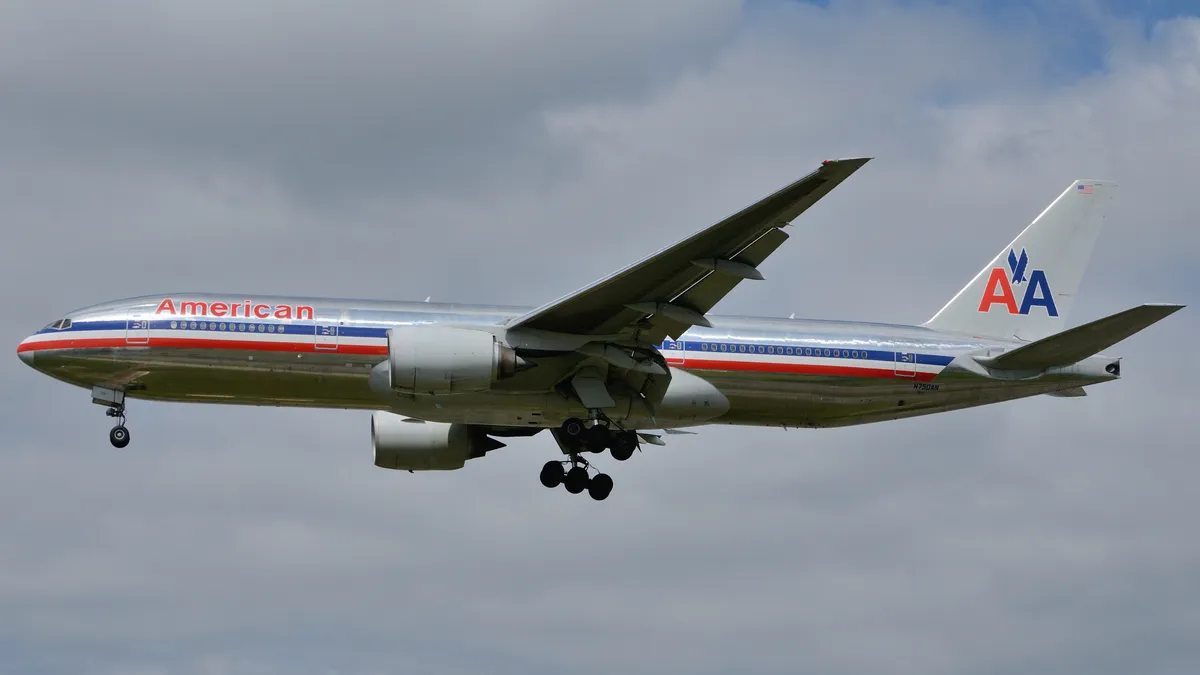
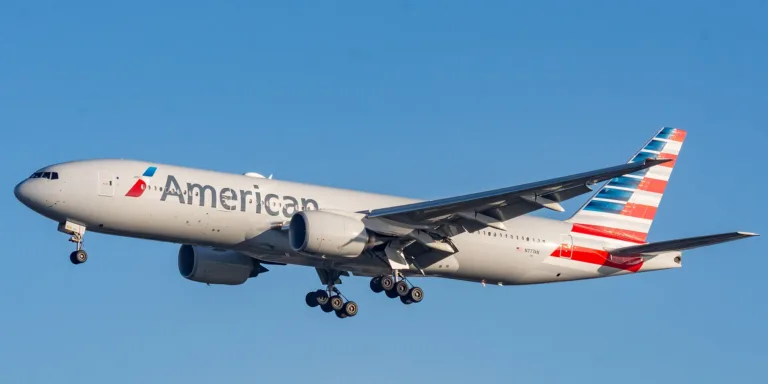
American Airlines is well into the process of planning the replacement of its Boeing 777-200ER fleet. The airline is studying a campaign that could involve up to 65 widebody aircraft, with deliveries expected mainly in the 2030s. The immediate requirement centres on replacing 47 Boeing 777-200ERs, but the upper limit leaves room for future international growth. As of September 2026, the Boeing 787-10 and Airbus A330-900 were the two main candidates publicly identified.
Up to 65 aircraft does not mean 65 firm orders
The figure needs careful interpretation. American has not announced a firm order, a final split between firm aircraft and options, or a purchase-right structure.
The 65-aircraft figure is best understood as the potential maximum scale of the campaign.
Because the airline currently operates 47 Boeing 777-200ERs, a strict one-for-one replacement would require fewer aircraft. The difference gives American room to preserve growth options as the 777-200ERs leave service during the next decade.
The 777-200ER remains central to the long-haul network
American still uses the type across transatlantic, transpacific and Latin American markets.
The replacement is therefore not an emergency retirement programme. It is a long-lead fleet-planning exercise driven by age, future efficiency and the time needed to secure production slots.
American also operates 20 Boeing 777-300ERs, which are undergoing cabin and product upgrades. The current campaign is primarily about the 777-200ER generation rather than the immediate disappearance of the entire 777 family.
The main contest: Boeing 787-10 versus Airbus A330-900
The 787-10 has an obvious fleet-commonality advantage because American already operates 787-8s and 787-9s.
Staying within the Dreamliner family would simplify pilot training, maintenance, spares and operational integration.
The A330-900, however, remains a credible alternative. It can be competitive on acquisition cost and may offer useful delivery-slot flexibility depending on industrial availability.
That availability has become a major negotiating factor because both Airbus and Boeing have large backlogs.
An Airbus return would be symbolically significant
American previously operated Airbus A330s inherited through the US Airways merger before retiring them during the pandemic.
Today its widebody fleet is entirely Boeing, built around 777s and 787s.
Selecting the A330-900 would therefore mark Airbus’s return to American’s long-haul fleet.
But it would also add another aircraft family, with the introduction costs that come with training, maintenance tooling and spares. Choosing more 787s would simplify the fleet, while keeping Airbus in the competition can strengthen American’s negotiating position with both manufacturers.
Why the decision must be made years in advance
Widebody renewal starts long before retirement.
Between contract signature, production-slot availability, cabin-design decisions, certification of interiors, crew training and entry-into-service preparation, several years can pass before the first aircraft arrives.
That is why American is making decisions now for aircraft that will mainly shape the fleet in the 2030s.
What the choice could change for American’s network
This is not simply a one-model-for-another replacement.
Aircraft capacity, range, cabin density and unit costs determine which markets can be served profitably and at what frequency.
A campaign of up to 65 aircraft would allow American to retire the 777-200ERs while preserving flexibility for international growth, route upgauging or changes in network strategy.
No final cabin configuration, delivery schedule or firm/options split has been announced, so direct economic comparisons between the A330-900 and 787-10 remain incomplete until American’s actual commercial terms are known.
The process is advanced, but there is no winner yet
American chief commercial officer Nat Pieper described the process as being in the “seventh or eighth inning”, suggesting that the evaluation is already well advanced.
He also indicated that the decision could still go either way between Airbus and Boeing.
As of September 20, 2026, American Airlines had not announced a winning aircraft or a firm order.
The verified position is therefore straightforward: American is preparing to replace 47 777-200ERs with a requirement that could reach 65 widebodies, and both the 787-10 and A330-900 remain in contention.
Main sources
Air Data News; American Airlines Newsroom; industry reporting on the A330-900 and 787-10 competition.

Leave a Reply