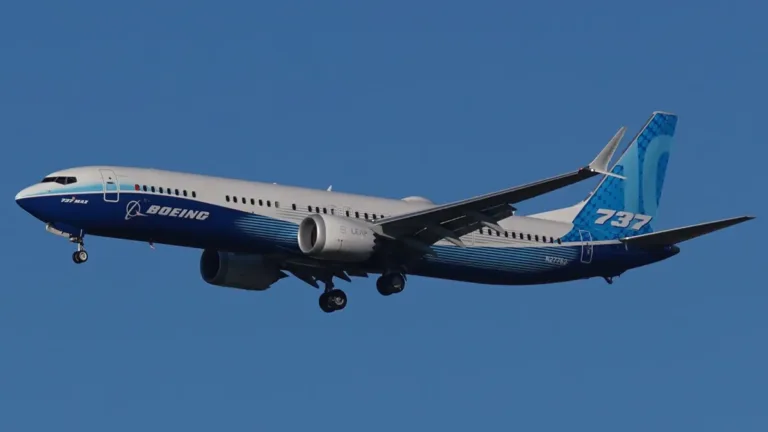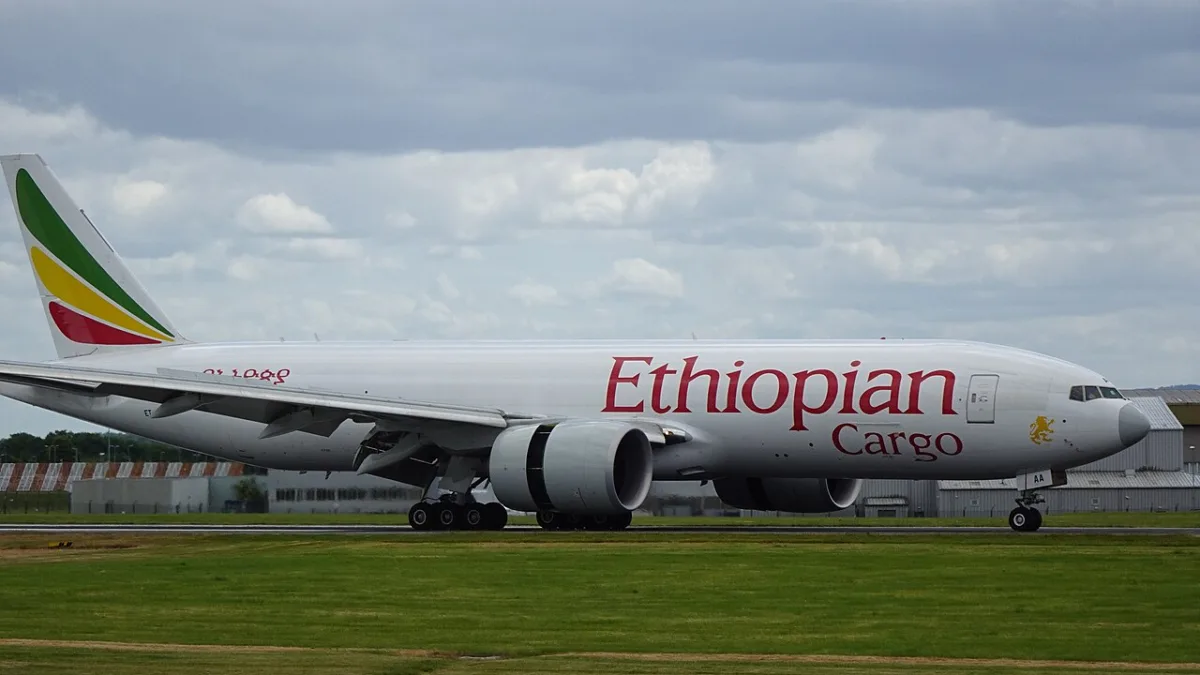
Ethiopian Airlines has turned an expected freighter deal into a firm order for 10 Boeing 777 cargo aircraft: eight next-generation 777-8 Freighters and two current 777 Freighters. The headline number matters, but the delivery schedule tells the more important story. Ethiopian is buying near-term capacity first, then shifting to the 777-8F in the 2030s.
The carrier becomes the first African customer for the 777-8F. Boeing also says the deal doubles Ethiopian’s 777X family order book, adding eight freighters to the eight 777-9 passenger aircraft already on order.
A bridge strategy rather than a one-step fleet replacement
According to the Ethiopian News Agency, the two current-generation 777Fs are scheduled for delivery in 2027 and 2028, while the eight 777-8Fs are planned for 2033 to 2035. That gap is central to the strategy: Ethiopian Cargo does not need to wait for the next decade to add lift.
The existing 777F is already deeply embedded in the airline’s operation, from crews and maintenance to network planning. The 777-8F can then enter once the programme is more mature and Ethiopian’s higher-volume lanes justify the additional capability.
Group CEO Mesfin Tasew also said the airline plans to acquire four additional passenger-to-freighter converted Boeing 777s, adding another layer of capacity before the full 777-8F fleet arrives.
A global cargo network built around Addis Ababa
Boeing says Ethiopian currently connects more than 70 cargo markets across Africa, Asia, Europe, the Middle East and North America. Ethiopian Cargo’s published network includes European points such as Brussels, Liège, Madrid, Oslo, Copenhagen and East Midlands, alongside Gulf and Middle Eastern markets including Dubai, Jeddah, Riyadh, Kuwait and Sharjah.
That geography explains why long-range widebody freighters matter. Addis Ababa is not simply an origin market; it functions as a redistribution hub linking multiple continents. High payload, range and reliable utilisation become critical when the network carries perishables, pharmaceuticals, e-commerce, industrial parts and outsized freight.
The 777-8F gives Ethiopian more payload headroom
Boeing lists a maximum structural payload of 118 tonnes for the 777-8F. Airbus advertises 111 tonnes for the A350F. Those figures are not a complete real-world comparison:range, weather, reserves, cargo density and airport constraints all matter:but the extra payload margin can be valuable on heavy long-haul sectors.
For Ethiopian, the appeal is also continuity. Staying within the 777 freighter ecosystem reduces transition complexity and allows the airline to leverage experience accumulated on the current 777F.
Public fleet data are not fully aligned
There is an important data caveat. Boeing’s September 30 release says Ethiopian currently operates 12 777 Freighters, two 767 Freighters and four 737-800SFs. Ethiopian Cargo’s own fleet page still lists 10 777 freighters, three 767 freighters and four 737-800 freighters.
The two official sources therefore appear to be out of sync. AeroSillage uses Boeing’s release as the most recent fleet snapshot while flagging the discrepancy rather than presenting the figures as fully reconciled.
Boeing secures a strategic African customer as the A350F enters flight test
The timing is notable because Airbus has just flown the A350F for the first time. The competitive picture is becoming clearer: Airbus is moving its 111-tonne freighter into certification testing, while Boeing is securing another major operator for the 118-tonne 777-8F.
For Ethiopian, the decision is not simply about which aircraft has the best brochure numbers. Fleet commonality, training, maintenance, spares, network experience and delivery sequencing all favour continuity with Boeing.
Related: Airbus A350F completes maiden flight, testing begins.
Why this order matters beyond Ethiopian Airlines
The most important feature of the deal is its sequencing: two new 777Fs in the near term, four conversions also planned, then eight 777-8Fs between 2033 and 2035. Ethiopian is building a capacity staircase rather than making one disruptive fleet jump.
That matters for African trade. More long-haul freighter capacity through Addis Ababa can improve links between African producers and global logistics markets, especially for time-sensitive exports. It can also further concentrate regional cargo flows around Ethiopian’s hub, strengthening the airline’s influence over how African freight connects with Europe, Asia, the Gulf and the Americas.
Sources
Boeing: Ethiopian Airlines order, September 30, 2026
Ethiopian News Agency: delivery timeline and conversions
Ethiopian Cargo: cargo network
Ethiopian Cargo: published fleet
Photo: Ethiopian Cargo Boeing 777F ET-BAA at East Midlands in May 2025. BWard 1997 / Wikimedia Commons, CC BY 4.0.