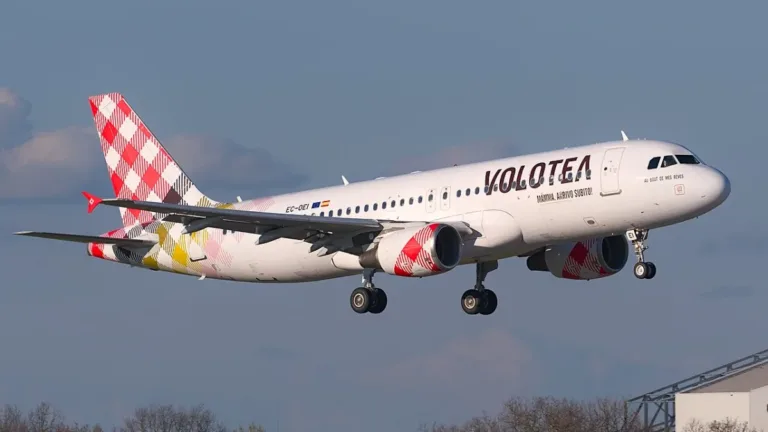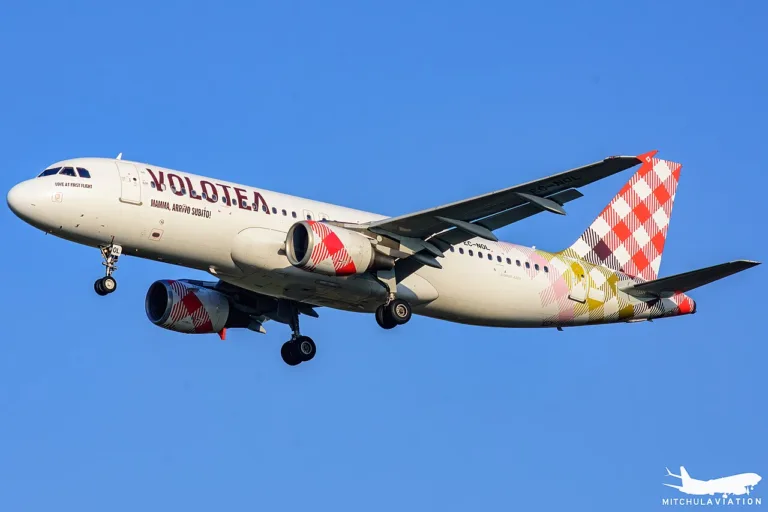
Volotea is changing course. After years of rapid expansion across Europe’s regional markets, the Spanish airline is preparing a significant fleet reduction and a tighter network. Reports published in September 2026 indicate that its fleet could shrink from around 44 aircraft to roughly 30-35, a major shift for a carrier that was still highlighting strong growth plans in France only months ago.
From expansion to retrenchment
The contrast is striking. Volotea previously described an operation built around 41 Airbus A319s and A320s in 2025, more than 420 routes and 12.7 million seats. France, its largest market, was expected to reach around 9 million seats in 2026.
By late September, the priority had clearly shifted. French travel-industry publication TourMaG reported that chief executive and co-founder Carlos Muñoz had written to employees outlining a plan focused on debt reduction and adaptation to sharply higher fuel costs. The report cited a 50-70% increase in fuel prices in the current geopolitical environment.
Other aviation reports point to a planned reduction from roughly 44 aircraft to 30-35. If implemented at that scale, Volotea would cut around a quarter of its production capacity.
Why shrink the fleet?
Fuel is one of an airline’s largest variable costs. A sudden rise in jet-fuel prices can hit short- and medium-haul operators particularly hard because fixed operating costs are spread over relatively short sectors.
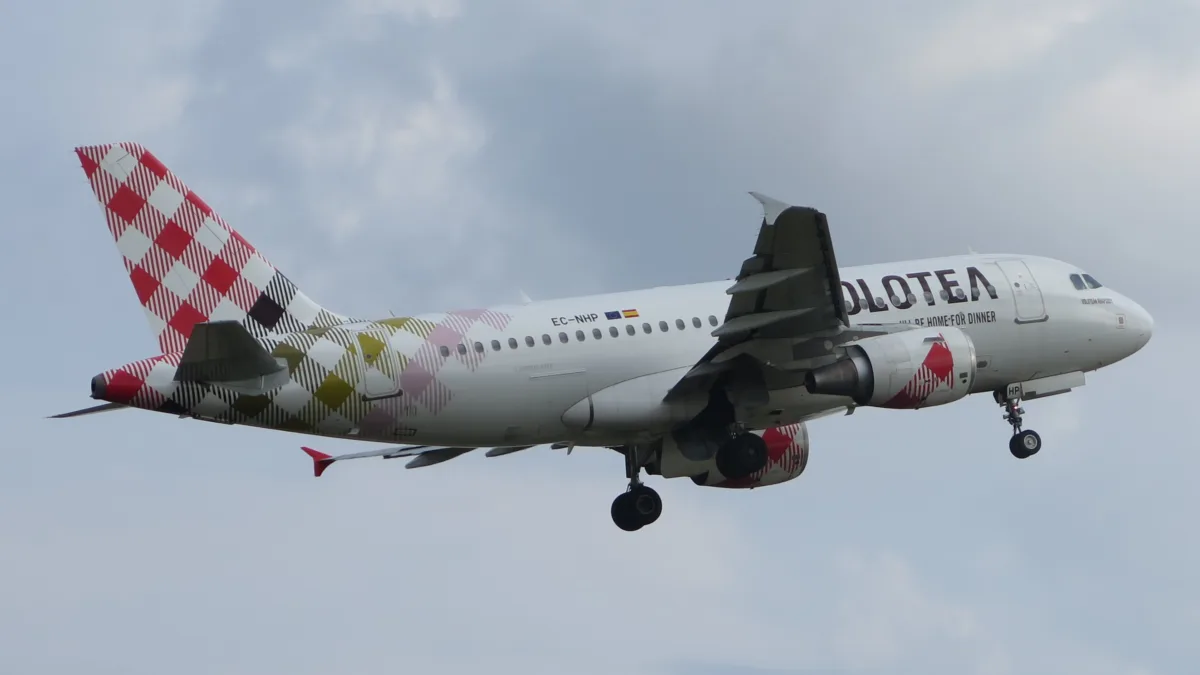
Volotea’s fleet consists of Airbus A319 and A320 CEO-generation aircraft. These aircraft remain fully airworthy under the same regulatory safety framework as newer jets, but they are generally less fuel-efficient than latest-generation A320neo-family aircraft.
A smaller fleet can reduce lease, maintenance and operating expenses while allowing the airline to concentrate remaining aircraft on routes with stronger economics.
Debt moves back to the top of the agenda
The second issue is financial. Volotea had already strengthened its capital structure in 2026 after several years shaped by the pandemic, the war in Ukraine and continued pressure on net profitability, even as operating results improved markedly in 2025.
The new plan is aimed at renegotiating part of the airline’s long-term debt and restoring greater financial flexibility. That does not mean Volotea is stopping operations. It means the company is trying to reduce fixed commitments in an environment that has become less predictable.
France will be central to the decisions
France is especially important because it is Volotea’s largest market. The airline has built a dense network of regional routes, many of them without direct competition, and has opened numerous French bases over the past several years.
That footprint means a fleet reduction can quickly become visible through lower frequencies, seasonal routes not returning, aircraft being reallocated or bases operating on a more seasonal basis.
It would still be premature to describe this as a broad retreat from France. Earlier in 2026, some bases were still expanding. Lille, for example, received a third based aircraft alongside a 23% capacity increase. The current shift therefore looks more like selective retrenchment than abandonment of the French market.
Which routes are most exposed?
Volotea has not published a final list of every route that could disappear under the restructuring. The most vulnerable services are logically seasonal or weaker-performing routes where demand no longer offsets higher operating costs.
Routes with strong demand, limited competition or strategic importance to major bases are more likely to prove resilient.
What it could mean for passengers
A smaller fleet inevitably reduces total available capacity. Depending on Volotea’s final decisions, passengers may see fewer frequencies or the loss of some nonstop regional links.
When an already-sold flight is canceled, European passenger-rights rules still apply. Travelers may be entitled to reimbursement or rerouting, while compensation depends on factors including the reason for cancellation and how much notice was provided.
A dramatic change in only a few months
The most important point is the speed of the reversal. Volotea entered 2026 still pursuing substantial growth. Higher fuel costs and financial pressure are now pushing the airline to prioritize resilience over expansion.
The strategy does not necessarily invalidate Volotea’s regional model. Shrinking can be a rational move if it protects the strongest routes, lowers financial exposure and creates room for future growth when conditions improve.
But the priority has clearly changed: Volotea now has to prove that it can preserve the strengths of its regional network with fewer aircraft and tighter financial discipline.
Sources
- TourMaG, September 28, 2026
- Volotea: Lille expansion and network data
- Reuters, June 2026: background on fuel-cost pressure and Volotea’s temporary fuel surcharge.
Photo: Volotea Airbus A319 EC-NHP departing Paris Orly. Zima Savolainen / Wikimedia Commons, CC BY-SA 4.0.
Related: Volotea: growth in France and risks under watch, our earlier analysis of the airline’s expansion model.