
Kenya: two killed in training-aircraft crash at Kipeto
A Kenya School of Flying aircraft crashed at Kipeto, killing a student pilot and instructor. Poor visibility is being examined but no cause is confirmed.
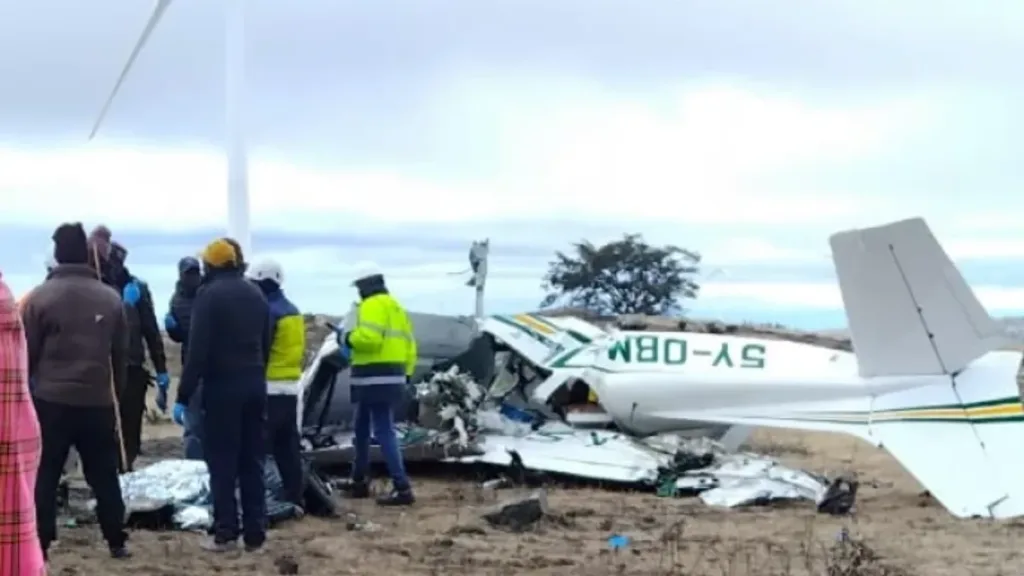
A training flight near Kenya’s Kipeto wind farm ended in tragedy on 18 September 2026, killing a student pilot and the instructor accompanying them. The crash raises difficult questions for flight training, but the available evidence does not yet establish why the aircraft came down.
The light aircraft belonged to the Kenya School of Flying and was operating in the Kipeto area of Kajiado County, southwest of Nairobi. According to the Kenya News Agency, police confirmed that both occupants died: the student at the scene, and the instructor while being taken to hospital. Emergency personnel and security officers attended the crash site, near the Kipeto Wind Power Project in hilly terrain, as investigations began.
Local police described morning mist and poor visibility as possible factors. The police account also suggested the crew may have attempted an emergency landing. Those are preliminary observations, not findings from a completed aviation accident investigation. Neither the aircraft’s precise technical condition nor the sequence of decisions inside the cockpit can be inferred from a weather description alone.
What investigators need to establish
For investigators, the central task will be to reconstruct the flight minute by minute. That means establishing the aircraft’s verified type and registration, its planned route, weather conditions at the relevant time and location, and any available communications or flight data. Investigators will also assess technical airworthiness and the training circumstances. The fact that a pilot was under instruction does not itself establish who was flying, what manoeuvre was being attempted or why the accident occurred.
The terrain around Kipeto makes an accurate account of visibility particularly important. Hilly areas can complicate a pilot’s view of the ground when cloud or mist lowers the available visual references. But visibility is only one potential element in an investigation: a chain of events may involve weather, aircraft performance, navigation, operational decisions or other factors, none of which should be declared the cause before evidence is evaluated.
The nearby wind farm and reported poor visibility are relevant context for investigators, but neither establishes why the training aircraft crashed. A safety investigation must compare witness accounts with physical evidence and the flight’s trajectory. Assigning the cause to weather, pilot actions or local terrain at this stage would be premature.
There is an immediate human cost for the families, the school and Kenya’s flight-training community. Training operators depend on a culture in which accidents are investigated carefully and lessons, if established, are applied to procedures and instruction without prejudging the crew’s actions. Speculation about blame would contribute little to that process.
Two deaths are confirmed; the cause is not. The next reliable development will be an official technical finding or verified new information about the aircraft and circumstances, rather than conjecture drawn from photographs or initial police comments.
Source: Kenya News Agency — Two killed as training aircraft crashes in Kipeto, 18 September 2026. Local police statements are reported there. Investigation conclusions remain pending.
Read next


JOIN THE CONVERSATION
Let’s discuss this story.
A question, a clarification or a different perspective? Share it with us.